Broadcom missed revenue estimates in its fiscal Q2 and saw shares plunge 14% after holding its $100 billion AI chip sales forecast for 2026 unchanged. The results highlight softening software sales even as AI revenue more than doubled and is expected to triple in the current quarter.
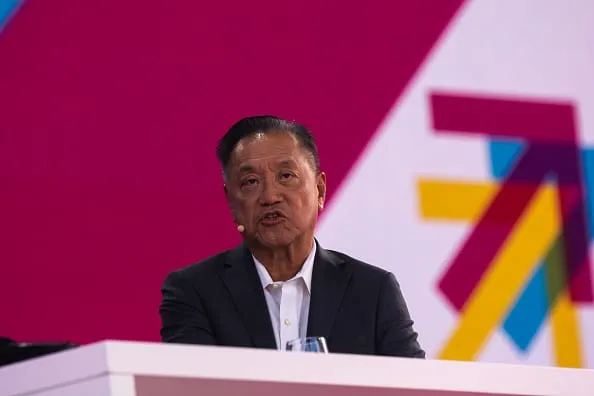
Hock Tan did not raise the full-year target of $100 billion in AI semiconductor sales for 2026.
Tan said Broadcom would offer "chips only" instead of the complete integrated AI systems it had previously planned to provide.
Tap a lens to see what this story means for you.
Liked this? The Brief brings you the whole day in tech, verified, every morning.
Two minutes, free forever. What's in The Brief →
See what’s happening right now
The Feed runs all day — short, verified briefs the moment they break.
Open the FeedFollow @thecircuitry_
Every story we publish, as it happens. No noise between.
Reader-supported
The Circuitry is a passion project I've always wanted to build, and I love the work behind it.
Running it costs real money. APIs, hosting, time. To keep improving the site and growing this into something useful for everyone, those costs have to be covered.
Any contribution is appreciated. If not, no pressure. Thanks for reading.
TSMC posted a 77.4% year-on-year profit increase to NT$706.56 billion and raised its capital spending outlook while announcing another $100 billion for Arizona fabs. The results underscore sustained AI demand that now dominates 66% of its platform revenue.
The Dow fell more than 4% in September while Micron posted an 11-fold data center revenue increase and beat expectations. Kashkari stated inflation is still too high at around a 3% rate.
MediaTek finalized pricing of a record US$3.9 billion overseas convertible bond on August 31, 2026, with Nvidia reportedly subscribing to US$3.5 billion or roughly 90 percent of the total. The issuance, which exceeds NT$120 billion, is described by the company as the largest overseas CB ever from a Taiwanese issuer.
CXMT shares jumped nearly 466% in their Shanghai debut, closing at 49 yuan to reach a 3.3 trillion yuan market cap that exceeds every other China-listed firm. The $8.6 billion IPO haul will support memory wafer manufacturing while the firm commands 7.67% of the worldwide DRAM sector and stands to benefit from Beijing's semiconductor self-reliance campaign.
Inflation cooled sharply in June while Morgan Stanley delivered record earnings and IBM suffered its worst trading day on record. Markets reacted positively to the inflation data and bank results but remain on edge over potential oil-price spikes from Middle East conflict.