The Circuitry
THE CIRCUITRYYour one-stop source for all tech news
HOMENEWSFEEDEVENTS
—STORIES—VERIFIED
BOOKMARKS
RSSSOURCESABOUTCORRECTIONS
RSS
© 2026 The Circuitry
About UsContactCorrections
  • Home
  • Feed
  • Events
  • Saved
Scroll for more
Verification
VERIFIEDConfidence: HIGH
Source identified
Claims cross-referenced
No discrepancies found
Sourcing
1source

via NotaTeslaApp

NotaTeslaApp · track record
12Stories
100%Verified
1230d
All sources →
Markets
TSLA···

Live quote · not investment advice

Home/Energy
VERIFIEDBy Xavier Rivera· ·2.5 min read

CARB Filing Reveals Tesla Semi Battery Capacities

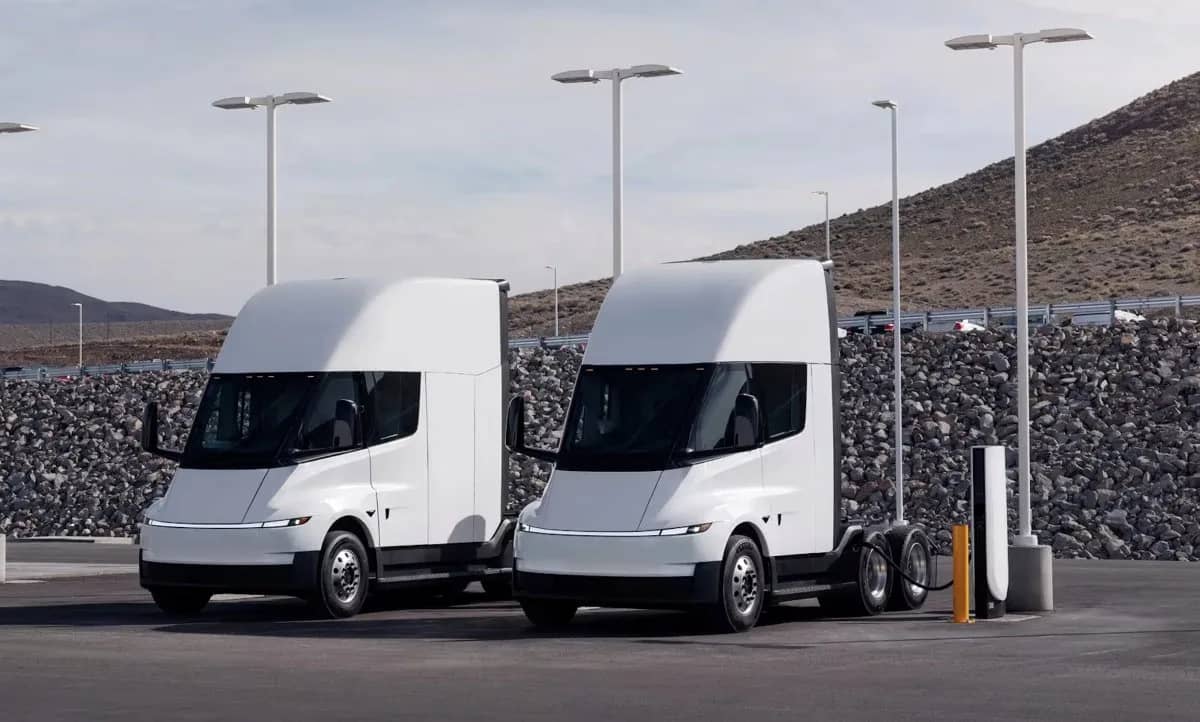
A CARB filing has confirmed the Tesla Semi Long Range uses an 822 kWh battery pack while the Standard Range uses 548 kWh, both built on 4680 Cybercells with 1.2 MW charging. The disclosure verifies efficiency below 2 kWh per mile at full load, supporting commercial viability against traditional diesel trucks.

Source:NotaTeslaApp
Post
CARB Filing Reveals Tesla Semi Battery Capacities
TL;DRAI · 60 sec read

California Air Resources Board filing reveals Tesla Semi battery capacities: 822 kWh for Long Range variant with 500-mile range, 548 kWh for Standard Range with 325 miles at full 82,000-pound load. This confirms 1.64 kWh per mile efficiency, undercutting Tesla's 2 kWh/mile target and enabling 1.2 MW charging for 30-minute 300-mile refills.

A newly published regulatory filing from the California Air Resources Board has revealed the battery capacities for both production variants of the Tesla Semi. The documentation confirms that the Long Range will use a large 822 kWh pack, while the Standard Range variant will use a smaller 548 kWh pack.

According to the CARB Executive Order, which certifies the powertrain design for the 2026 model year, Tesla is utilizing a Lithium-ion NMCA chemistry for the Semi. NMCA is a high-performance chemistry that delivers a significantly higher energy density than an equivalent weight LFP pack. The flagship Long Range model features an exact usable capacity of 822 kWh and is rated for a peak power output of 800 kW. The Standard Range variant scales the hardware down to a 548 kWh pack, generating 525 kW of peak power to achieve its targeted 325-mile range.

The estimated range for both variants is calculated strictly at the maximum gross combination weight of 82,000 pounds. Both variants are built around Tesla's 2nd-gen 4680 cell architecture, the Cybercell, and are capable of sustaining a 1,200 kW (1.2 MW) peak charging speed.

With the official battery sizes now part of the public record, the physical efficiency of the Tesla Semi can be calculated. To achieve 500 miles of range with an 822 kWh pack, the Long Range Semi operates at 1.64 kWh per mile. For comparison, the Model 3 achieves about 0.250 kWh per mile, about 6x less than the Semi. However, the Model 3 weighs just 4,000 lbs, compared to the Semi’s fully loaded weight of 82,000 lbs.

This efficiency for the Tesla Semi is a victory for Tesla's engineering team. When the Semi program was initially detailed, Tesla claimed the truck would consume less than 2 kWh per mile under a full load. The CARB filing definitively proves that Tesla has engineered a vehicle that significantly undercuts that 2 kWh threshold. Each and every decimal point below 2 kWh translates into massive efficiency increases for logistics operators.

By utilizing NMCA 4680 cells, Tesla ensures the battery pack can safely absorb the thermal load generated by the Megawatt Charging System. Pushing 1.2 MW of sustained power into the pack allows the Semi to replenish roughly 300 miles of range in approximately 30 minutes. This is exactly what will allow Semi fleet operators to maintain similar operational times, rivaling those of traditional diesel trucking.

For reference, the AWD, Long Range variants of the Model 3 and Model Y have about a 75-80 kWh battery, making the Long Range Semi’s pack about 10x larger in energy capacity.
Why this mattersAI · ~100 words

Tap a lens to see what this story means for you.

Reader-supported
CoffeeSupport →Follow@thecircuitry_ →

Reader-supported · Daily Brief

Daily brief at 7 AM ET. Top tech stories, every morning. Sourced and fact-checked.

HELP US IMPROVE

Reader-supported

The Circuitry is a passion project I've always wanted to build, and I love the work behind it.

Running it costs real money. APIs, hosting, time. To keep improving the site and growing this into something useful for everyone, those costs have to be covered.

Any contribution is appreciated. If not, no pressure. Thanks for reading.

Support →
TeslaSemiBatteryCARB
More fromNotaTeslaApp
  • Rivian Confirms June 9 Launch for R2 with Orders, Demos and Deliveries

    Energy · 9d
  • Tesla Remotely Diagnoses Cybertruck PCS Failures, Offers Free Supercharging

    Energy · 16d
  • Tesla Relaxes Driver Monitoring With FSD v14.3.3

    Energy · 17d
More inEnergy
  • Waymo to Repurpose Robotaxi Batteries for Grid Storage

    Energy · 2d
  • Toyota Abandons Lexus LF-ZC Electric Sedan for 2026

    Energy · 4d
  • Rivian Confirms June 9 Launch for R2 with Orders, Demos and Deliveries

    Energy · 9d
SupportThe Work

The Circuitry is reader-supported. If you find the daily brief useful, you can buy me a coffee to keep it going.

Buy a coffee →
SubscribeCircuitry Brief

Daily brief at 7 AM ET. Top tech stories, every morning.

MORE IN ENERGY

Waymo to Repurpose Robotaxi Batteries for Grid Storage

Waymo and B2U Storage Solutions announced a strategic supply agreement to repurpose used batteries from the robotaxi fleet for stationary energy storage on power grids. The deal could add hundreds of megawatt-hours of capacity to projects in California and Texas while extending battery usefulness in the same regions where the vehicles operate and charge.

Toyota Abandons Lexus LF-ZC Electric Sedan for 2026

Toyota has abandoned its planned Lexus LF-ZC electric sedan that was due by the end of 2026. The company will instead focus on larger SUVs while continuing solid-state battery and gigacasting development for future EVs.

Rivian Confirms June 9 Launch for R2 with Orders, Demos and Deliveries

Rivian confirms the R2 launches on June 9 with order invitations, demo drives at its Spaces and initial customer deliveries all beginning that day. The concurrent approach seeks to avoid criticism from the R1 rollout as the company shifts toward mass-market EVs.