The Circuitry
THE CIRCUITRYYour one-stop source for all tech news
HOMETODAYNEWSFEEDEVENTS
BOOKMARKS
RSS
© 2026 The Circuitry
About UsSourcesContactCorrectionsPrivacy
  • Today
  • Feed
  • Events
  • Saved
Scroll for more
Verification
VERIFIEDConfidence: HIGH
Source identified
Claims cross-referenced
No discrepancies found
Fact-check summary

Axios, Reuters, Biohub's PR Newswire, and multiple other outlets confirm the $300M investment from Google DeepMind, Meta, and Isomorphic Labs as part of the $1.8B virtual cell initiative announced today.

Sourcing
4independent sources

via The Verge

The Verge · track record
115Stories
99%Verified
2230d
All sources →
Markets
GOOGL···

Live quote · not investment advice

From The CircuitryWhy The Circuitry

Verified tech news, cross-checked.

Every story is checked against independent sources before it posts — no rumors dressed up as fact.

How we verify →
Home/Tech/Google DeepMind and Meta back Biohub virtual cell with $300M
VERIFIEDBy Xavier Rivera· ·1.5 min read

Google DeepMind and Meta back Biohub virtual cell with $300M

Google DeepMind, Meta, and Isomorphic Labs are investing $300 million in Biohub to build AI datasets for a virtual cell model. The funding is part of a $1.8 billion initiative that also includes contributions from the Department of Energy and National Institutes of Health.
Source:The Verge
Post
Google DeepMind and Meta back Biohub virtual cell with $300M
From The CircuitryWhy The Circuitry

Verified tech news, cross-checked.

Every story is checked against independent sources before it posts — no rumors dressed up as fact.

How we verify →
TL;DRAI · 60 sec read

Google DeepMind, Meta, and Isomorphic Labs invest $300 million in Biohub as part of a $1.8 billion effort to create a predictive virtual cell model. Founded in 2016, Biohub will build AI datasets enabling researchers to run biological experiments digitally. Biohub’s head of science says this could accelerate discovery of new disease prevention methods.

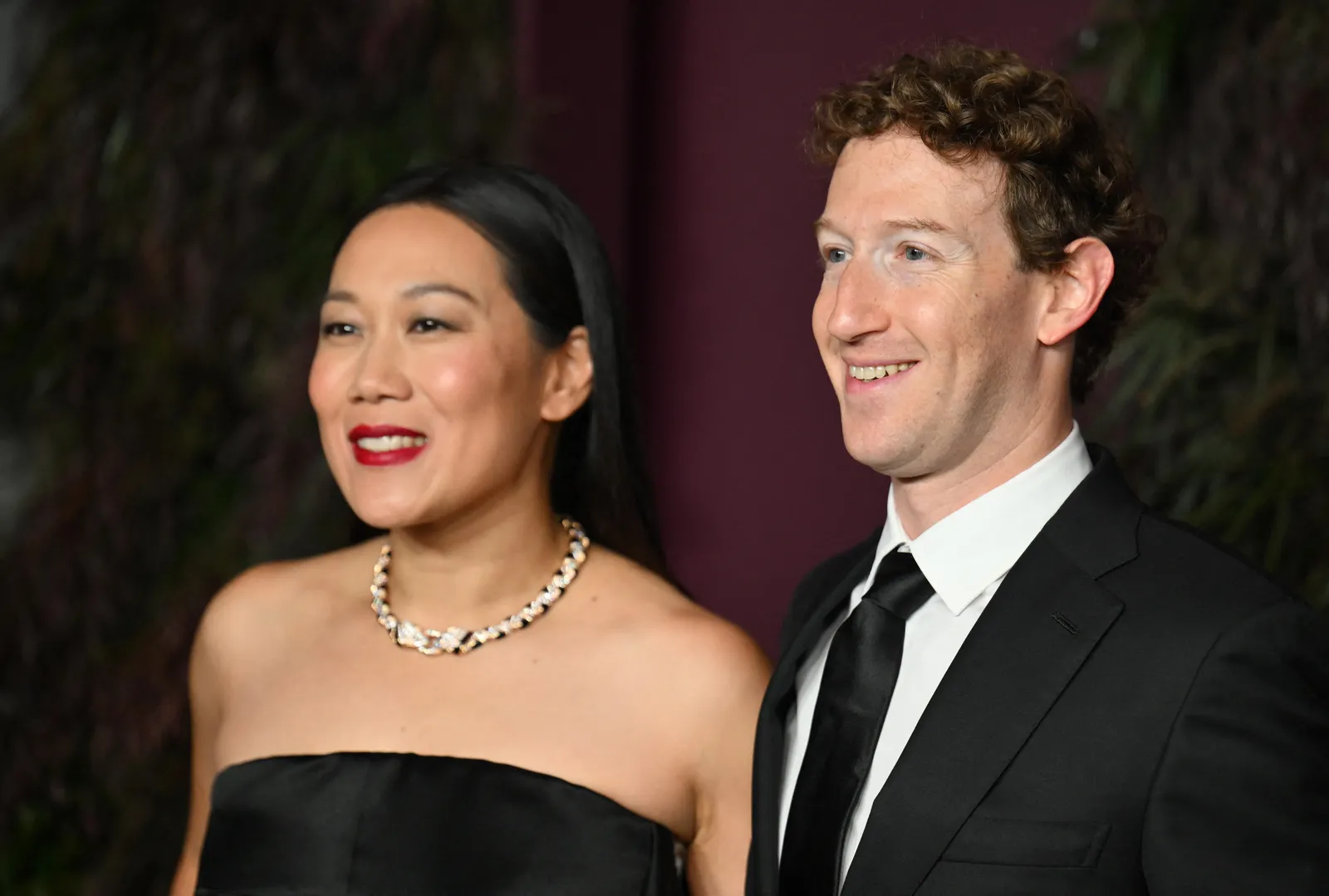
Google DeepMind, Meta, and Isomorphic Labs are jointly investing $300 million in Biohub, the nonprofit biomedical research organization founded by Mark Zuckerberg and Priscilla Chan.

The funding forms part of a larger $1.8 billion effort. The total initiative combines the $300 million from the three commercial partners with $500 million from Biohub itself, more than $500 million from the US Department of Energy over five years, and more than $500 million in prior federal datasets and repositories from the National Institutes of Health.
Biohub’s goal is a predictive virtual cell model.

Biohub will use the money to build AI datasets that let researchers ask, predict, and answer biological questions digitally.

Biohub’s goal is a predictive virtual cell model. Founded in 2016, the organization seeks to simulate cellular processes so scientists can run experiments in software rather than physical labs. The project is framed as a way to speed discovery of new methods to prevent and manage diseases.
From The CircuitryThe Feed — live briefs across tech, all day.See what’s happening →

Alex Rives, Biohub’s head of science, said an accurate predictive model of biology could dramatically accelerate scientific discovery by enabling scientists to perform experiments digitally.
Commercial partners receive a one-year data head start.

Commercial partners receive a one-year data head start. Google DeepMind, Meta, and Isomorphic Labs will have early access to the generated datasets before they are opened more broadly. The Department of Energy contribution will support the effort through its Genesis Mission, which includes access to exascale supercomputers and advanced imaging tools.
From The CircuitryWhy The Circuitry

Verified tech news, cross-checked.

Every story is checked against independent sources before it posts — no rumors dressed up as fact.

How we verify →
Project leaders target a five-year timeline. Rives stated the work that normally takes decades could be compressed to five years, with the first dataset expected within roughly one year and accurate models within five years.
Why this mattersAI · ~100 words

Tap a lens to see what this story means for you.

Morning Brief

Liked this? The Brief brings you the whole day in tech, verified, every morning.

Two minutes, free forever. What's in The Brief →

Reader-supported
DonateBuy me a coffee →Follow@thecircuitry_ →Follow@thecircuitry.to →
HELP US IMPROVE
From The Circuitry

See what’s happening right now

The Feed runs all day — short, verified briefs the moment they break.

Open the Feed →
From The Circuitry

Follow @thecircuitry_

Every story we publish, as it happens. No noise between.

Follow on X ↗On Bluesky ↗

Reader-supported

The Circuitry is a passion project I've always wanted to build, and I love the work behind it.

Running it costs real money. APIs, hosting, time. To keep improving the site and growing this into something useful for everyone, those costs have to be covered.

Any contribution is appreciated. If not, no pressure. Thanks for reading.

Buy me a coffee
AIbiotechGoogleMeta
More fromThe Verge
  • First Nvidia RTX Spark laptops range from $2,599 to nearly $7,000

    Tech · 11h
  • Microsoft introduces Magnetic Connect charging for Surface Laptop Ultra

    Tech · 16h
  • Surface Laptop Ultra will launch October 16 starting at $2,599

    Tech · 16h
More inTech
  • MacRumors: Gurman Says OLED MacBook Pro Won't Be Significantly Thinner

    Tech · 1h
  • PS5 Crunchyroll Anime Hub Launches Spring 2027

    Tech · 1h
  • First Nvidia RTX Spark laptops range from $2,599 to nearly $7,000

    Tech · 11h
SupportThe Work

The Circuitry is reader-supported. If you find the daily brief useful, you can buy me a coffee to keep it going.

Buy a coffee →
From The CircuitryWhy The Circuitry

Verified tech news, cross-checked.

Every story is checked against independent sources before it posts — no rumors dressed up as fact.

How we verify →

MORE IN THIS BEAT

All Tech →
  • Tech· 

    Meta and Microsoft Slash Employee Claude AI Spending

    Meta and Microsoft are cutting employee use of Anthropic’s Claude AI and directing staff toward their own coding tools, The Information reported. The changes reflect tighter internal AI budgets while customer access to Claude through Microsoft platforms continues to expand.

  • Tech· 

    Anthropic launches Claude Haiku 5.5, cutting prices up to 90% from Haiku 4.5

    Anthropic released Claude Haiku 5.5, its cheapest and fastest small model, at $0.10 per million input tokens and $0.50 per million output tokens for prompts up to 100,000 tokens. Anthropic says it costs around 75% less to run than Haiku 4.5 on average and scores far higher on its benchmarks.

  • Tech· 

    OpenAI publishes 722 math manuscripts from an unreleased internal model

    OpenAI released 722 mathematical manuscripts, grouped into 372 result families, produced by an unreleased internal model. The papers are on GitHub, with Lean formalizations for many but not all of them, and OpenAI warns some unformalized results could have issues.

  • Tech· 

    Microsoft preparing local MAI-Code-1.1-Flash for high-end PCs

    Microsoft has introduced a local edition of MAI-Code-1.1-Flash that runs on Windows PCs without server access. The model requires substantial memory and is coming to GitHub Copilot in experimental preview by the end of October, starting with Nvidia RTX Spark PCs.

  • Tech· 

    Microsoft opens Surface Laptop Ultra preorders and pushes AI agents deeper into Windows

    At its Windows and Surface event, Microsoft opened preorders for the $2,599 Surface Laptop Ultra and the $5,999 Surface RTX Spark Dev Box, and said Copilot will be able to use files and act across Windows in the coming months.