The Circuitry
THE CIRCUITRYYour one-stop source for all tech news
HOMENEWSFEEDEVENTS
—STORIES—VERIFIED
BOOKMARKS
RSSSOURCESABOUTCORRECTIONS
RSS
© 2026 The Circuitry
About UsContactCorrections
  • Home
  • Feed
  • Events
  • Saved
Scroll for more
Verification
VERIFIEDConfidence: HIGH
Source identified
Claims cross-referenced
No discrepancies found
Sourcing
1source

via Ars Technica

Ars Technica · track record
14Stories
100%Verified
1130d
All sources →
Home/Energy
VERIFIEDBy Xavier Rivera· ·2.5 min read

SpaceX Positions AI as Future Tentpole in S-1 Filing

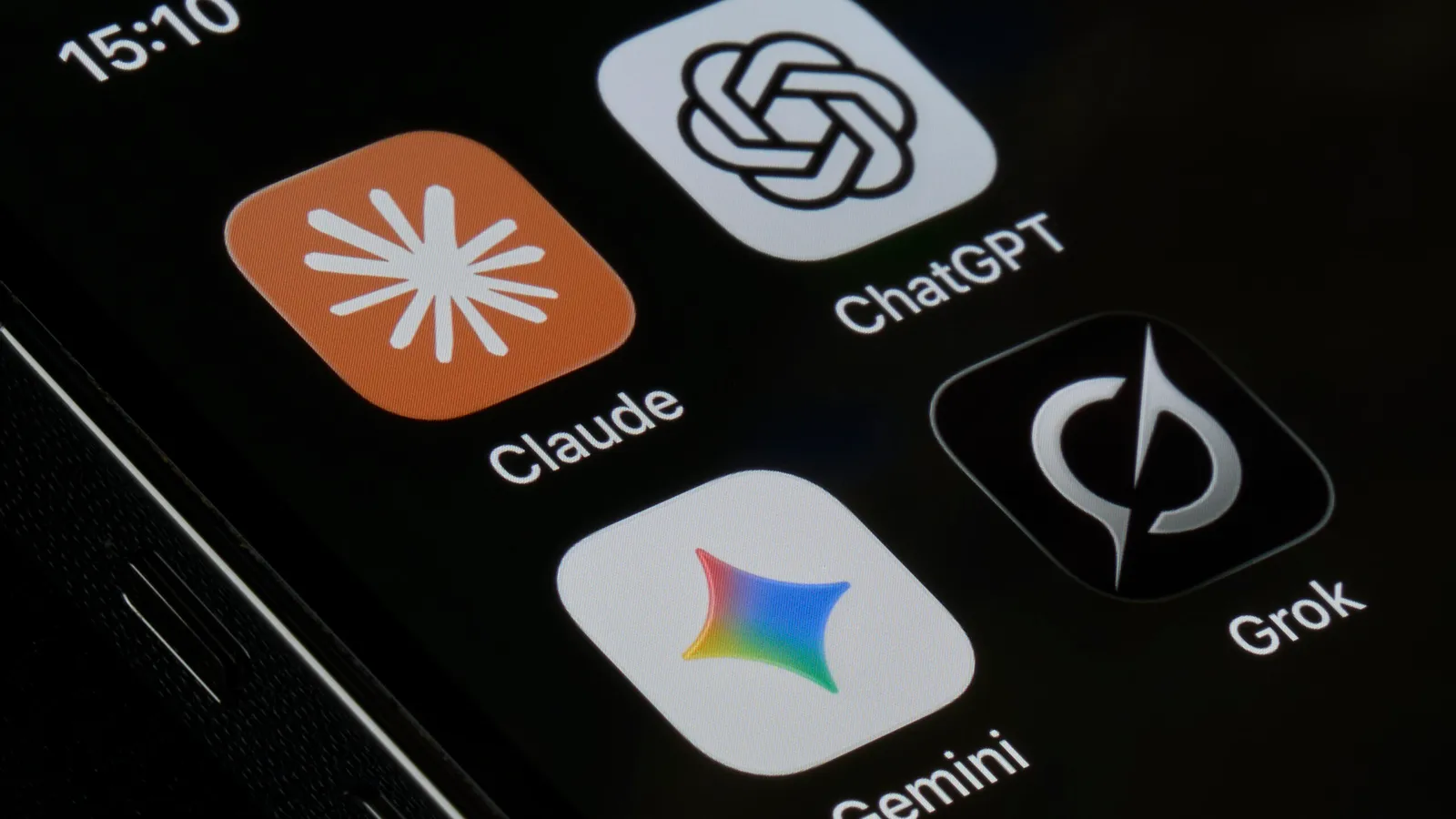
SpaceX has designated AI as the primary driver of its future in its S-1 filing preceding an expected IPO, estimating a $26.5 trillion addressable market after absorbing xAI to oversee Grok. The ambitious pitch arrives as Grok substantially trails ChatGPT, Claude, and Gemini in both consumer paid usage and corporate adoption.
Source:Ars Technica
Post
SpaceX Positions AI as Future Tentpole in S-1 Filing
TL;DRAI · 60 sec read

SpaceX positions AI as its primary future growth area in S-1 disclosures ahead of an expected IPO. The filing projects a $26.5 trillion market opportunity after acquiring xAI. Despite this ambition, Grok trails OpenAI and Anthropic by wide margins in consumer payments and enterprise adoption.

SpaceX has identified AI as the central focus of its future growth, projecting a $26.5 trillion market opportunity that approaches the scale of total US economic output. The company must still attract customers who predominantly use AI models from competitors including OpenAI and Anthropic.

In financial disclosures ahead of an expected initial public offering, SpaceX characterized its established space launch and satellite operations as secondary to its emerging AI business. This follows the formal acquisition of Musk’s xAI earlier this year, after which the SpaceXAI division assumed oversight of the Grok AI models and chatbot originally developed by xAI.

The S-1 filing states that SpaceX possesses “the largest actionable total addressable market in human history,” with AI accounting for the majority at an estimated $26.5 trillion. That sum nearly matches US nominal GDP, which stood at nearly $32 trillion in the first quarter of 2026. The company did not disclose the timeframe underlying its addressable market projection.
The S-1 filing states that SpaceX possesses “the largest actionable total addressable market in human history,” with AI accounting for the majority at an estimated $26.5 trillion.

The figure substantially exceeds independent estimates. Gartner projected worldwide AI spending would reach $3.3 trillion by 2027, while Citigroup forecasted the global AI market might exceed $4.2 trillion by 2030.

SpaceX confronts steep competition from better-resourced rivals. Musk described xAI prior to the merger as “the smallest of the AI companies” during court hearings related to his OpenAI lawsuit. The Grok chatbot has trailed other services in usage despite deep integration with Musk’s X platform.

An AppMagic survey of 260,000 US consumers and workers found that only 0.174 percent paid to use Grok in the second quarter of 2026. By comparison, more than 6 percent paid for OpenAI’s ChatGPT, according to The Wall Street Journal report on the survey.
Musk described xAI prior to the merger as “the smallest of the AI companies” during court hearings related to his OpenAI lawsuit.

Corporate adoption has followed the same pattern. Enterprise Technology Research’s survey of 500 respondents showed companies using Anthropic’s Claude rising from 21 percent to 48 percent between 2025 and 2026, while Google Gemini usage climbed from 27 percent to 40 percent. Grok corporate usage increased from 4 percent to 7 percent over the same period.

SpaceX noted in the filing that it has launched Grok Business, Grok Enterprise, Grok API, and xAI Gov, products it believes will appeal to enterprises and governments with substantial opportunities for new customers. Reuters, however, reported that xAI’s Grok has been a flop with the US government, recording just three public mentions of xAI or Grok out of more than 400 disclosed examples of federal AI use in 2025.

Grok’s peak download popularity occurred after a January 2026 update that permitted users to generate millions of sexualized images of women and children by applying real photos to virtually undress people. The capability remained available for weeks before correction. The episode triggered lawsuits against xAI and led the European Union to ban nudifying apps. Grok continues to include “Spicy” and “Unhinged” modes.
Why this mattersAI · ~100 words

Tap a lens to see what this story means for you.

Reader-supported
CoffeeSupport →Follow@thecircuitry_ →

Reader-supported · Daily Brief

Daily brief at 7 AM ET. Top tech stories, every morning. Sourced and fact-checked.

HELP US IMPROVE

Reader-supported

The Circuitry is a passion project I've always wanted to build, and I love the work behind it.

Running it costs real money. APIs, hosting, time. To keep improving the site and growing this into something useful for everyone, those costs have to be covered.

Any contribution is appreciated. If not, no pressure. Thanks for reading.

Support →
SpaceXxAIGrokAI
More fromArs Technica
  • S&P 500 Rejects Fast-Track for SpaceX and AI Firms

    Tech · 1d
  • Waymo to Repurpose Robotaxi Batteries for Grid Storage

    Energy · 2d
  • Blue Origin's New Glenn Explodes During Static Fire Test

    Tech · 8d
More inEnergy
  • Waymo to Repurpose Robotaxi Batteries for Grid Storage

    Energy · 2d
  • Toyota Abandons Lexus LF-ZC Electric Sedan for 2026

    Energy · 4d
  • Rivian Confirms June 9 Launch for R2 with Orders, Demos and Deliveries

    Energy · 9d
SupportThe Work

The Circuitry is reader-supported. If you find the daily brief useful, you can buy me a coffee to keep it going.

Buy a coffee →
SubscribeCircuitry Brief

Daily brief at 7 AM ET. Top tech stories, every morning.

MORE IN ENERGY

Waymo to Repurpose Robotaxi Batteries for Grid Storage

Waymo and B2U Storage Solutions announced a strategic supply agreement to repurpose used batteries from the robotaxi fleet for stationary energy storage on power grids. The deal could add hundreds of megawatt-hours of capacity to projects in California and Texas while extending battery usefulness in the same regions where the vehicles operate and charge.

Toyota Abandons Lexus LF-ZC Electric Sedan for 2026

Toyota has abandoned its planned Lexus LF-ZC electric sedan that was due by the end of 2026. The company will instead focus on larger SUVs while continuing solid-state battery and gigacasting development for future EVs.

Rivian Confirms June 9 Launch for R2 with Orders, Demos and Deliveries

Rivian confirms the R2 launches on June 9 with order invitations, demo drives at its Spaces and initial customer deliveries all beginning that day. The concurrent approach seeks to avoid criticism from the R1 rollout as the company shifts toward mass-market EVs.