The Circuitry
THE CIRCUITRYYour one-stop source for all tech news
HOMETODAYNEWSFEEDEVENTS
BOOKMARKS
RSS
© 2026 The Circuitry
About UsSourcesContactCorrectionsPrivacy
  • Today
  • Feed
  • Events
  • Saved
Scroll for more
Verification
VERIFIEDConfidence: HIGH
Source identified
Claims cross-referenced
No discrepancies found
Fact-check summary

Multiple outlets (Space.com, Spaceflight Now, SpaceNews) and Amazon's official updates confirm the July 2 Atlas V launch of 29 Amazon Leo satellites, reaching 396 total and enabling initial service later this year.

Sourcing
1source

via GeekWire

GeekWire · track record
10Stories
100%Verified
330d
All sources →
Markets
AMZN···

Live quote · not investment advice

Home/Tech/Amazon Leo reaches 396 satellites after Atlas 5 launch
VERIFIEDBy Xavier Rivera· ·2 min read

Amazon Leo reaches 396 satellites after Atlas 5 launch

Amazon Leo has reached 396 operational satellites after its final Atlas 5 launch, clearing the way for initial commercial broadband service later in 2026. The network will compete with Starlink in limited latitudes at first while scaling toward full deployment by mid-2029.
Source:GeekWire
Post
Amazon Leo reaches 396 satellites after Atlas 5 launch
TL;DRAI · 60 sec read

Amazon has reached 396 Leo satellites after an Atlas 5 rocket deployed 29 more from Cape Canaveral. The total supports continuous service in initial latitudes for commercial high-speed internet starting later this year in mid-latitude zones. Future launches using Vulcan and other rockets will add capacity as the network competes with Starlink.

Amazon has completed enough launches to begin commercial high-speed internet service from its Leo satellite network later this year.

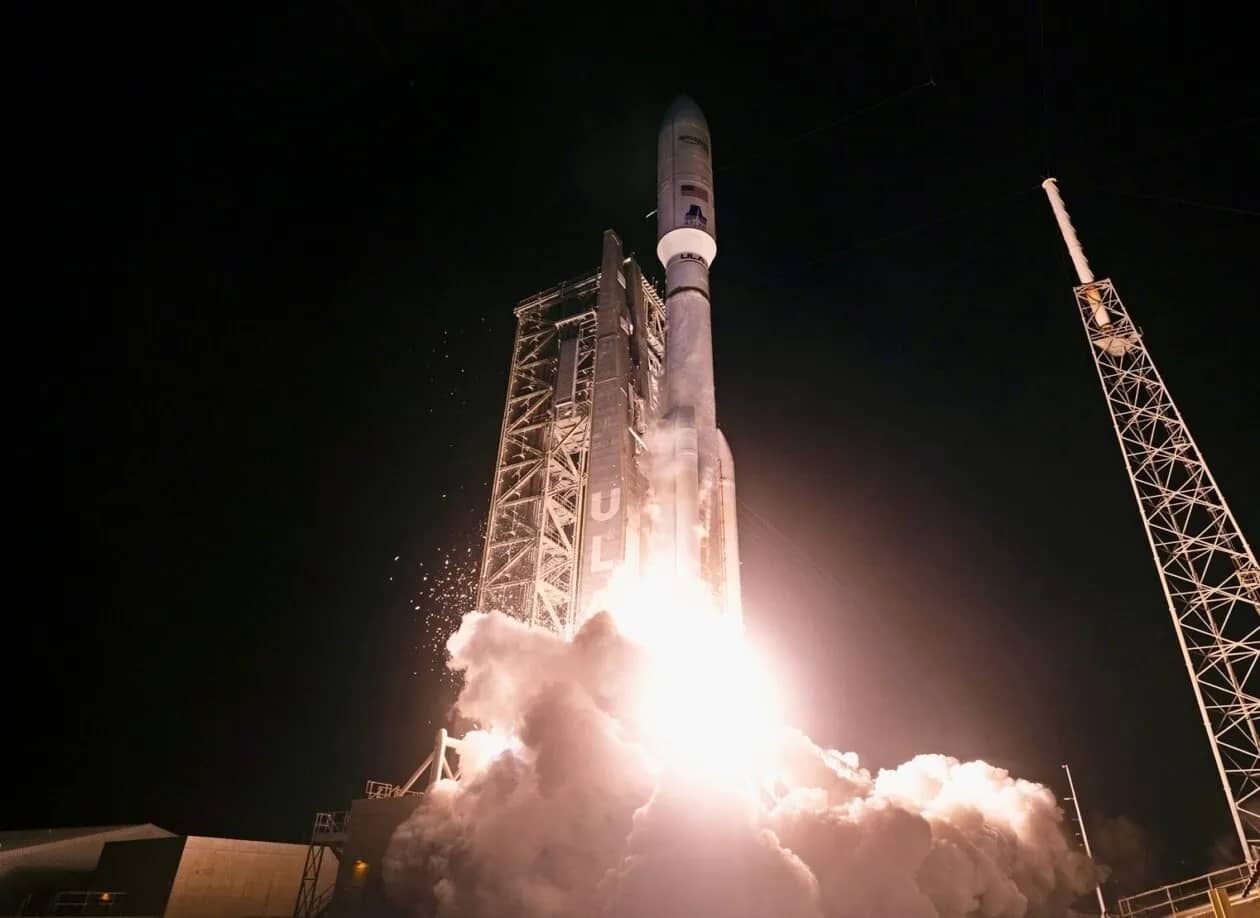
The Atlas 5 rocket deployed 29 additional satellites. United Launch Alliance’s Atlas 5 lifted off from Cape Canaveral Space Force Station at 12:30 a.m. ET on July 2, 2026. The mission marks the final Atlas 5 launch reserved by Amazon for its Leo constellation.
Amazon has conducted months of beta testing with a select group of customers, but connectivity has not been continuous because of sparse orbital coverage.
This brings the total number of operational Leo satellites to 396. Chris Weber, vice president of business and product for Amazon Leo, stated that the count will support continuous connectivity in the initial latitudes targeted for commercial service.
POST FROM @ulalaunch· Official ULA announcement tweet confirming successful delivery of 29 satellites for Amazon Leo, bringing total to 396
https://x.com/ulalaunch/status/2072555947008967046
Future launches will use ULA’s Vulcan rocket. Amazon has made additional launch reservations with Blue Origin, Arianespace and SpaceX. Melissa Wuerl, Amazon Leo’s director of launch systems, said hundreds of flight-ready satellites are standing by at the Cape along with a new dedicated vertical integration facility to support Vulcan missions.
From The CircuitryThe Feed — live briefs across tech, all day.See what’s happening →
“Still lots of work ahead — including raising all these new satellites to their assigned altitude — but we’ve completed enough launches for initial service this year, and future missions just add coverage and capacity,” Weber said in a LinkedIn post. Wuerl added that the setup provides “a clear path to increase launch and deployment cadence, helping us quickly expand network coverage following an initial service rollout later this year.”
Commercial service will start in limited mid-latitude zones. Amazon has conducted months of beta testing with a select group of customers, but connectivity has not been continuous because of sparse orbital coverage. The business plan focuses first on mid-northern and mid-southern latitudes before expanding as more satellites reach orbit.
In the direct-to-device satellite services market, Amazon is targeting the same segment SpaceX plans to expand.
Leo will compete directly with SpaceX’s Starlink. Starlink currently operates more than 10,000 satellites and serves 12 million subscribers. Amazon’s first-generation Leo constellation is planned to total 3,232 satellites by mid-2029, and the company has regulatory approval for an even larger second-generation system. Amazon has not yet announced pricing for its satellite broadband service.
Both Starlink and Leo satellites are built in the Seattle area. In the direct-to-device satellite services market, Amazon is targeting the same segment SpaceX plans to expand. Under an agreement tied to its acquisition of Globalstar, Amazon Leo will begin powering Apple’s iPhone satellite services in 2028.
Why this mattersAI · ~100 words

Tap a lens to see what this story means for you.

Reader-supported
DonateBuy me a coffee →Follow@thecircuitry_ →Follow@thecircuitry.to →

Reader-supported · The Brief

Liked this? The Brief brings you the whole day in tech, verified, every morning. Two minutes, free forever.

HELP US IMPROVE
From The Circuitry

See what’s happening right now

The Feed runs all day — short, verified briefs the moment they break.

Open the Feed →
From The Circuitry

Follow @thecircuitry_

Every story we publish, as it happens. No noise between.

Follow on X ↗On Bluesky ↗

Reader-supported

The Circuitry is a passion project I've always wanted to build, and I love the work behind it.

Running it costs real money. APIs, hosting, time. To keep improving the site and growing this into something useful for everyone, those costs have to be covered.

Any contribution is appreciated. If not, no pressure. Thanks for reading.

Buy me a coffee
AmazonSatelliteBroadbandSpace
More fromGeekWire
  • Seattle startup funding drops 40% amid AI shift

    Markets · 14d
  • Repligen Agrees to Buy BioLife Solutions in $1.5 Billion Deal

    Markets · 15d
  • General Fusion finishes SPAC merger, becoming first publicly listed fusion firm

    Energy · 28d
More inTech
  • Tesla and SpaceX confirm Terafab chip fab in Texas

    Tech · 1d
  • OpenAI Urges Federal Judge to Throw Out Apple's Trade Secrets Complaint

    Tech · 2d
  • Meta introduces Muse Code, its terminal-based coding agent

    Tech · 2d
SupportThe Work

The Circuitry is reader-supported. If you find the daily brief useful, you can buy me a coffee to keep it going.

Buy a coffee →
SubscribeCircuitry Brief

Liked this? The Brief brings you the whole day in tech, verified, every morning. Free forever.

MORE IN TECH

Tesla and SpaceX confirm Terafab chip fab in Texas

Tesla and SpaceX have confirmed Grimes County, Texas as the site for their Terafab semiconductor megafactory, with the first phase costing roughly $16.8 billion. The project targets the largest chip manufacturing facility on the planet to supply over 1 terawatt of compute per year that exceeds current and future global production capacity.

OpenAI Urges Federal Judge to Throw Out Apple's Trade Secrets Complaint

OpenAI has filed a motion asking a federal judge to dismiss Apple's trade secrets lawsuit, describing the claims as meritless. The dispute, which follows a July suit and this week's injunction request from Apple, highlights tensions after their prior partnership on Siri and OpenAI's hardware push.

Meta introduces Muse Code, its terminal-based coding agent

Meta has released an early beta of Muse Code, a terminal-based coding agent driven by the updated Muse Spark 1.2 model and positioned against Anthropic's Claude Code and OpenAI's Codex. Substantially lower rates, including a contributor plan at $0.10 for every million tokens received, may encourage migration away from higher-priced options such as Anthropic's Sonnet 5.