The Circuitry
THE CIRCUITRYYour one-stop source for all tech news
HOMETODAYNEWSFEEDEVENTS
BOOKMARKS
RSS
© 2026 The Circuitry
About UsSourcesContactCorrectionsPrivacy
  • Today
  • Feed
  • Events
  • Saved
Scroll for more
Verification
VERIFIEDConfidence: HIGH
Source identified
Claims cross-referenced
No discrepancies found
Sourcing
1source

via Apple Newsroom

Apple Newsroom · track record
6Stories
100%Verified
030d
All sources →
Markets
AAPL···

Live quote · not investment advice

Home/Tech/Apple Previews Apple Intelligence Accessibility Updates
VERIFIEDBy Xavier Rivera· ·3 min read

Apple Previews Apple Intelligence Accessibility Updates

Apple outlined upcoming accessibility enhancements powered by Apple Intelligence for VoiceOver, Magnifier, Voice Control and Accessibility Reader, plus on-device subtitles for uncaptioned video and eye-tracking wheelchair control via Vision Pro. The updates add detailed image descriptions, natural-language commands and complex-document support while preserving privacy by design.
Source:Apple Newsroom
Post
Apple Previews Apple Intelligence Accessibility Updates
TL;DRAI · 60 sec read

Apple previews accessibility updates using Apple Intelligence to enhance VoiceOver with image descriptions, Magnifier for low vision, and Voice Control with natural language. It also adds video subtitles and Vision Pro eye controls for wheelchairs. These tools support users with disabilities on Apple devices later this year.

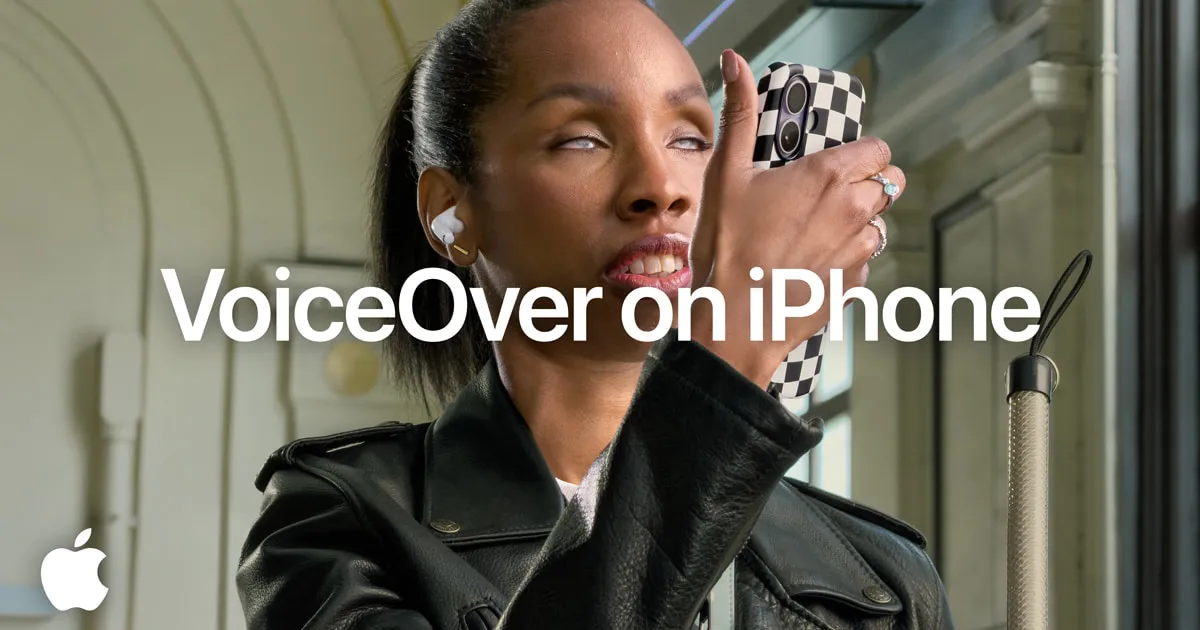
Apple on Tuesday outlined upcoming accessibility enhancements that incorporate Apple Intelligence to expand everyday tools such as VoiceOver, Magnifier, Voice Control and Accessibility Reader. The company also disclosed on-device subtitle generation for videos lacking captions across its platforms, along with an eye-tracking option that lets Apple Vision Pro users operate certain power wheelchairs. All the new functions and Intelligence-driven refinements are scheduled to arrive later this year.

VoiceOver and Magnifier Gain Deeper Insight
For people who are blind or have low vision, the Image Explorer feature within VoiceOver will reportedly supply richer, system-wide explanations of photos, scanned documents, personal paperwork and additional visuals. Live Recognition updates allow iPhone owners to tap the Action button for immediate spoken queries about the camera’s live view, with support for natural follow-up questions. Magnifier receives a comparable high-contrast mode that delivers the same descriptive assistance, pairs with the Action button for quick inquiries, and accepts spoken commands such as “zoom in” or “turn on flashlight.”

Voice Control Adopts Conversational Commands
Voice Control is set to interpret everyday phrasing so users with physical disabilities can direct iPhone and iPad without memorizing exact terminology. The flexible input reportedly lets people refer to on-screen items conversationally—for instance, saying “tap the guide about best restaurants” inside Apple Maps or “tap the purple folder” in Files—helping overcome labeling shortcomings.

Accessibility Reader Handles Complex Documents
The reading mode, aimed at users with dyslexia, low vision and other conditions, will process scientific papers featuring multiple columns, embedded images and tables. On-demand summaries give an overview before deeper reading, while built-in translation reportedly preserves chosen fonts, colors and layout when converting text to a preferred language.

Automatic Subtitles Arrive Across Devices
Generated subtitles will transcribe spoken audio in personal clips, shared videos and online streams that lack existing captions. Powered by on-device speech recognition, the text appears automatically on iPhone, iPad, Mac, Apple TV and Apple Vision Pro, with styling options available in playback menus or Settings.
From The CircuitryThe Feed — live briefs across tech, all day.See what’s happening →

Vision Pro Adds Eye-Driven Wheelchair Control
Targeting users who cannot operate a joystick, the new feature leverages Vision Pro’s eye-tracking to interface with compatible alternative drive systems. It launches with Tolt and LUCI solutions in the United States, supporting both Bluetooth and wired connections; Apple plans further developer partnerships to broaden compatibility.

“Apple’s approach to accessibility is unlike any other,” said Tim Cook, Apple’s CEO. “Now, with Apple Intelligence, we are bringing powerful new capabilities into our accessibility features while maintaining our foundational commitment to privacy by design.”

“The accessibility features our users rely on every day become even more powerful with Apple Intelligence,” said Sarah Herrlinger, Apple’s senior director of Global Accessibility Policy and Initiatives. “With these updates, we’re bringing new, intuitive options for input, exploration, and personalization — designed to protect users’ privacy at every step.”

Starting immediately, the Hikawa Grip & Stand for iPhone—an adaptive MagSafe accessory created with input from people facing grip, strength or mobility challenges—is offered in three new colors via the Apple Store online.
“The option to control my power wheelchair on my own is gold to me,” said Pat Dolan, founder of GeoALS and a member of Team Gleason’s patient advisory board, who has lived with ALS for 10 years. “With this new feature, Apple is developing life-enhancing technology for the people who need it most.”
Why this mattersAI · ~100 words

Tap a lens to see what this story means for you.

Reader-supported
DonateBuy me a coffee →Follow@thecircuitry_ →Follow@thecircuitry.to →

Reader-supported · The Brief

Liked this? The Brief brings you the whole day in tech, verified, every morning. Two minutes, free forever.

HELP US IMPROVE
From The Circuitry

See what’s happening right now

The Feed runs all day — short, verified briefs the moment they break.

Open the Feed →
From The Circuitry

Follow @thecircuitry_

Every story we publish, as it happens. No noise between.

Follow on X ↗On Bluesky ↗

Reader-supported

The Circuitry is a passion project I've always wanted to build, and I love the work behind it.

Running it costs real money. APIs, hosting, time. To keep improving the site and growing this into something useful for everyone, those costs have to be covered.

Any contribution is appreciated. If not, no pressure. Thanks for reading.

Buy me a coffee
AppleAccessibilityAppleIntelligence
More fromApple Newsroom
  • Apple earns record 89 Emmy nominations

    Tech · 1mo
  • Apple revises iOS rules in Brazil after regulator pact

    Tech · 1mo
  • App Store Ecosystem Reaches $1.4 Trillion in 2025

    Tech · 2mo
More inTech
  • Tesla and SpaceX confirm Terafab chip fab in Texas

    Tech · 1d
  • OpenAI Urges Federal Judge to Throw Out Apple's Trade Secrets Complaint

    Tech · 2d
  • Meta introduces Muse Code, its terminal-based coding agent

    Tech · 2d
SupportThe Work

The Circuitry is reader-supported. If you find the daily brief useful, you can buy me a coffee to keep it going.

Buy a coffee →
SubscribeCircuitry Brief

Liked this? The Brief brings you the whole day in tech, verified, every morning. Free forever.

MORE IN TECH

Tesla and SpaceX confirm Terafab chip fab in Texas

Tesla and SpaceX have confirmed Grimes County, Texas as the site for their Terafab semiconductor megafactory, with the first phase costing roughly $16.8 billion. The project targets the largest chip manufacturing facility on the planet to supply over 1 terawatt of compute per year that exceeds current and future global production capacity.

OpenAI Urges Federal Judge to Throw Out Apple's Trade Secrets Complaint

OpenAI has filed a motion asking a federal judge to dismiss Apple's trade secrets lawsuit, describing the claims as meritless. The dispute, which follows a July suit and this week's injunction request from Apple, highlights tensions after their prior partnership on Siri and OpenAI's hardware push.

Meta introduces Muse Code, its terminal-based coding agent

Meta has released an early beta of Muse Code, a terminal-based coding agent driven by the updated Muse Spark 1.2 model and positioned against Anthropic's Claude Code and OpenAI's Codex. Substantially lower rates, including a contributor plan at $0.10 for every million tokens received, may encourage migration away from higher-priced options such as Anthropic's Sonnet 5.