The Circuitry
THE CIRCUITRYYour one-stop source for all tech news
HOMETODAYNEWSFEEDEVENTS
BOOKMARKS
RSS
© 2026 The Circuitry
About UsSourcesContactCorrectionsPrivacy
  • Today
  • Feed
  • Events
  • Saved
Scroll for more
Verification
VERIFIEDConfidence: HIGH
Source identified
Claims cross-referenced
No discrepancies found
Fact-check summary

Multiple sources including Reddit, Spaceflight Now, Instagram, and Wikipedia confirm Blue Origin's New Glenn exploded during a static fire test for NG-4 at LC-36 on May 28/29, 2026, captured on NASASpaceflight feeds.

Sourcing
1source

via Ars Technica

Ars Technica · track record
30Stories
100%Verified
130d
All sources →
From The CircuitryWhy The Circuitry

Verified tech news, cross-checked.

Every story is checked against independent sources before it posts — no rumors dressed up as fact.

How we verify →
Home/Tech/Blue Origin's New Glenn Explodes During Static Fire Test
VERIFIEDBy Xavier Rivera· ·3.5 min read

Blue Origin's New Glenn Explodes During Static Fire Test

Blue Origin's New Glenn rocket exploded during a static fire test at LC-36A on Thursday evening, producing a massive fireball and marking the company's worst disaster. The failure, which originated in the first stage, will delay launches and affect NASA's 2028 lunar rover deliveries plus broader Moon base plans.
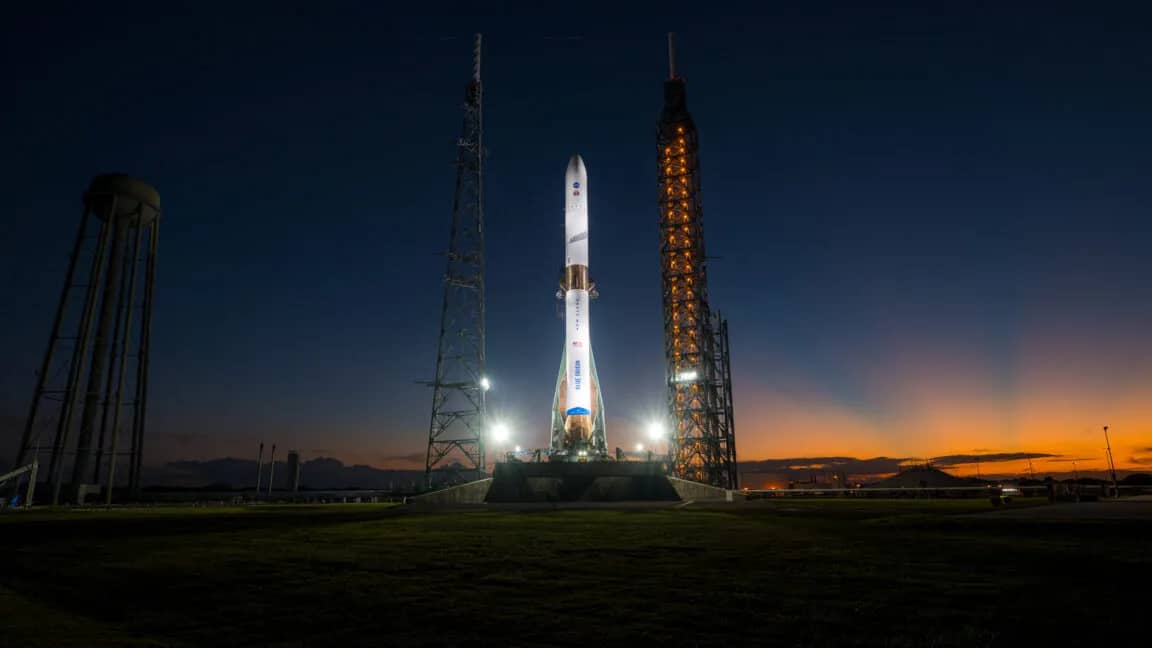
Source:Ars Technica
Post
Blue Origin's New Glenn Explodes During Static Fire Test
From The CircuitryWhy The Circuitry

Verified tech news, cross-checked.

Every story is checked against independent sources before it posts — no rumors dressed up as fact.

How we verify →
TL;DRAI · 60 sec read

Blue Origin's New Glenn rocket exploded during a static fire test Thursday evening at its Florida launch site. The first stage failure created a massive fireball. No one was injured but the pad suffered extensive damage. The incident delays NASA lunar rover deliveries planned for 2028 and disrupts Blue Origin's recent progress toward monthly launches.

A spectacular explosion rocked Cape Canaveral on Thursday evening when Blue Origin's New Glenn rocket erupted during a static fire test at LC-36A. The methane-fueled first stage generated an enormous fireball above the coastal site shortly after engine ignition.

Disastrous test caught on camera

NASASpaceflight.com recorded the event on its Space Coast Live feed, showing the booster's destruction in a dramatic conflagration. The incident ranks among the most powerful rocket failures since the Soviet N1 rocket exploded during a 1969 launch attempt. The test had targeted preparations for the NG-4 mission.

Uncertainty over root cause

No clear explanation emerged immediately for the malfunction that struck early in the static fire sequence. The problem reportedly began in the engine section of the first stage, which relies on seven BE-4 engines.
By all accounts, the rocket was viewed as a major success for a company which, for so long, had seemed to plod along.

"It’s too early to know the root cause but we’re already working to find it," Blue Origin founder Jeff Bezos said on X. "Very rough day, but we’ll rebuild whatever needs rebuilding and get back to flying. It’s worth it."
POST FROM @JeffBezos· official statement from Blue Origin founder/CEO referenced in the article
https://x.com/JeffBezos/status/2060182822170902622

Sources indicated the blast inflicted extensive damage across the company's elaborate launch infrastructure, though no injuries occurred. A comparable 2016 Falcon 9 pad failure required SpaceX more than a year to restore its Space Launch Complex-40.

Worst setback for company founded in 2000

This marks the most severe incident in Blue Origin's history. The firm had flown New Glenn three times previously, with the first stage operating successfully on each occasion. The booster had also shown it could land and return to flight, achieving its first reuse in April.
From The CircuitryThe Feed — live briefs across tech, all day.See what’s happening →
An upper stage anomaly doomed the third mission, which carried the Blue Bird 7 satellite. Blue Origin recovered quickly from that issue, returning to the pad in under two months. The first stage slated for this test, nicknamed "No, It’s Necessary," was flying for the first time.

Before the attempt the company held two completed first stages and roughly six upper stages in stock, positioning itself for a monthly launch tempo. New Glenn had elevated Blue Origin into the top tier of global spaceflight firms after years of slower progress, rendering the current reversal especially difficult.

Significant consequences for NASA's lunar plans

The explosion carries broad ramifications for NASA's drive to place humans back on the Moon by decade's end and build a surface base. On Tuesday the agency named New Glenn to deliver the initial two rovers—developed by Lunar Outpost and Astrolab—to the lunar surface in 2028. Blue Origin created the Blue Moon Mark 1 cargo lander to ride atop New Glenn; that vehicle had been scheduled for its debut lunar flight this fall and a follow-on VIPER rover delivery for NASA the next year.
That Blue Origin was on the precipice of accelerating further makes this setback all the more painful.

A more capable Blue Moon Mark 2 lander will require an upgraded New Glenn variant featuring nine first-stage engines, designated 9×4. NASA expects both the Mark 2 and SpaceX's Starship to support routine crewed lunar landings.

Early assessments suggest severe harm to LC-36A infrastructure, including a lightning tower that may be unsalvageable and a transporter-erector possibly damaged beyond repair. Construction has only just begun on a nearby second pad at LC-36B. New Glenn almost certainly will not fly again in 2026, and even a first-half 2027 launch would count as an impressive achievement amid the recovery challenges.

Bezos has invested tens of billions of dollars into Blue Origin since establishing it a quarter-century ago from his Amazon fortune, giving the firm the resources to endure this blow and hasten repairs. The exploded booster carried no payload; its Amazon Leo internet satellites remained secure in a nearby processing facility.
From The CircuitryWhy The Circuitry

Verified tech news, cross-checked.

Every story is checked against independent sources before it posts — no rumors dressed up as fact.

How we verify →
The incident underscores ongoing technical risks even for vehicles that had compiled a strong early record.
Why this mattersAI · ~100 words

Tap a lens to see what this story means for you.

Morning Brief

Liked this? The Brief brings you the whole day in tech, verified, every morning.

Two minutes, free forever. What's in The Brief →

Reader-supported
DonateBuy me a coffee →Follow@thecircuitry_ →Follow@thecircuitry.to →
HELP US IMPROVE
From The Circuitry

See what’s happening right now

The Feed runs all day — short, verified briefs the moment they break.

Open the Feed →
From The Circuitry

Follow @thecircuitry_

Every story we publish, as it happens. No noise between.

Follow on X ↗On Bluesky ↗

Reader-supported

The Circuitry is a passion project I've always wanted to build, and I love the work behind it.

Running it costs real money. APIs, hosting, time. To keep improving the site and growing this into something useful for everyone, those costs have to be covered.

Any contribution is appreciated. If not, no pressure. Thanks for reading.

Buy me a coffee
Blue OriginNew GlennSpace Launch
More fromArs Technica
  • Vendors object to Spirit Airlines selling operational data to Google in bankruptcy

    Tech · 28d
  • Twitch adds opt-out for Amazon’s generative AI training on user content

    Tech · 1mo
  • Aptoide becomes first rival app store hosted in Google Play

    Tech · 1mo
More inTech
  • Critical CVE-2026-77900 Hits Microsoft Azure App Service for Linux

    Tech · 12h
  • Critical CVE-2026-88131 hits Microsoft Dataverse with remote code execution

    Tech · 12h
  • Critical CVE-2026-16823 hits IBM Security Verify Access

    Tech · 14h
SupportThe Work

The Circuitry is reader-supported. If you find the daily brief useful, you can buy me a coffee to keep it going.

Buy a coffee →
From The CircuitryWhy The Circuitry

Verified tech news, cross-checked.

Every story is checked against independent sources before it posts — no rumors dressed up as fact.

How we verify →

MORE IN THIS BEAT

All Tech →
  • Tech· 

    Blue Origin reportedly raising up to $10B in first private capital round

    Blue Origin is reportedly raising up to $10 billion in its first private capital round at a $130 billion valuation, with Coatue Management reported to lead participation from institutional investors and Jeff Bezos. The move ends the company's near-total reliance on Bezos' personal funding as it races to scale ambitious launch, lunar, and satellite constellation projects against SpaceX.

  • Tech· 

    NASA Awards Blue Origin Contract to Deliver Lunar Rovers

    NASA awarded Blue Origin an initial $188 million contract to deliver lunar rovers to the moon's south pole using its Blue Moon lander as part of the Moon Base program. The initiative leverages commercial partners including Astrolab, Lunar Outpost and Firefly Aerospace to establish a permanent human presence ahead of the 2028 Artemis 4 mission.

  • Tech· 

    GlobalFoundries signs $2B TSMC deal for US silicon interposers

    GlobalFoundries signed a multi-year US$2 billion agreement with TSMC on October 8, 2026 to manufacture silicon interposers at its Malta, New York fab. The deal creates the first US-based source of silicon interposers for TSMC's CoWoS advanced packaging ecosystem.

  • Tech· 

    SpaceX agrees to buy 800 MHz spectrum for Starlink Mobile

    SpaceX has agreed to acquire Grain Management's nationwide 800 MHz spectrum portfolio, which it says will pave the way for Starlink Mobile to become a major US mobile carrier. The deal needs FCC approval, and financial terms were not disclosed.

  • Tech· 

    Microsoft discloses CVE-2026-83947 in Azure Event Grid

    Microsoft has disclosed CVE-2026-83947, a CVSS 7.7 HIGH spoofing vulnerability in Azure Event Grid caused by missing authorization. Microsoft says it has already fully mitigated the cloud-service flaw and customers have nothing to do.