The Circuitry
THE CIRCUITRYYour one-stop source for all tech news
HOMETODAYNEWSFEEDEVENTS
BOOKMARKS
RSS
© 2026 The Circuitry
About UsSourcesContactCorrectionsPrivacy
  • Today
  • Feed
  • Events
  • Saved
Scroll for more
Verification
VERIFIEDConfidence: HIGH
Source identified
Claims cross-referenced
No discrepancies found
Fact-check summary

ESMA's July 3 statement on event contracts falling under binary-options bans is corroborated by its own press release plus coverage from Cointelegraph and other outlets.

Sourcing
1source

via CoinDesk

CoinDesk · track record
37Stories
100%Verified
130d
All sources →
Home/Markets/ESMA Targets Binary Event Contracts in EU Prediction Market Surge
VERIFIEDBy Xavier Rivera· ·2 min read

ESMA Targets Binary Event Contracts in EU Prediction Market Surge

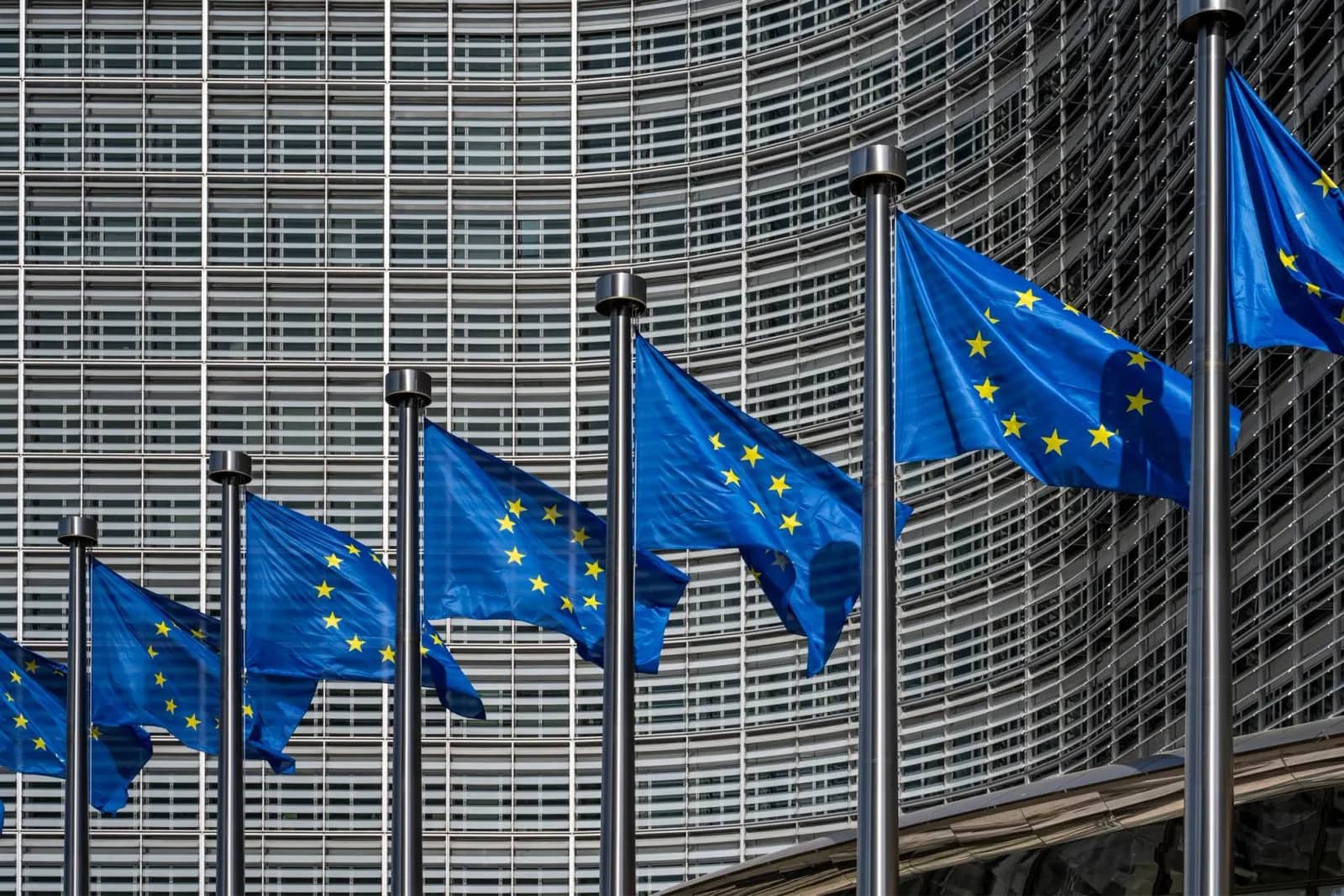
ESMA has warned that binary prediction-market event contracts functioning as financial instruments are prohibited for retail clients under the EU’s binary options ban. The move comes as platforms such as Kalshi and Polymarket expand rapidly and attract traditional-finance interest.
Source:CoinDesk
Post
ESMA Targets Binary Event Contracts in EU Prediction Market Surge
TL;DRAI · 60 sec read

ESMA classifies many yes-or-no event contracts on prediction platforms as banned binary options under EU rules when they behave like derivatives. Product mechanics, not branding, determine status. Providers must secure MiFID II authorization to offer or distribute them. The warning arrives as Kalshi and Polymarket expand quickly amid rising investor interest.

European regulators have signaled that certain yes-or-no prediction contracts could run afoul of the bloc’s prohibition on binary options when they operate as derivatives for ordinary investors.

ESMA classifies qualifying event contracts as banned binary options. The authority stressed that a product’s real behavior as a derivative counts far more than its marketed title or branding during any compliance review. Contracts promising a fixed sum or zero based solely on an upcoming event’s result cannot be offered, promoted or distributed to retail customers if they satisfy the legal test for financial instruments.
The authority stressed that a product’s real behavior as a derivative counts far more than its marketed title or branding during any compliance review.

Officials made plain that calling something an “event contract” carries no automatic protection. Once the underlying reference sits inside MiFID II’s derivative classes, the arrangement becomes a regulated financial instrument subject to existing national curbs on binary options.

Firms must obtain MiFID II authorization for related investment services. Providers furnishing investment services tied to these arrangements inside the EU require formal MiFID II licensing regardless of whether clients are restricted to professionals. The same rules apply even when the platform itself does not target ordinary retail users.
From The CircuitryThe Feed — live briefs across tech, all day.See what’s happening →

National gambling statutes or the bloc’s Markets in Crypto-Assets regime could also apply, particularly if the contracts are tokenized and fall outside financial-instrument definitions. According to ESMA, any coupon, reward or interest-style yield paid on deposited funds leaves the binary character unchanged.
Officials made plain that calling something an “event contract” carries no automatic protection.

Warning arrives amid rapid growth in prediction markets. The alert lands while prediction platforms spread through both crypto-native and legacy-finance circles; Kalshi reached a $22 billion valuation in its most recent capital raise, and Jump Trading has acquired minority positions in Kalshi and Polymarket to supply liquidity. Industry observers have floated both venues as possible acquisition targets as the boundary between exchanges, brokerages and sportsbooks continues to fade.
Companies are expected to judge each contract’s regulatory status according to its concrete mechanics rather than its commercial description. The European Securities and Markets Authority’s statement underscores that product-intervention rules activate the moment an arrangement behaves like a derivative.
Why this mattersAI · ~100 words

Tap a lens to see what this story means for you.

Reader-supported
DonateBuy me a coffee →Follow@thecircuitry_ →Follow@thecircuitry.to →

Reader-supported · The Brief

Liked this? The Brief brings you the whole day in tech, verified, every morning. Two minutes, free forever.

HELP US IMPROVE
From The Circuitry

See what’s happening right now

The Feed runs all day — short, verified briefs the moment they break.

Open the Feed →
From The Circuitry

Follow @thecircuitry_

Every story we publish, as it happens. No noise between.

Follow on X ↗On Bluesky ↗

Reader-supported

The Circuitry is a passion project I've always wanted to build, and I love the work behind it.

Running it costs real money. APIs, hosting, time. To keep improving the site and growing this into something useful for everyone, those costs have to be covered.

Any contribution is appreciated. If not, no pressure. Thanks for reading.

Buy me a coffee
RegulationPrediction MarketsESMA
More fromCoinDesk
  • DTCC Processes First Live Trades of Tokenized Securities

    Markets · 23d
  • Sony Bank Gains Preliminary OCC Approval for New York Stablecoin Trust

    Markets · 1mo
  • Analysts Initiate Bullish Coverage on SpaceX After Quiet Period

    Markets · 1mo
More inMarkets
  • Visa Agrees to Buy BioCatch for $2.4 Billion

    Markets · 5d
  • Visa to cut 7% of workforce, about 2,600 jobs

    Markets · 11d
  • CXMT jumps 466% in Shanghai debut to eclipse all other China-listed firms

    Markets · 12d
SupportThe Work

The Circuitry is reader-supported. If you find the daily brief useful, you can buy me a coffee to keep it going.

Buy a coffee →
SubscribeCircuitry Brief

Liked this? The Brief brings you the whole day in tech, verified, every morning. Free forever.

MORE IN MARKETS

Visa Agrees to Buy BioCatch for $2.4 Billion

Visa announced it will acquire Israeli fraud-detection startup BioCatch for $2.4 billion in cash from Permira and other investors. The purchase centers on behavioral biometrics technology and expands the payments company’s fast-growing value-added services business as global fraud losses surpass $1 trillion a year.

Visa to cut 7% of workforce, about 2,600 jobs

Visa plans to cut about 2,600 jobs, representing roughly 7% of its workforce, with AI cited as a significant but not sole factor. The company will redirect savings into growth areas such as affluent customers, cross-border activity and geographic expansion as it reports quarterly earnings the same day.

CXMT jumps 466% in Shanghai debut to eclipse all other China-listed firms

CXMT shares jumped nearly 466% in their Shanghai debut, closing at 49 yuan to reach a 3.3 trillion yuan market cap that exceeds every other China-listed firm. The $8.6 billion IPO haul will support memory wafer manufacturing while the firm commands 7.67% of the worldwide DRAM sector and stands to benefit from Beijing's semiconductor self-reliance campaign.