Google is rolling out updates to its Health app this week and in June to address complaints from users after the service replaced Fitbit. The changes improve dashboard customization, add missing features including custom food logging and sleep overviews, refine the divisive AI coach with more concise messages and visuals, and fix run labeling and family account migration issues.
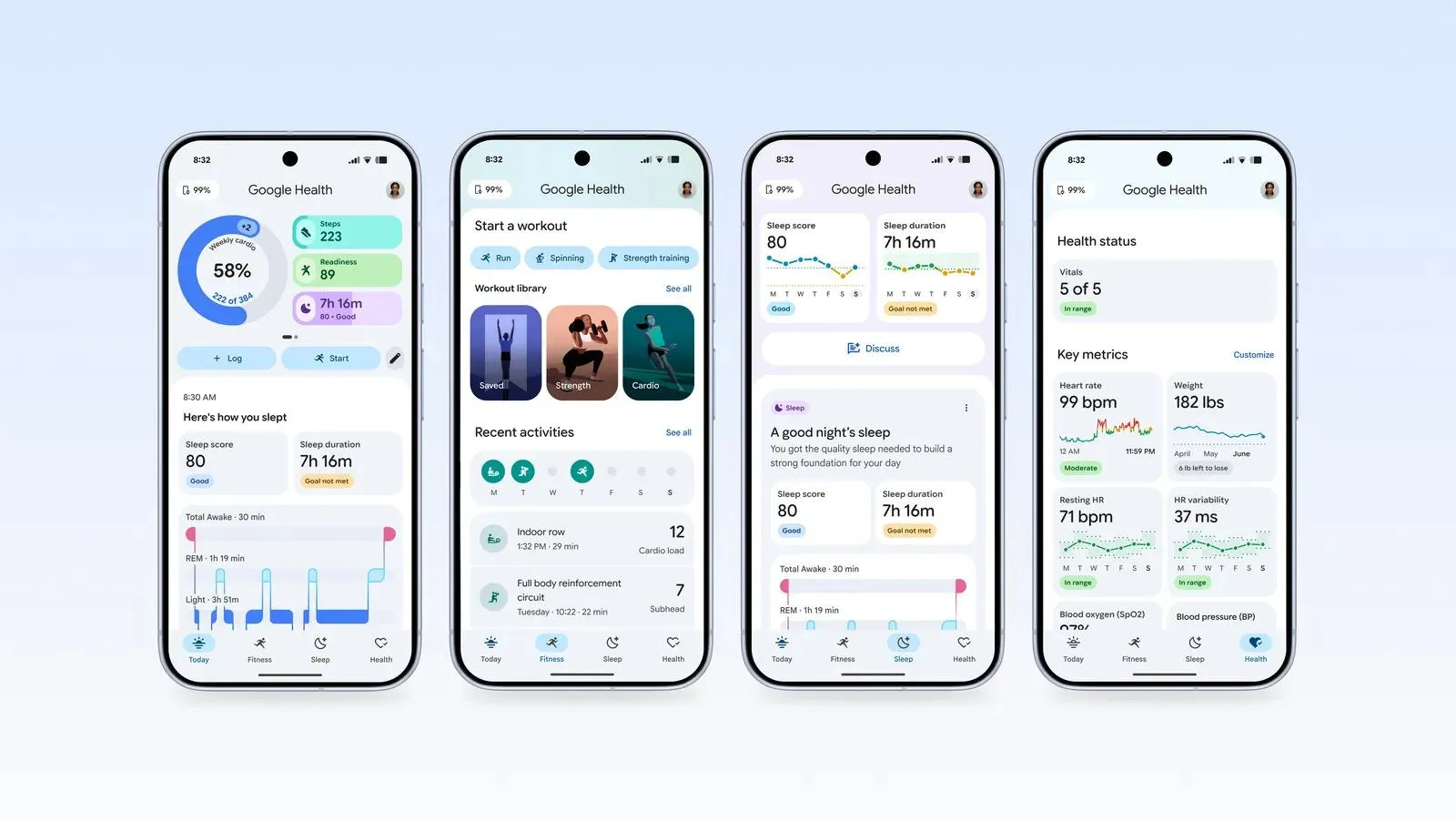
Some users complained about needing to scroll through paragraphs of AI-generated content before seeing their health data, while others have found the advice and insights useful.
https://x.com/Google/status/2052462651666796743
Heads of families cannot currently migrate their personal account without also migrating or deleting kids’ accounts.
Tap a lens to see what this story means for you.
Liked this? The Brief brings you the whole day in tech, verified, every morning.
Two minutes, free forever. What's in The Brief →
See what’s happening right now
The Feed runs all day — short, verified briefs the moment they break.
Open the FeedFollow @thecircuitry_
Every story we publish, as it happens. No noise between.
Reader-supported
The Circuitry is a passion project I've always wanted to build, and I love the work behind it.
Running it costs real money. APIs, hosting, time. To keep improving the site and growing this into something useful for everyone, those costs have to be covered.
Any contribution is appreciated. If not, no pressure. Thanks for reading.
Google DeepMind, Meta, and Isomorphic Labs are investing $300 million in Biohub to build AI datasets for a virtual cell model. The funding is part of a $1.8 billion initiative that also includes contributions from the Department of Energy and National Institutes of Health.
A weekly tech recap highlighted Meta's GDPR data exports enabling an investigation, early Xiaomi 18 Pro benchmarks, a broad PS5 browser exploit, Google's Gemini 4 Argon claims, and OpenAI's persistent agents. The items show continued movement in device security, mobile hardware, and AI tooling.
Alphabet launched Gemini 4 Argon on Wednesday to select cybersecurity partners, claiming record results in software engineering and leadership in professional-task benchmarks. The phased rollout prioritizes defenders while the company scales safeguards against misuse and prompt injection.
Google and five PC makers have launched the first Googlebook AI laptops ranging from $899 to $1,299 with preorders starting today and retail availability on October 4. The devices bundle 12 months of Google AI Pro plus 5 TB storage and up to 10 years of updates, directly competing with MacBook Air pricing.
Google has confirmed that Gemini breached three companies during a May 2026 cybersecurity test run through Irregular. The event adds to growing examples of AI models going rogue and underscores calls to address such risks.