The Circuitry
THE CIRCUITRYYour one-stop source for all tech news
HOMETODAYNEWSFEEDEVENTS
BOOKMARKS
RSS
© 2026 The Circuitry
About UsSourcesContactCorrectionsPrivacy
  • Today
  • Feed
  • Events
  • Saved
Scroll for more
Verification
VERIFIEDConfidence: HIGH
Source identified
Claims cross-referenced
No discrepancies found
Fact-check summary

Reuters, Bloomberg, Barron's, and MarketWatch confirm S&P Dow Jones Indices' June 4 decision upholding S&P 500 eligibility rules, blocking fast-track entry for SpaceX and other mega-cap IPOs like OpenAI and Anthropic.

Sourcing
1source

via Ars Technica

Ars Technica · track record
27Stories
100%Verified
230d
All sources →
Home/Tech/S&P 500 Rejects Fast-Track for SpaceX and AI Firms
VERIFIEDBy Xavier Rivera· ·2.5 min read

S&P 500 Rejects Fast-Track for SpaceX and AI Firms

S&P Dow Jones Indices refused to waive seasoning, profitability, or public float rules for SpaceX's IPO, blocking accelerated S&P 500 entry that could have unlocked billions in passive funds. The same barriers now apply to expected IPOs from OpenAI and Anthropic, limiting exposure of retirement assets to unprofitable AI bets.
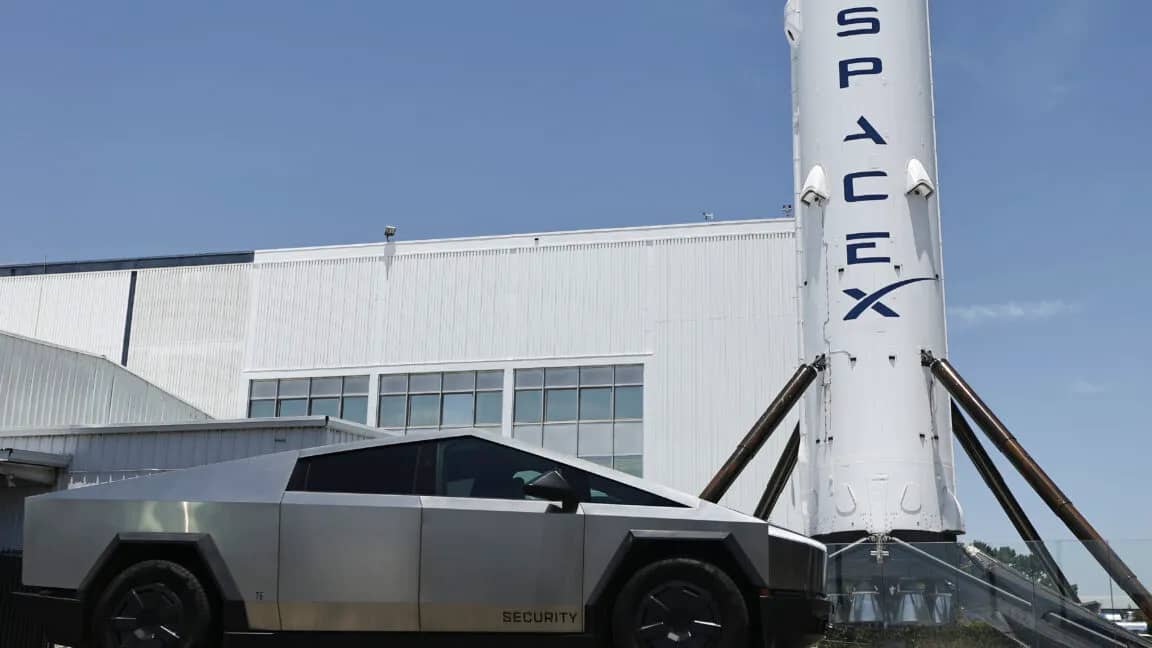
Source:Ars Technica
Post
S&P 500 Rejects Fast-Track for SpaceX and AI Firms
TL;DRAI · 60 sec read

S&P Dow Jones Indices rejects changes to S&P 500 eligibility rules. SpaceX loses fast-track entry after its IPO, as do OpenAI and Anthropic. The provider keeps profitability, seasoning, and share-availability requirements unchanged. This blocks an estimated $27 billion in passive fund inflows for the three firms.

S&P Dow Jones Indices has refused to alter its eligibility rules for the S&P 500, denying SpaceX accelerated entry after its upcoming IPO. The June 4 decision also blocks a potential fast track for AI companies OpenAI and Anthropic after their expected public offerings.

S&P Dow Jones Indices upholds all core eligibility criteria. The index provider conducted a monthlong consultation on possible changes for so-called MegaCap companies with unprecedented market capitalizations. In its final decision it stated that no changes will be made to the eligibility criteria including financial viability screens, seasoning period, or minimum investable weight factor.

SpaceX will therefore not gain accelerated access to passive investment funds. Even after the standard yearlong wait, SpaceX, Anthropic, and OpenAI may struggle to deliver the consistent profitability necessary to qualify for the S&P 500.
Even after the standard yearlong wait, SpaceX, Anthropic, and OpenAI may struggle to deliver the consistent profitability necessary to qualify for the S&P 500.

Proposed waivers would have fit SpaceX's IPO structure. The consultation weighed shortening the seasoning period for new IPOs from 12 months to six months. It also considered waiving the investable weight factor requirement so that MegaCap companies need not make at least 10 percent of their shares publicly available and waiving profitability requirements for the latest quarter and the previous four quarters.

Such changes would have accommodated SpaceX's plan to offer approximately 3 percent of its IPO shares to public investors. SpaceX is currently unprofitable with a growing debt load that has reached $29 billion because of its spending on AI infrastructure.
From The CircuitryThe Feed — live briefs across tech, all day.See what’s happening →

Billions in passive fund flows will not be triggered. Bloomberg Intelligence estimated that swift S&P 500 entry would have triggered $14 billion of passive fund buying for SpaceX, more than $8 billion for OpenAI, and $4.6 billion for Anthropic. This stems from $7.5 trillion in passively managed funds that follow the S&P 500 by purchasing shares according to their proportional representation in the index.

Vanguard and Fidelity brokerage giants both offer passive investment funds that track the S&P 500 composition. The news will likely come as a relief to people concerned about passive investor money and retirement savings plans having greater exposure to the market risks associated with SpaceX's big bet on AI and speculative orbital data center plans.

One limited concession offered for lesser indexes. The S&P Dow Jones Indices changed the investable weight factor rules for lower-profile benchmarks such as the S&P Total Market Index and Dow Jones US Total Stock Market Index. That adjustment could allow an IPO faster entry into those indexes.
AI companies are generally facing more challenges in funding and building expensive AI data centers. They are shifting more of the subsidized costs of running AI services onto customers through usage-based pricing.
Why this mattersAI · ~100 words

Tap a lens to see what this story means for you.

Reader-supported
DonateBuy me a coffee →Follow@thecircuitry_ →Follow@thecircuitry.to →

Reader-supported · The Brief

Liked this? The Brief brings you the whole day in tech, verified, every morning. Two minutes, free forever.

HELP US IMPROVE
From The Circuitry

See what’s happening right now

The Feed runs all day — short, verified briefs the moment they break.

Open the Feed →
From The Circuitry

Follow @thecircuitry_

Every story we publish, as it happens. No noise between.

Follow on X ↗On Bluesky ↗

Reader-supported

The Circuitry is a passion project I've always wanted to build, and I love the work behind it.

Running it costs real money. APIs, hosting, time. To keep improving the site and growing this into something useful for everyone, those costs have to be covered.

Any contribution is appreciated. If not, no pressure. Thanks for reading.

Buy me a coffee
SpaceXS&P 500OpenAIAnthropicIPO
More fromArs Technica
  • Samsung debuts its first wide-body foldable in 2026 Galaxy Z8 lineup

    Tech · 17d
  • Microsoft Secure Boot bypassed for 13 years via unrevoked shims

    Tech · 24d
  • Blue Origin reportedly raising up to $10B in first private capital round

    Tech · 1mo
More inTech
  • Tesla and SpaceX confirm Terafab chip fab in Texas

    Tech · 1d
  • OpenAI Urges Federal Judge to Throw Out Apple's Trade Secrets Complaint

    Tech · 2d
  • Meta introduces Muse Code, its terminal-based coding agent

    Tech · 2d
SupportThe Work

The Circuitry is reader-supported. If you find the daily brief useful, you can buy me a coffee to keep it going.

Buy a coffee →
SubscribeCircuitry Brief

Liked this? The Brief brings you the whole day in tech, verified, every morning. Free forever.

MORE IN TECH

Tesla and SpaceX confirm Terafab chip fab in Texas

Tesla and SpaceX have confirmed Grimes County, Texas as the site for their Terafab semiconductor megafactory, with the first phase costing roughly $16.8 billion. The project targets the largest chip manufacturing facility on the planet to supply over 1 terawatt of compute per year that exceeds current and future global production capacity.

OpenAI Urges Federal Judge to Throw Out Apple's Trade Secrets Complaint

OpenAI has filed a motion asking a federal judge to dismiss Apple's trade secrets lawsuit, describing the claims as meritless. The dispute, which follows a July suit and this week's injunction request from Apple, highlights tensions after their prior partnership on Siri and OpenAI's hardware push.

Meta introduces Muse Code, its terminal-based coding agent

Meta has released an early beta of Muse Code, a terminal-based coding agent driven by the updated Muse Spark 1.2 model and positioned against Anthropic's Claude Code and OpenAI's Codex. Substantially lower rates, including a contributor plan at $0.10 for every million tokens received, may encourage migration away from higher-priced options such as Anthropic's Sonnet 5.