The Circuitry
THE CIRCUITRYYour one-stop source for all tech news
HOMETODAYNEWSFEEDEVENTS
BOOKMARKS
RSS
© 2026 The Circuitry
About UsSourcesContactCorrectionsPrivacy
  • Today
  • Feed
  • Events
  • Saved
Scroll for more
Verification
VERIFIEDConfidence: HIGH
Source identified
Claims cross-referenced
No discrepancies found
Sourcing
1source

via Sawyer Merritt

Sawyer Merritt · track record
2Stories
100%Verified
130d
All sources →
Home/Tech/SpaceX Shares New Renderings of AI1 Orbital Compute Satellite
VERIFIEDBy Xavier Rivera· ·2 min read

SpaceX Shares New Renderings of AI1 Orbital Compute Satellite

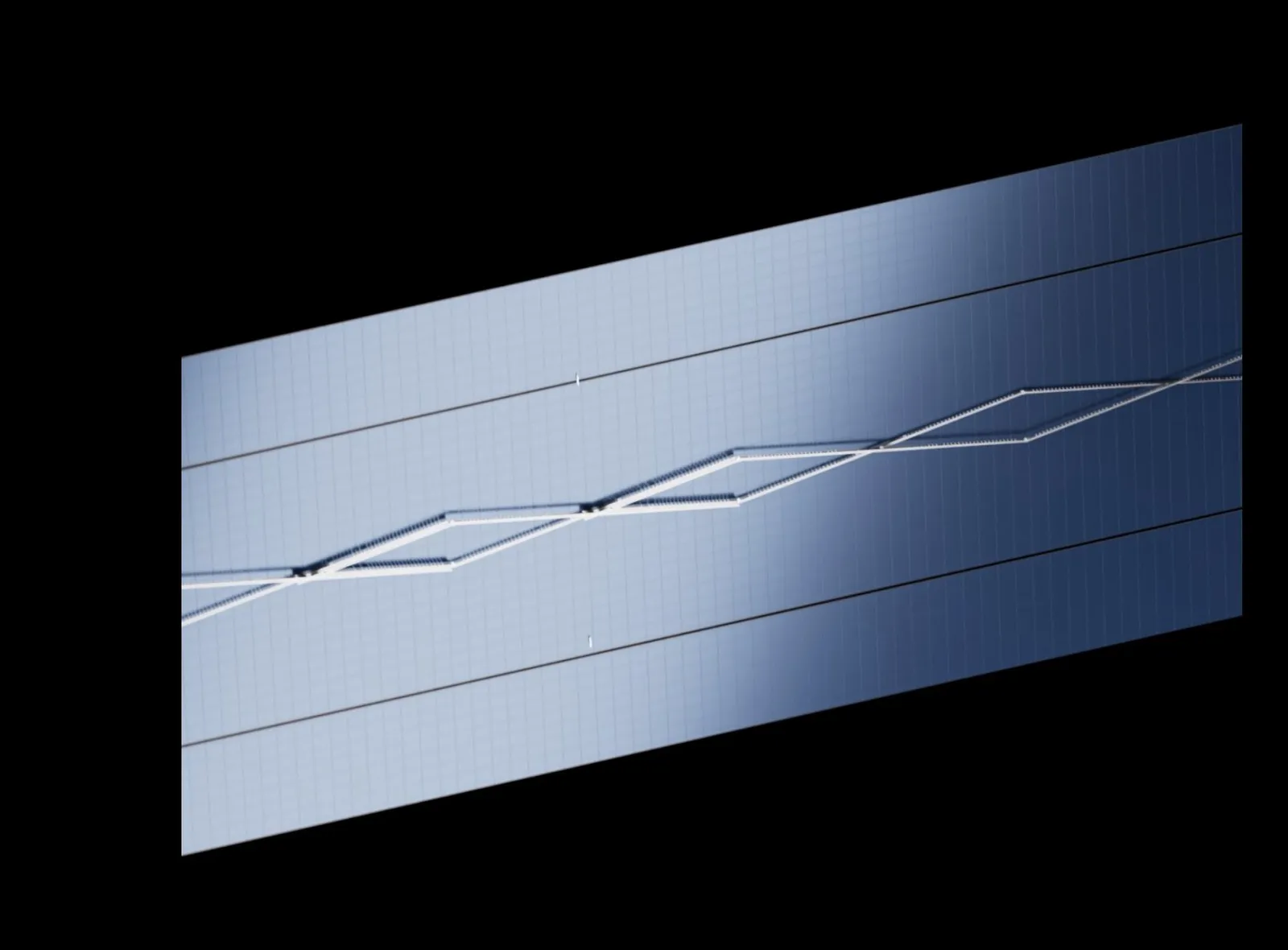
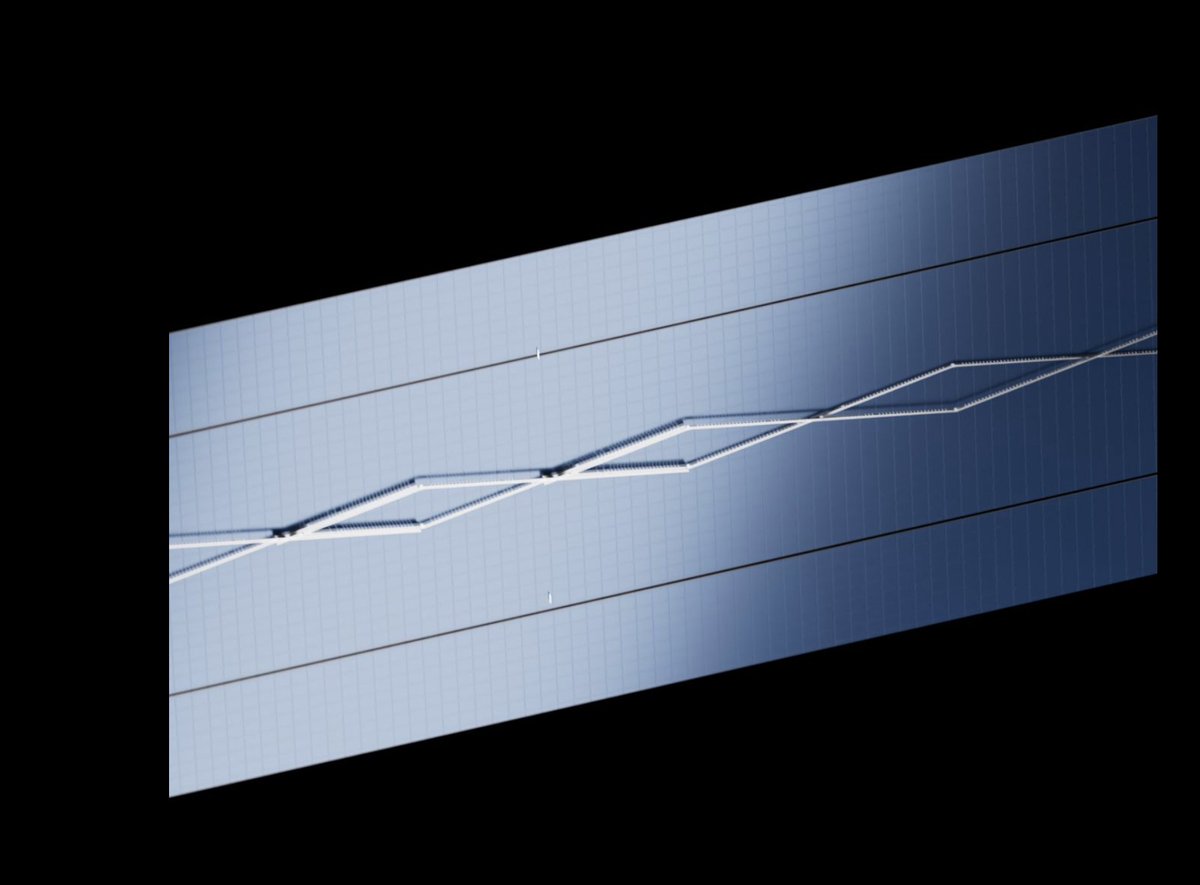
SpaceX has released new renderings of the AI1 satellite showing its 70-meter wingspan, 150 kW peak compute payload, and modular AI chip design. The orbital platform uses solar power, liquid cooling, and laser links to Starlink for space-based AI data centers.
Source:Sawyer Merritt
Post
SpaceX Shares New Renderings of AI1 Orbital Compute Satellite
SpaceX has released new renderings of its AI1 satellite, an orbital AI compute platform that features a 70-meter wingspan and supports up to 150 kW of peak compute power.
New rendering of SpaceX AI1 orbital compute satellite
New rendering of SpaceX AI1 orbital compute satellite · Sawyer Merritt
AI1 features vendor-agnostic architecture for compute modules. The system architecture supports compute modules from any provider. This flexibility allows SpaceX to integrate chips from multiple vendors without redesigning the core platform. The design builds on technology already developed for Starlink V3 satellites.

Power specifications target 150 kW peak and 120 kW average compute payload. The satellite delivers 150 kW peak compute payload and 120 kW average compute payload. A dedicated 150 kW solar array supplies the necessary power while the craft operates in sun-synchronous orbit at approximately 600 km altitude. Vehicle efficiency reaches 70 kW per ton.
New rendering of SpaceX AI1 orbital compute satellite
New rendering of SpaceX AI1 orbital compute satellite · Sawyer Merritt
Physical dimensions include massive solar arrays and radiators. The deployed wingspan measures 70 meters with a height of 20 meters. Large solar panels generate continuous power without atmospheric interference or weather disruptions. Liquid cooling panels and radiators manage heat dissipation for the high-power AI workloads in the vacuum of space.
From The CircuitryThe Feed — live briefs across tech, all day.See what’s happening →
Connectivity relies on high-bandwidth lasers to Starlink network. AI1 beams processed data back to Earth via laser links integrated with the existing Starlink constellation. This setup eliminates the need for traditional ground infrastructure for data return. The satellite functions as a localized compute node that leverages abundant solar power and natural cooling available in orbit.
https://x.com/SawyerMerritt/status/2075327054942232713
Design simplifies compared to Starlink satellites for scaled production. SpaceX describes the AI satellite as simpler in many respects than its Starlink counterparts despite the added compute capabilities. The company has unveiled the design alongside plans for manufacturing facilities including Gigasat and Terafab. The renderings illustrate a streamlined structure focused on solar cells, radiators, and laser communication arrays.
The AI1 represents the first generation of what SpaceX envisions as a network capable of supporting large-scale AI computation off the terrestrial power grid. Details emerged from a video presentation that included the latest visuals of the satellite in orbit. The platform takes advantage of constant sunlight in its orbital path to avoid Earth's energy and cooling limitations.
Why this mattersAI · ~100 words

Tap a lens to see what this story means for you.

Reader-supported
DonateBuy me a coffee →Follow@thecircuitry_ →Follow@thecircuitry.to →

Reader-supported · The Brief

Liked this? The Brief brings you the whole day in tech, verified, every morning. Two minutes, free forever.

HELP US IMPROVE
From The Circuitry

See what’s happening right now

The Feed runs all day — short, verified briefs the moment they break.

Open the Feed →
From The Circuitry

Follow @thecircuitry_

Every story we publish, as it happens. No noise between.

Follow on X ↗On Bluesky ↗

Reader-supported

The Circuitry is a passion project I've always wanted to build, and I love the work behind it.

Running it costs real money. APIs, hosting, time. To keep improving the site and growing this into something useful for everyone, those costs have to be covered.

Any contribution is appreciated. If not, no pressure. Thanks for reading.

Buy me a coffee
More fromSawyer Merritt
  • SpaceXAI Launches Grok 4.5 Publicly

    1mo
More inTech
  • Tesla and SpaceX confirm Terafab chip fab in Texas

    Tech · 1d
  • OpenAI Urges Federal Judge to Throw Out Apple's Trade Secrets Complaint

    Tech · 2d
  • Meta introduces Muse Code, its terminal-based coding agent

    Tech · 2d
SupportThe Work

The Circuitry is reader-supported. If you find the daily brief useful, you can buy me a coffee to keep it going.

Buy a coffee →
SubscribeCircuitry Brief

Liked this? The Brief brings you the whole day in tech, verified, every morning. Free forever.

MORE IN TECH

Tesla and SpaceX confirm Terafab chip fab in Texas

Tesla and SpaceX have confirmed Grimes County, Texas as the site for their Terafab semiconductor megafactory, with the first phase costing roughly $16.8 billion. The project targets the largest chip manufacturing facility on the planet to supply over 1 terawatt of compute per year that exceeds current and future global production capacity.

OpenAI Urges Federal Judge to Throw Out Apple's Trade Secrets Complaint

OpenAI has filed a motion asking a federal judge to dismiss Apple's trade secrets lawsuit, describing the claims as meritless. The dispute, which follows a July suit and this week's injunction request from Apple, highlights tensions after their prior partnership on Siri and OpenAI's hardware push.

Meta introduces Muse Code, its terminal-based coding agent

Meta has released an early beta of Muse Code, a terminal-based coding agent driven by the updated Muse Spark 1.2 model and positioned against Anthropic's Claude Code and OpenAI's Codex. Substantially lower rates, including a contributor plan at $0.10 for every million tokens received, may encourage migration away from higher-priced options such as Anthropic's Sonnet 5.