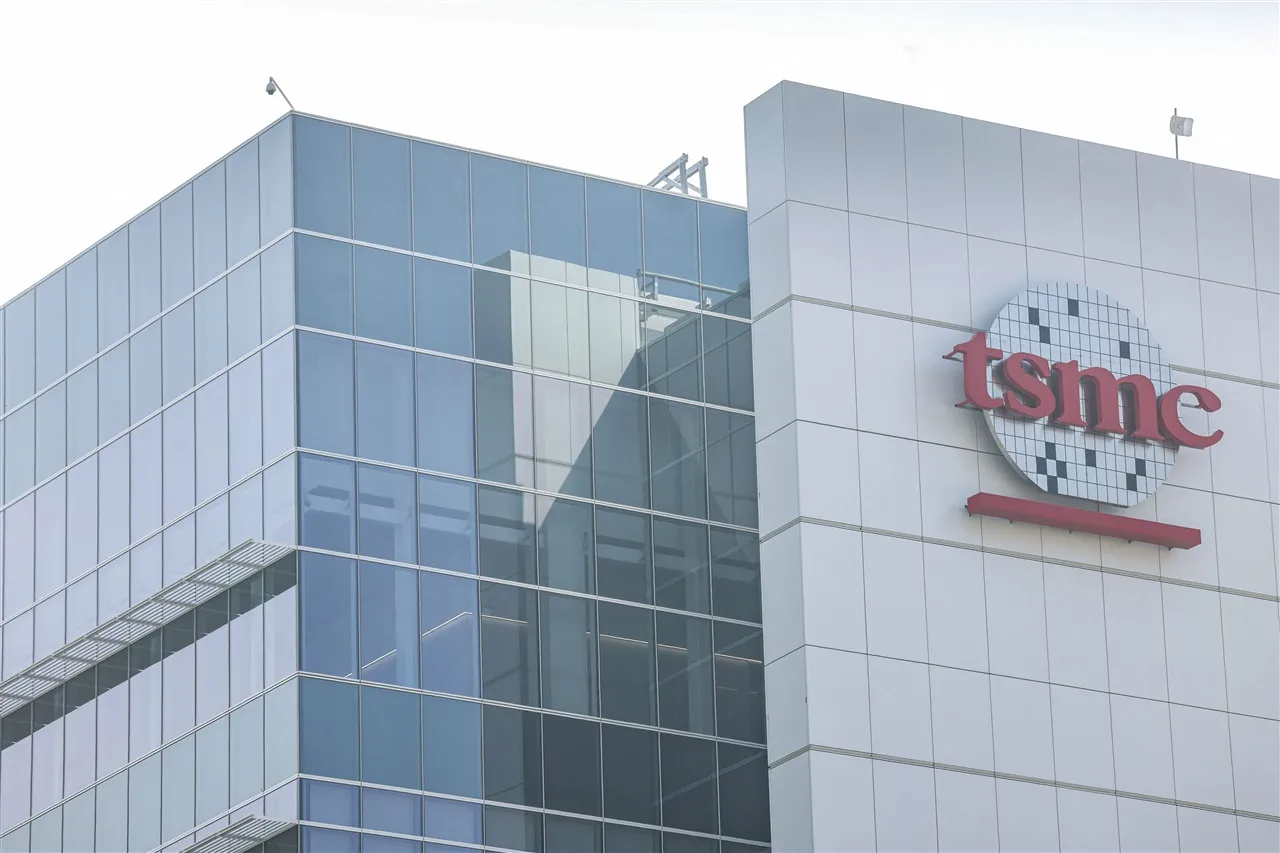
TSMC reported that revenue for the first four months of 2026 rose 29.9% from a year earlier. The increase signals the company's strength and underscores Asia's grip on AI chip supply amid investor attention on demand and capacity constraints.
Tap a lens to see what this story means for you.
Liked this? The Brief brings you the whole day in tech, verified, every morning.
Two minutes, free forever. What's in The Brief →
See what’s happening right now
The Feed runs all day — short, verified briefs the moment they break.
Open the FeedFollow @thecircuitry_
Every story we publish, as it happens. No noise between.
Reader-supported
The Circuitry is a passion project I've always wanted to build, and I love the work behind it.
Running it costs real money. APIs, hosting, time. To keep improving the site and growing this into something useful for everyone, those costs have to be covered.
Any contribution is appreciated. If not, no pressure. Thanks for reading.
TSMC posted a 77.4% year-on-year profit increase to NT$706.56 billion and raised its capital spending outlook while announcing another $100 billion for Arizona fabs. The results underscore sustained AI demand that now dominates 66% of its platform revenue.
GlobalFoundries signed a multi-year US$2 billion agreement with TSMC on October 8, 2026 to manufacture silicon interposers at its Malta, New York fab. The deal creates the first US-based source of silicon interposers for TSMC's CoWoS advanced packaging ecosystem.
MediaTek reported June 2026 revenue of NT$58.012 billion, beating the top end of its forecast and driving second-quarter revenue to NT$152.183 billion. The beat reinforces expectations for seasonal growth in the second half of the year.
Marvell Technology raised its fiscal 2028 revenue outlook to approximately $20 billion and set a fiscal 2031 target of $70-90 billion. The increases reflect expected growth in AI networking and optical connectivity demand.
According to reporting, Biren Technology is preparing its next-generation BR20X GPU for mass production. The move advances a domestic AI accelerator roadmap built on broader low-precision support and locally available manufacturing.