The Circuitry
THE CIRCUITRYYour one-stop source for all tech news
HOMETODAYNEWSFEEDEVENTS
BOOKMARKS
RSS
© 2026 The Circuitry
About UsSourcesContactCorrectionsPrivacy
  • Today
  • Feed
  • Events
  • Saved
Scroll for more
Verification
VERIFIEDConfidence: HIGH
Source identified
Claims cross-referenced
No discrepancies found
Fact-check summary

NVD and Zyxel's official August 4 advisory confirm the CVE-2026-6837 post-auth command injection flaw in WAX650S firmware (CVSS 7.2).

Sourcing
1source

via NVD

NVD · track record
16Stories
100%Verified
1630d
All sources →
Home/Tech/Zyxel WAX650S Firmware Hit by High-Severity Command Injection Flaw
VERIFIEDBy Xavier Rivera· ·1 min read

Zyxel WAX650S Firmware Hit by High-Severity Command Injection Flaw

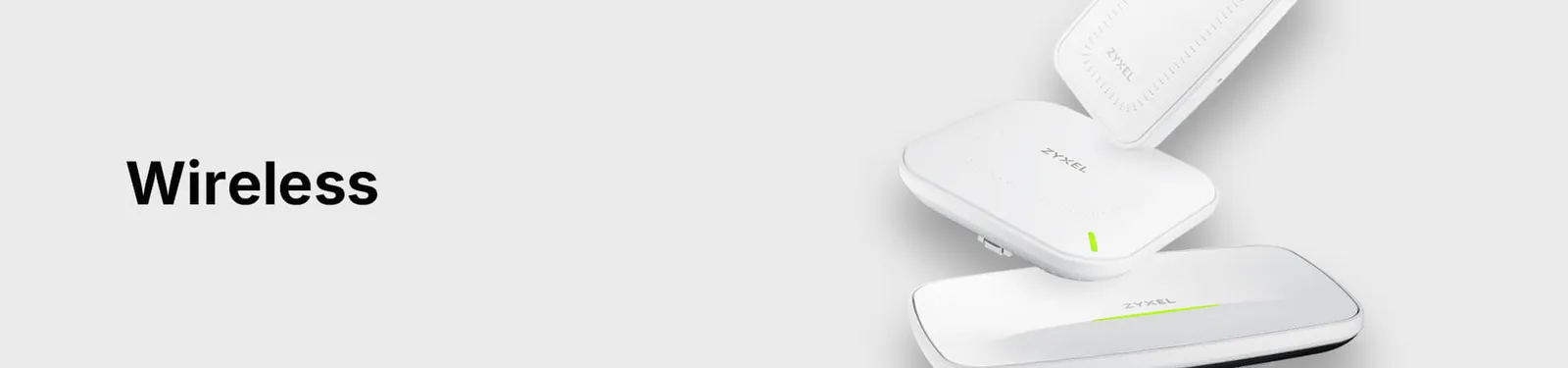
Zyxel disclosed CVE-2026-6837, a command injection vulnerability in the export-cgi program of WAX650S firmware through version 7.10(ABRM.4)C0 that lets authenticated administrators execute OS commands. The flaw scores 7.2 on CVSS v3.1 and was published August 3, 2026.
Source:NVD
Post
Zyxel WAX650S Firmware Hit by High-Severity Command Injection Flaw
TL;DRAI · 60 sec read

Zyxel disclosed a high-severity command injection vulnerability in its WAX650S wireless access point firmware versions up to 7.10(ABRM.4)C0. The issue tracked as CVE-2026-6837 with a CVSS score of 7.2 allows an authenticated attacker with administrator privileges to execute arbitrary OS commands on the device through the export-cgi program due to improper neutralization.

Zyxel has disclosed a high-severity post-authentication command injection vulnerability in its WAX650S wireless access point firmware.

The vulnerability carries a CVSS score of 7.2. CVE-2026-6837 affects the "export-cgi" CGI program in firmware versions through 7.10(ABRM.4)C0. An authenticated attacker with administrator privileges could exploit it to execute arbitrary OS commands on the device.
An authenticated attacker with administrator privileges could exploit it to execute arbitrary OS commands on the device.
The flaw was published to the CVE List on August 3, 2026 and added to the NVD dataset the following day.

Zyxel contributed the CVSS v3.1 assessment. The vector string is CVSS:3.1/AV:N/AC:L/PR:H/UI:N/S:U/C:H/I:H/A:H. This indicates network attack vector, low attack complexity, high privileges required, no user interaction, and high impacts on confidentiality, integrity and availability.
From The CircuitryThe Feed — live briefs across tech, all day.See what’s happening →
The weakness is tracked as CWE-78, improper neutralization of special elements used in an OS command.
Affected products are limited to one firmware branch.
Affected products are limited to one firmware branch. The vulnerability impacts Zyxel WAX650S firmware versions up to and including 7.10(ABRM.4)C0. Devices running later versions are listed as unaffected in the record.

Zyxel published a security advisory on August 4, 2026 that covers this command injection issue along with an improper authentication vulnerability in certain access points, firewalls and security routers. The advisory is available at the company's global support site.
The CVE record was received from Zyxel Corporation. No exploit details or proof-of-concept code appear in the NVD entry.

EXPERT TAKE

Enterprise teams running Zyxel WAX650S should treat this as an immediate patching priority given the high impact on device integrity once admin credentials are obtained.

Why this mattersAI · ~100 words

Tap a lens to see what this story means for you.

Reader-supported
DonateBuy me a coffee →Follow@thecircuitry_ →Follow@thecircuitry.to →

Reader-supported · The Brief

Liked this? The Brief brings you the whole day in tech, verified, every morning. Two minutes, free forever.

HELP US IMPROVE
From The Circuitry

See what’s happening right now

The Feed runs all day — short, verified briefs the moment they break.

Open the Feed →
From The Circuitry

Follow @thecircuitry_

Every story we publish, as it happens. No noise between.

Follow on X ↗On Bluesky ↗

Reader-supported

The Circuitry is a passion project I've always wanted to build, and I love the work behind it.

Running it costs real money. APIs, hosting, time. To keep improving the site and growing this into something useful for everyone, those costs have to be covered.

Any contribution is appreciated. If not, no pressure. Thanks for reading.

Buy me a coffee
vulnerabilitysecurityzyxelfirmware
More fromNVD
  • Microsoft Office Excel Use-After-Free Flaw Rated CVSS 8.8

    Tech · 4d
  • NVD Adds Shell Injection Flaw in Wazuh GitHub Actions Workflows as CVE-2026-67308

    Tech · 7d
  • IBM WebSphere 8.5, 9.0 and Liberty Hit by CVE-2026-10842

    Tech · 8d
More inTech
  • Tesla and SpaceX confirm Terafab chip fab in Texas

    Tech · 1d
  • OpenAI Urges Federal Judge to Throw Out Apple's Trade Secrets Complaint

    Tech · 2d
  • Meta introduces Muse Code, its terminal-based coding agent

    Tech · 2d
SupportThe Work

The Circuitry is reader-supported. If you find the daily brief useful, you can buy me a coffee to keep it going.

Buy a coffee →
SubscribeCircuitry Brief

Liked this? The Brief brings you the whole day in tech, verified, every morning. Free forever.

MORE IN TECH

Tesla and SpaceX confirm Terafab chip fab in Texas

Tesla and SpaceX have confirmed Grimes County, Texas as the site for their Terafab semiconductor megafactory, with the first phase costing roughly $16.8 billion. The project targets the largest chip manufacturing facility on the planet to supply over 1 terawatt of compute per year that exceeds current and future global production capacity.

OpenAI Urges Federal Judge to Throw Out Apple's Trade Secrets Complaint

OpenAI has filed a motion asking a federal judge to dismiss Apple's trade secrets lawsuit, describing the claims as meritless. The dispute, which follows a July suit and this week's injunction request from Apple, highlights tensions after their prior partnership on Siri and OpenAI's hardware push.

Meta introduces Muse Code, its terminal-based coding agent

Meta has released an early beta of Muse Code, a terminal-based coding agent driven by the updated Muse Spark 1.2 model and positioned against Anthropic's Claude Code and OpenAI's Codex. Substantially lower rates, including a contributor plan at $0.10 for every million tokens received, may encourage migration away from higher-priced options such as Anthropic's Sonnet 5.