The Circuitry
THE CIRCUITRYYour one-stop source for all tech news
HOMETODAYNEWSFEEDEVENTS
BOOKMARKS
RSS
© 2026 The Circuitry
About UsSourcesContactCorrectionsPrivacy
  • Today
  • Feed
  • Events
  • Saved
Scroll for more
Verification
VERIFIEDConfidence: HIGH
Source identified
Claims cross-referenced
No discrepancies found
Fact-check summary

Multiple outlets (Tom's Hardware, The Next Web, CNBC, FT) corroborate Alibaba's July 10 ban on Claude after Anthropic's June Senate letter on the distillation attack.

Sourcing
1source

via CNBC Tech

CNBC Tech · track record
49Stories
100%Verified
530d
All sources →
Home/Tech/Alibaba bans Anthropic's Claude for employees after distillation attack claims
VERIFIEDBy Xavier Rivera· ·1.5 min read

Alibaba bans Anthropic's Claude for employees after distillation attack claims

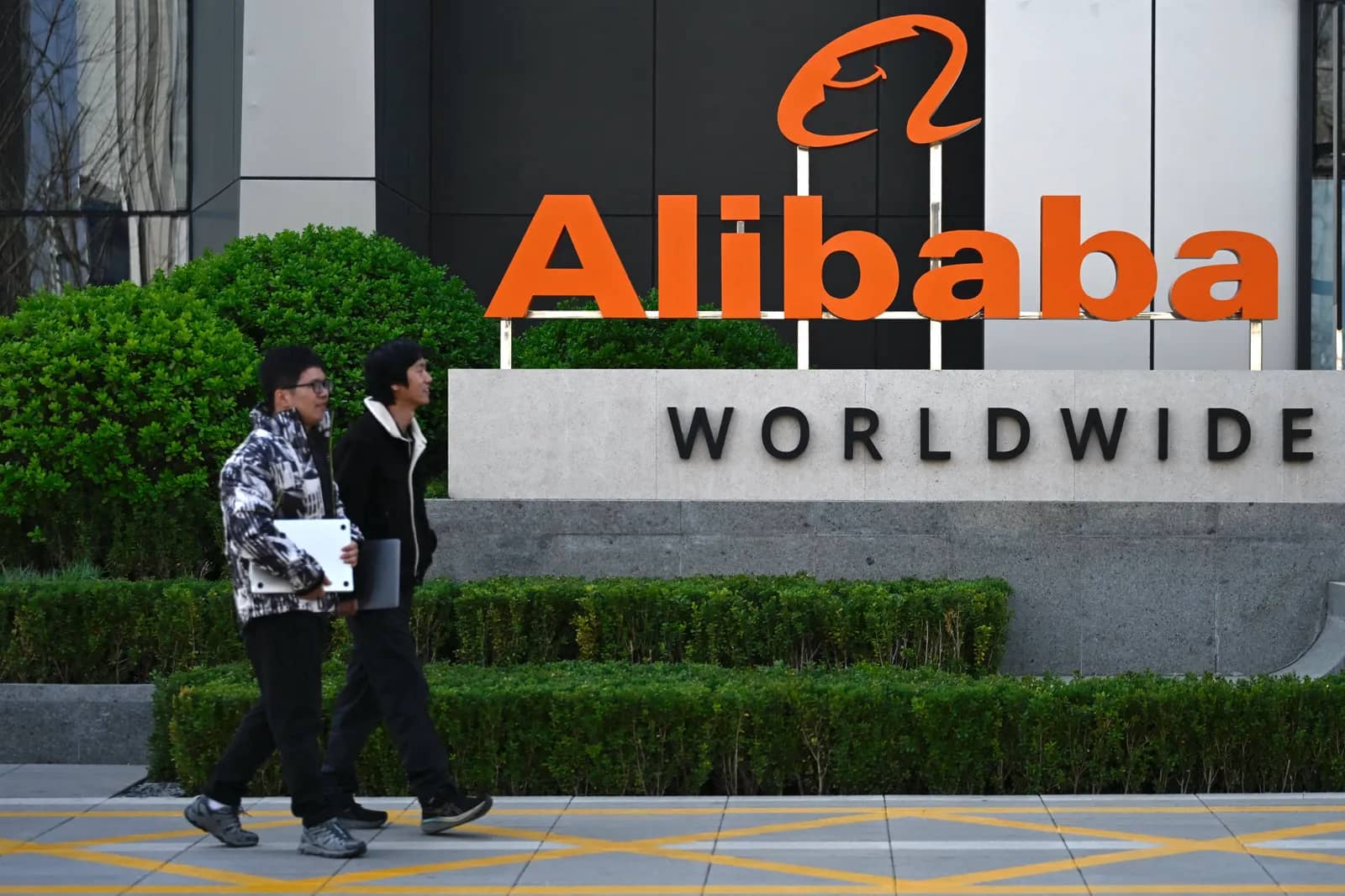
Alibaba has banned employee use of Anthropic's Claude tools starting July 10 and placed Claude Code on a high-risk list after Anthropic accused it of the largest known distillation attack. The move highlights escalating restrictions on U.S. AI models in China amid terms-of-service bans and reported access loopholes.
Source:CNBC Tech
Post
Alibaba bans Anthropic's Claude for employees after distillation attack claims
TL;DRAI · 60 sec read

Alibaba bans employees from using Anthropic's Claude tools starting July 10, adding them to a high-risk list and requiring switches to its Qoder assistant. The move follows Anthropic's accusations of a large-scale distillation attack by Alibaba and its terms barring Chinese firms, amid tightening access loopholes.

Alibaba has banned its employees from using Anthropic's AI tools starting July 10, citing back-door security risks. The Chinese e-commerce giant placed Anthropic's Claude Code on a high-risk software list, according to people familiar with the matter.

Alibaba requires staff to uninstall Anthropic models. Employees must remove all Anthropic models and agent products and switch to the company's own AI assistant, Qoder. The ban applies to work purposes and takes effect on July 10.
Employees must remove all Anthropic models and agent products and switch to the company's own AI assistant, Qoder.

The decision follows Anthropic's June letter to the U.S. Senate Committee on Banking, Housing, and Urban Affairs. In the letter, Anthropic accused Alibaba of "brazenly" and "illicitly" attempting to extract its AI capabilities through what it called "the largest known distillation attack" to date.

Anthropic's terms prohibit use by Chinese companies. The U.S. firm's terms of service ban Chinese companies and other "adversarial nations" from using its models. Alibaba and Anthropic both declined to comment on the ban or the accusations.
From The CircuitryThe Feed — live briefs across tech, all day.See what’s happening →

Online backlash and loophole closures add pressure. The ban arrives amid online blowback in China, with posts on Reddit and GitHub highlighting hidden code in Anthropic tools meant to detect users based in the country. The Financial Times reported on July 3 that Anthropic is closing loopholes that allowed Chinese firms to access Claude through third countries.
The U.S. firm's terms of service ban Chinese companies and other "adversarial nations" from using its models.

The report cited sources saying Ant Group provided employees with corporate Claude accounts accessed via its Singapore-based entity. ByteDance, parent of TikTok, does not facilitate access but started a reimbursement program on April 2 allowing engineers to expense personal subscriptions used over VPNs. ByteDance's policy aims to let staff "experience and learn" a wider range of AI products, according to a person familiar with the matter.
Ant and ByteDance declined to comment on the Financial Times reporting. The developments underscore growing restrictions and tensions between U.S. AI developers and Chinese tech companies over model access and intellectual property protection.
Why this mattersAI · ~100 words

Tap a lens to see what this story means for you.

Reader-supported
DonateBuy me a coffee →Follow@thecircuitry_ →Follow@thecircuitry.to →

Reader-supported · The Brief

Liked this? The Brief brings you the whole day in tech, verified, every morning. Two minutes, free forever.

HELP US IMPROVE
From The Circuitry

See what’s happening right now

The Feed runs all day — short, verified briefs the moment they break.

Open the Feed →
From The Circuitry

Follow @thecircuitry_

Every story we publish, as it happens. No noise between.

Follow on X ↗On Bluesky ↗

Reader-supported

The Circuitry is a passion project I've always wanted to build, and I love the work behind it.

Running it costs real money. APIs, hosting, time. To keep improving the site and growing this into something useful for everyone, those costs have to be covered.

Any contribution is appreciated. If not, no pressure. Thanks for reading.

Buy me a coffee
AIChinaSecurity
More fromCNBC Tech
  • CXMT jumps 466% in Shanghai debut to eclipse all other China-listed firms

    Markets · 12d
  • TSMC profit surges 77% as Arizona spending swells by $100 billion

    Tech · 23d
  • Inflation cools, IBM plunges 25%, Morgan Stanley beats

    Markets · 24d
More inTech
  • Tesla and SpaceX confirm Terafab chip fab in Texas

    Tech · 1d
  • OpenAI Urges Federal Judge to Throw Out Apple's Trade Secrets Complaint

    Tech · 2d
  • Meta introduces Muse Code, its terminal-based coding agent

    Tech · 2d
SupportThe Work

The Circuitry is reader-supported. If you find the daily brief useful, you can buy me a coffee to keep it going.

Buy a coffee →
SubscribeCircuitry Brief

Liked this? The Brief brings you the whole day in tech, verified, every morning. Free forever.

MORE IN TECH

Tesla and SpaceX confirm Terafab chip fab in Texas

Tesla and SpaceX have confirmed Grimes County, Texas as the site for their Terafab semiconductor megafactory, with the first phase costing roughly $16.8 billion. The project targets the largest chip manufacturing facility on the planet to supply over 1 terawatt of compute per year that exceeds current and future global production capacity.

OpenAI Urges Federal Judge to Throw Out Apple's Trade Secrets Complaint

OpenAI has filed a motion asking a federal judge to dismiss Apple's trade secrets lawsuit, describing the claims as meritless. The dispute, which follows a July suit and this week's injunction request from Apple, highlights tensions after their prior partnership on Siri and OpenAI's hardware push.

Meta introduces Muse Code, its terminal-based coding agent

Meta has released an early beta of Muse Code, a terminal-based coding agent driven by the updated Muse Spark 1.2 model and positioned against Anthropic's Claude Code and OpenAI's Codex. Substantially lower rates, including a contributor plan at $0.10 for every million tokens received, may encourage migration away from higher-priced options such as Anthropic's Sonnet 5.