The Circuitry
THE CIRCUITRYYour one-stop source for all tech news
HOMETODAYNEWSFEEDEVENTS
BOOKMARKS
RSS
© 2026 The Circuitry
About UsSourcesContactCorrectionsPrivacy
  • Today
  • Feed
  • Events
  • Saved
Scroll for more
Verification
VERIFIEDConfidence: HIGH
Source identified
Claims cross-referenced
No discrepancies found
Fact-check summary

Multiple outlets (SpaceNews, Reuters, ABC, Space.com, NYT) confirm China's Long March 10B net sea recovery on its July 10, 2026 debut launch.

Sourcing
1source

via Engadget

Engadget · track record
21Stories
100%Verified
730d
All sources →
Home/Tech/China nets Long March 10B booster in historic sea recovery
VERIFIEDBy Xavier Rivera· ·1.5 min read

China nets Long March 10B booster in historic sea recovery

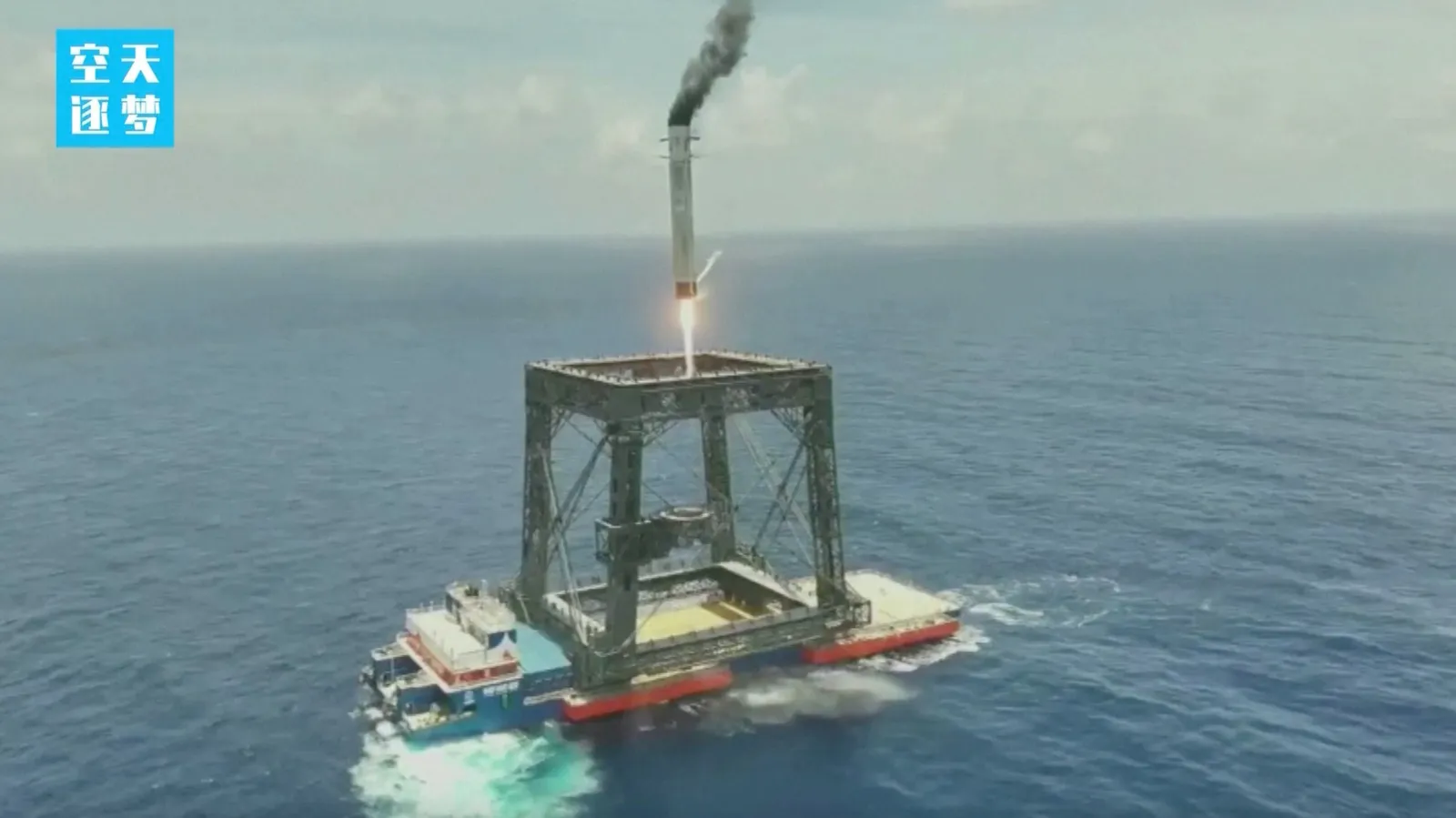
China has become the second country to recover a rocket booster after successfully capturing its Long March 10B with a net at sea on its maiden flight. The achievement advances the nation's reusable rocket technology and supports its goal of becoming a space power by 2030.
Source:Engadget
Post
China nets Long March 10B booster in historic sea recovery
TL;DRAI · 60 sec read

China nets its Long March 10B booster at sea in the first successful net recovery of a rocket stage. The intact booster lands after thrust descent and will fly again before 2026 ends. This positions China as only the second nation with reusable rocket technology, supporting its goal to reach space power status by 2030 despite fewer launches than the US.

China has emerged as only the second nation to retrieve a reusable rocket after snaring its booster with a net at sea.

China achieves first net capture of a descending rocket booster. Footage from state broadcaster CCTV captured the Long March 10B slowing on its own thrust until engines shut down and the intact stage landed in the waiting net. The state-owned China Academy of Launch Vehicle Technology built the vehicle for its debut launch on July 10, 2026.
Footage from state broadcaster CCTV captured the Long March 10B slowing on its own thrust until engines shut down and the intact stage landed in the waiting net.

CALT deployed hooks attached to the net in an approach that differs sharply from SpaceX designs. The Falcon 9 relies on retractable landing legs while Starship uses external mechanical arms; this system marks the first successful use of such netting anywhere, the agency reported. Officials confirmed the booster survived undamaged.
https://x.com/LandSpace_Tech/status/1996973617037648205

CALT plans rapid reuse of the recovered booster. The agency expects to fly the same stage again before the close of 2026. In its statement CALT called the mission "a historic breakthrough for China in the field of reusable rocket technology" and said it "will lay a solid foundation for accelerating the enhancement of the country's space access capabilities."
From The CircuitryThe Feed — live briefs across tech, all day.See what’s happening →

China aims to become a space power with reusable technology. Beijing targets full status as a space power by 2030 and views reusable stages as central to that ambition. Even so its orbital launch totals trail the United States. American rockets flew 193 times last year, 165 of them by SpaceX, against China's 92 attempts.
Beijing targets full status as a space power by 2030 and views reusable stages as central to that ambition.
Earlier tests showed mixed results for reusable recovery. CALT's February 2026 rehearsal sent the booster splashing down approximately 200 meters from the recovery platform. Separately the private Beijing firm LandSpace tested a leg-based system on its ZhuQue-3 that nearly succeeded before the stage exploded in a fireball the company chose not to broadcast.
Why this mattersAI · ~100 words

Tap a lens to see what this story means for you.

Reader-supported
DonateBuy me a coffee →Follow@thecircuitry_ →Follow@thecircuitry.to →

Reader-supported · The Brief

Liked this? The Brief brings you the whole day in tech, verified, every morning. Two minutes, free forever.

HELP US IMPROVE
From The Circuitry

See what’s happening right now

The Feed runs all day — short, verified briefs the moment they break.

Open the Feed →
From The Circuitry

Follow @thecircuitry_

Every story we publish, as it happens. No noise between.

Follow on X ↗On Bluesky ↗

Reader-supported

The Circuitry is a passion project I've always wanted to build, and I love the work behind it.

Running it costs real money. APIs, hosting, time. To keep improving the site and growing this into something useful for everyone, those costs have to be covered.

Any contribution is appreciated. If not, no pressure. Thanks for reading.

Buy me a coffee
SpaceChinaReusable Rockets
More fromEngadget
  • Meta introduces Muse Code, its terminal-based coding agent

    Tech · 2d
  • SpaceX Q2 revenue hits $7.8B as AI unit drives reported 2,013% CapEx surge

    Tech · 3d
  • Netflix Applied GenAI Workflows to Approximately 300 Shows and Films This Year

    Tech · 22d
More inTech
  • Tesla and SpaceX confirm Terafab chip fab in Texas

    Tech · 1d
  • OpenAI Urges Federal Judge to Throw Out Apple's Trade Secrets Complaint

    Tech · 2d
  • Meta introduces Muse Code, its terminal-based coding agent

    Tech · 2d
SupportThe Work

The Circuitry is reader-supported. If you find the daily brief useful, you can buy me a coffee to keep it going.

Buy a coffee →
SubscribeCircuitry Brief

Liked this? The Brief brings you the whole day in tech, verified, every morning. Free forever.

MORE IN TECH

Tesla and SpaceX confirm Terafab chip fab in Texas

Tesla and SpaceX have confirmed Grimes County, Texas as the site for their Terafab semiconductor megafactory, with the first phase costing roughly $16.8 billion. The project targets the largest chip manufacturing facility on the planet to supply over 1 terawatt of compute per year that exceeds current and future global production capacity.

OpenAI Urges Federal Judge to Throw Out Apple's Trade Secrets Complaint

OpenAI has filed a motion asking a federal judge to dismiss Apple's trade secrets lawsuit, describing the claims as meritless. The dispute, which follows a July suit and this week's injunction request from Apple, highlights tensions after their prior partnership on Siri and OpenAI's hardware push.

Meta introduces Muse Code, its terminal-based coding agent

Meta has released an early beta of Muse Code, a terminal-based coding agent driven by the updated Muse Spark 1.2 model and positioned against Anthropic's Claude Code and OpenAI's Codex. Substantially lower rates, including a contributor plan at $0.10 for every million tokens received, may encourage migration away from higher-priced options such as Anthropic's Sonnet 5.