The Circuitry
THE CIRCUITRYYour one-stop source for all tech news
HOMETODAYNEWSFEEDEVENTS
BOOKMARKS
RSS
© 2026 The Circuitry
About UsSourcesContactCorrectionsPrivacy
  • Today
  • Feed
  • Events
  • Saved
Scroll for more
Verification
VERIFIEDConfidence: HIGH
Source identified
Claims cross-referenced
No discrepancies found
Sourcing
1source

via Ars Technica

Ars Technica · track record
27Stories
100%Verified
430d
All sources →
Markets
GOOGL···

Live quote · not investment advice

Home/Tech/Google Rolls Gemini 3.1 to Home Speakers with Camera, Automation Upgrades
VERIFIEDBy Xavier Rivera· ·1 min read

Google Rolls Gemini 3.1 to Home Speakers with Camera, Automation Upgrades

Google expands Gemini 3.1 to Home smart speakers and adds camera navigation plus automation triggers. Early-access users gain complex multi-step commands and web/app device management for smoother smart home control.
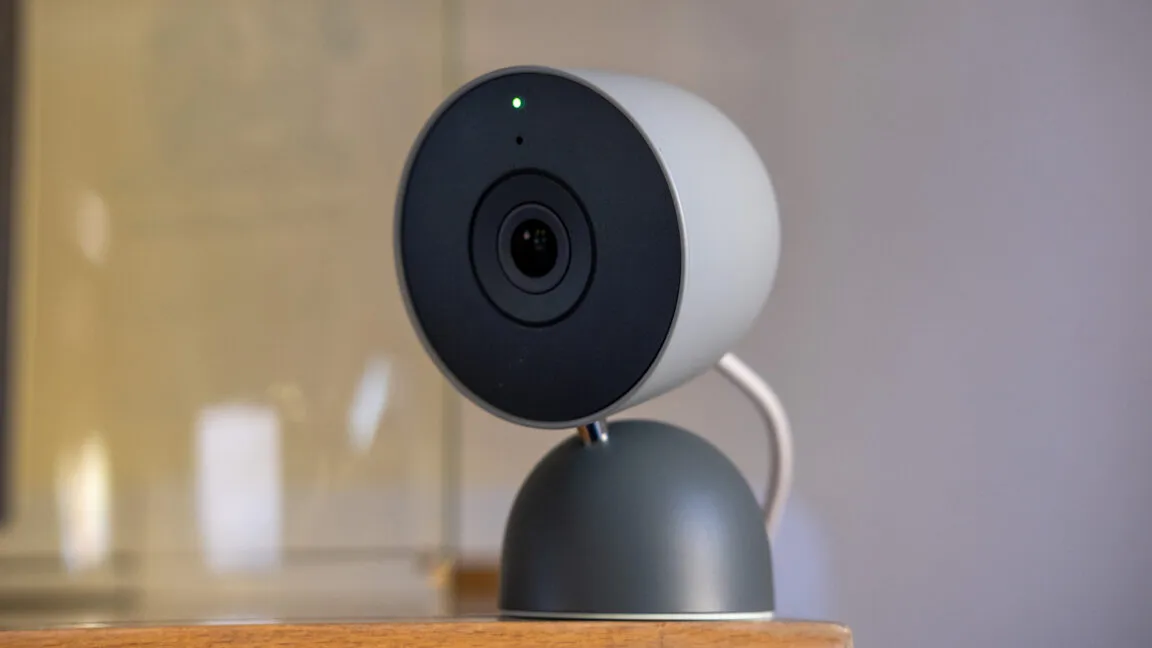
Source:Ars Technica
Post
Google Rolls Gemini 3.1 to Home Speakers with Camera, Automation Upgrades
TL;DRAI · 60 sec read

Google rolls out Gemini 3.1 to Google Home speakers, simplifies camera feed navigation, improves AI event labeling, and adds automation triggers for security, appliances, lighting, and device health. The update enables complex multi-step voice commands with benchmark-tested reasoning gains, reducing split requests and expanding Ask Home to web. Early access users receive it now.

Google updates its Google Home platform with Gemini 3.1 voice assistance and new camera and automation controls. The company launched an AI-focused redesign late last year and continues adding features. These changes simplify camera feed navigation and boost AI event labeling accuracy to address user pain points.

Early-access Home users now access Gemini 3.1, which Google first released on other platforms in February without smart speakers. Speakers now handle complex, multi-step voice commands using advanced reasoning. Google says the model processes multiple tasks in a single prompt.
From The CircuitryThe Feed — live briefs across tech, all day.See what’s happening →
The company cites gains on benchmarks like ARC-AGI-2 and Humanity’s Last Exam, testing logic and domain knowledge. These enable longer conversations on devices for users opting in. Improvements cut the need to break requests into separate commands.

Ask Home expands to the web interface as a preview, letting users check camera history and build automations via chat. New triggers and actions span categories: security (arming/disarming, door states like locked/unlocked/jammed, sensor conditions); appliances (start/stop/pause/resume for washers, dryers, coffee makers, robot vacs); lighting/environment (brightness, colors, temps, window positions, humidity); media (playback, volume); and device health (battery, switches).
Paying subscribers create automations via Ask Home or legacy buttons/menus. All users keep menu-based building. Camera upgrades skip the Gemini 3.1 model, which applies only to voice.
Why this mattersAI · ~100 words

Tap a lens to see what this story means for you.

Reader-supported
DonateBuy me a coffee →Follow@thecircuitry_ →Follow@thecircuitry.to →

Reader-supported · The Brief

Liked this? The Brief brings you the whole day in tech, verified, every morning. Two minutes, free forever.

HELP US IMPROVE
From The Circuitry

See what’s happening right now

The Feed runs all day — short, verified briefs the moment they break.

Open the Feed →
From The Circuitry

Follow @thecircuitry_

Every story we publish, as it happens. No noise between.

Follow on X ↗On Bluesky ↗

Reader-supported

The Circuitry is a passion project I've always wanted to build, and I love the work behind it.

Running it costs real money. APIs, hosting, time. To keep improving the site and growing this into something useful for everyone, those costs have to be covered.

Any contribution is appreciated. If not, no pressure. Thanks for reading.

Buy me a coffee
GoogleGeminiSmart HomeAI
More fromArs Technica
  • Samsung debuts its first wide-body foldable in 2026 Galaxy Z8 lineup

    Tech · 14d
  • Microsoft Secure Boot bypassed for 13 years via unrevoked shims

    Tech · 21d
  • Blue Origin reportedly raising up to $10B in first private capital round

    Tech · 28d
More inTech
  • Demis Hassabis steps down as DeepMind CEO to focus on AGI strategy

    Tech · 2h
  • ChainDrop worm compromises over 1,300 npm packages totaling 2 billion downloads

    Tech · 19h
  • SpaceX Q2 revenue hits $7.8B as AI unit drives reported 2,013% CapEx surge

    Tech · 19h
SupportThe Work

The Circuitry is reader-supported. If you find the daily brief useful, you can buy me a coffee to keep it going.

Buy a coffee →
SubscribeCircuitry Brief

Liked this? The Brief brings you the whole day in tech, verified, every morning. Free forever.

MORE IN TECH

Demis Hassabis steps down as DeepMind CEO to focus on AGI strategy

Sundar Pichai announced leadership changes at Google DeepMind in which Demis Hassabis steps down from the CEO post to become Chair of GDM and Chief Scientist of Alphabet, citing the proximity of AGI. Koray Kavukcuoglu, previously Chief Technology Officer, takes over as Senior Vice President reporting to Pichai and will oversee Gemini model development, Frontier AI research, and the Gemini app and developer teams.

ChainDrop worm compromises over 1,300 npm packages totaling 2 billion downloads

ChainDrop, a self-propagating worm, has compromised more than 1,300 npm packages responsible for 2 billion combined monthly downloads, including Keyv, Cacheable and utilities tied to Deliveroo, Picsart, Qlik and others. The malware steals a broad array of developer and cloud credentials from infected systems and CI/CD environments, requiring any impacted machine to be treated as fully breached.

SpaceX Q2 revenue hits $7.8B as AI unit drives reported 2,013% CapEx surge

SpaceX reported Q2 revenue of $7.8 billion, up 92 percent year-over-year, with its former xAI division driving growth through cloud deals while posting a reported 2,013 percent surge in capital expenditure to $15.8 billion. The results offer the first public window into the economics of an AI-scale operation, highlighting both revenue gains and massive infrastructure costs.