The Circuitry
THE CIRCUITRYYour one-stop source for all tech news
HOMETODAYNEWSFEEDEVENTS
BOOKMARKS
RSS
© 2026 The Circuitry
About UsSourcesContactCorrectionsPrivacy
  • Today
  • Feed
  • Events
  • Saved
Scroll for more
Verification
VERIFIEDConfidence: HIGH
Source identified
Claims cross-referenced
No discrepancies found
Fact-check summary

CNBC reports Hesai expanding U.S. lidar sales via Nvidia partnership announced at CES 2026 despite the 2024 Pentagon blacklist; the partnership, Nvidia's 39% FY2026 automotive revenue growth, and CEO David Li's comments are corroborated by Nvidia, Hesai, and prior coverage.

Sourcing
1source

via CNBC Tech

CNBC Tech · track record
49Stories
100%Verified
1230d
All sources →
Home/Tech/Hesai expands U.S. lidar sales despite Pentagon blacklist
VERIFIEDBy Xavier Rivera· ·2 min read

Hesai expands U.S. lidar sales despite Pentagon blacklist

Hesai Technology is expanding U.S. lidar sales and partnering with Nvidia despite a 2024 Pentagon blacklist labeling it a Chinese military entity. Security experts warn the sensors could introduce cyber risks and data-access backdoors into autonomous systems and critical infrastructure.
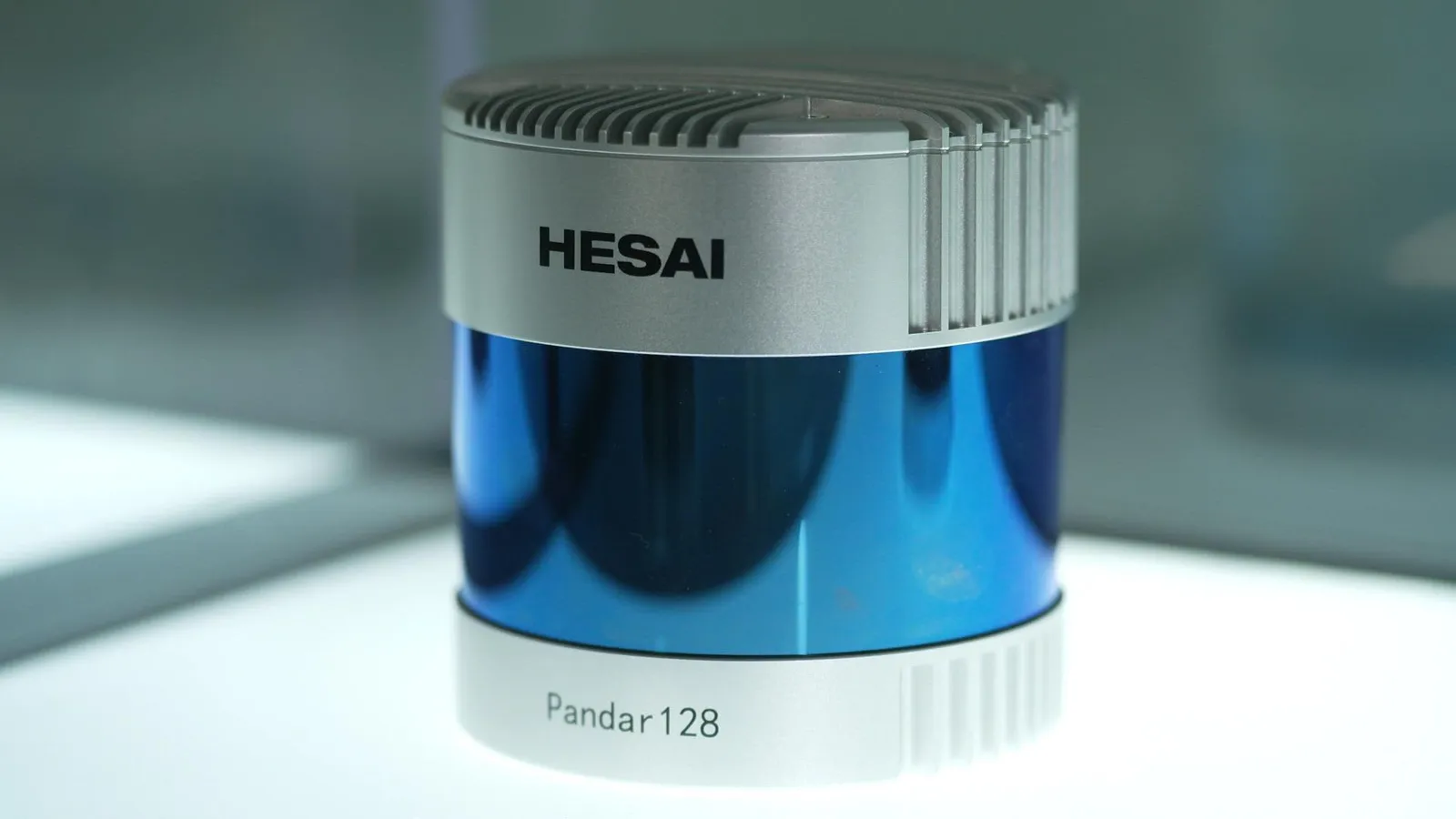
Source:CNBC Tech
Post
Hesai expands U.S. lidar sales despite Pentagon blacklist
TL;DRAI · 60 sec read

Hesai Technology expands U.S. lidar sales through a new Nvidia partnership despite its 2024 Pentagon blacklist as a Chinese military entity. The designation bars only federal contracts, leaving commercial use in vehicles and robots open. Officials cite cyber risks in the sensors, while the company rejects the claims and grows its autonomous tech footprint.

Hesai Technology has expanded its U.S. presence despite a 2024 Pentagon blacklist that designated the Shanghai-based lidar maker a Chinese military entity and national security threat.

Hesai supplies lidar for robots, self-driving vehicles and other physical AI systems. The sensors enable machines to perceive their surroundings in factories, on roads and in applications such as robotic dogs. Hesai has become one of the dominant suppliers in the global autonomous technology ecosystem, with its products integrated into vehicles and robots.
Hesai supplies lidar for robots, self-driving vehicles and other physical AI systems.
The Department of Defense placed Hesai on its blacklist in 2024. The designation bars the company from Pentagon contracts but does not prohibit U.S. firms from purchasing or integrating its lidar in nonmilitary uses.

Government officials and security researchers warn of cyber risks from Chinese lidar. Experts told CNBC that lidar units can be compromised with malware, potentially creating backdoors for Beijing to access sensitive data collected by the sensors. Such vulnerabilities could expose critical infrastructure built around autonomous systems.
From The CircuitryThe Feed — live briefs across tech, all day.See what’s happening →
Hesai has deepened its U.S. footprint through an expanded partnership with Nvidia. Under the deal, Hesai sensors become an integration option for automakers using Nvidia's autonomous vehicle platforms. Nvidia CEO Jensen Huang announced the partnership at CES in January 2026, stating the company's vision that every car and truck will eventually be autonomous.
Government officials and security researchers warn of cyber risks from Chinese lidar.
Nvidia views robotics and self-driving technology as a major growth driver. In its latest annual filing, Nvidia reported automotive revenue for fiscal year 2026 rose 39 percent from the prior year, fueled by adoption of its self-driving platforms. Robotics ranks as the chipmaker's second-most important growth category after artificial intelligence.

Hesai's CEO rejects the national security allegations. In his first extended interview on the blacklist, co-founder and CEO David Li told CNBC the narrative that his company poses a threat is fiction. Li said the DOD case lacks sufficient evidence and is not logical, adding that the company does not work for the Chinese military and its products are safe.
The blacklist covers Hesai along with 187 other companies and subsidiaries. While it limits certain federal work, the company's commercial expansion continues in the rapidly growing autonomous vehicle and robotics markets.
Why this mattersAI · ~100 words

Tap a lens to see what this story means for you.

Reader-supported
DonateBuy me a coffee →Follow@thecircuitry_ →Follow@thecircuitry.to →

Reader-supported · The Brief

Liked this? The Brief brings you the whole day in tech, verified, every morning. Two minutes, free forever.

HELP US IMPROVE
From The Circuitry

See what’s happening right now

The Feed runs all day — short, verified briefs the moment they break.

Open the Feed →
From The Circuitry

Follow @thecircuitry_

Every story we publish, as it happens. No noise between.

Follow on X ↗On Bluesky ↗

Reader-supported

The Circuitry is a passion project I've always wanted to build, and I love the work behind it.

Running it costs real money. APIs, hosting, time. To keep improving the site and growing this into something useful for everyone, those costs have to be covered.

Any contribution is appreciated. If not, no pressure. Thanks for reading.

Buy me a coffee
lidarautonomous vehiclescybersecurityUS-China tech
More fromCNBC Tech
  • CXMT jumps 466% in Shanghai debut to eclipse all other China-listed firms

    Markets · 9d
  • TSMC profit surges 77% as Arizona spending swells by $100 billion

    Tech · 20d
  • Inflation cools, IBM plunges 25%, Morgan Stanley beats

    Markets · 21d
More inTech
  • ChainDrop worm compromises over 1,300 npm packages totaling 2 billion downloads

    Tech · 16h
  • SpaceX Q2 revenue hits $7.8B as AI unit drives reported 2,013% CapEx surge

    Tech · 16h
  • Zyxel WAX650S Firmware Hit by High-Severity Command Injection Flaw

    Tech · 1d
SupportThe Work

The Circuitry is reader-supported. If you find the daily brief useful, you can buy me a coffee to keep it going.

Buy a coffee →
SubscribeCircuitry Brief

Liked this? The Brief brings you the whole day in tech, verified, every morning. Free forever.

MORE IN TECH

ChainDrop worm compromises over 1,300 npm packages totaling 2 billion downloads

ChainDrop, a self-propagating worm, has compromised more than 1,300 npm packages responsible for 2 billion combined monthly downloads, including Keyv, Cacheable and utilities tied to Deliveroo, Picsart, Qlik and others. The malware steals a broad array of developer and cloud credentials from infected systems and CI/CD environments, requiring any impacted machine to be treated as fully breached.

SpaceX Q2 revenue hits $7.8B as AI unit drives reported 2,013% CapEx surge

SpaceX reported Q2 revenue of $7.8 billion, up 92 percent year-over-year, with its former xAI division driving growth through cloud deals while posting a reported 2,013 percent surge in capital expenditure to $15.8 billion. The results offer the first public window into the economics of an AI-scale operation, highlighting both revenue gains and massive infrastructure costs.

Zyxel WAX650S Firmware Hit by High-Severity Command Injection Flaw

Zyxel disclosed CVE-2026-6837, a command injection vulnerability in the export-cgi program of WAX650S firmware through version 7.10(ABRM.4)C0 that lets authenticated administrators execute OS commands. The flaw scores 7.2 on CVSS v3.1 and was published August 3, 2026.