The Circuitry
THE CIRCUITRYYour one-stop source for all tech news
HOMETODAYNEWSFEEDEVENTS
BOOKMARKS
RSS
© 2026 The Circuitry
About UsSourcesContactCorrectionsPrivacy
  • Today
  • Feed
  • Events
  • Saved
Scroll for more
Verification
VERIFIEDConfidence: HIGH
Source identified
Claims cross-referenced
No discrepancies found
Sourcing
1source

via Teslarati

Teslarati · track record
14Stories
100%Verified
030d
All sources →
Markets
META···

Live quote · not investment advice

From The CircuitryWhy The Circuitry

Verified tech news, cross-checked.

Every story is checked against independent sources before it posts — no rumors dressed up as fact.

How we verify →
Home/Energy/Meta Taps Tesla for 365 MW Wyoming Solar and Battery Project
VERIFIEDBy Xavier Rivera· ·2 min read

Meta Taps Tesla for 365 MW Wyoming Solar and Battery Project

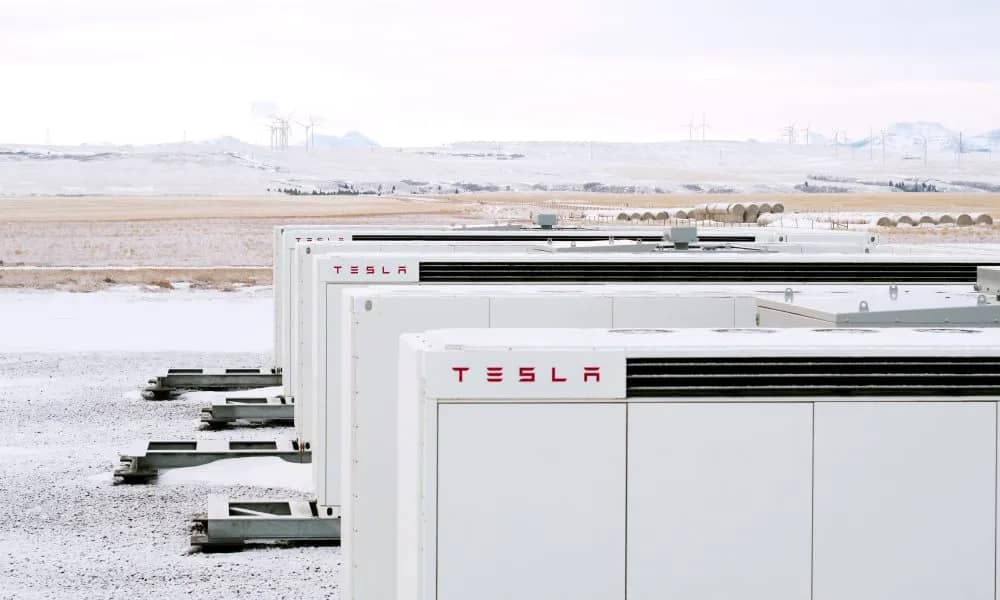
Meta has partnered with Enbridge on the first phase of the Cowboy Project, a 365 MW solar farm and 200 MW/1,600 MWh Tesla battery system near Cheyenne, Wyoming, to supply its data centers. The initiative supports Meta's renewable energy commitments while addressing grid reliability challenges from AI-driven data center demand growth.
Source:Teslarati
Post
Meta Taps Tesla for 365 MW Wyoming Solar and Battery Project
From The CircuitryWhy The Circuitry

Verified tech news, cross-checked.

Every story is checked against independent sources before it posts — no rumors dressed up as fact.

How we verify →
TL;DRAI · 60 sec read

Meta partners with Enbridge on a 365-megawatt solar farm paired with a 200-megawatt Tesla battery system near Cheyenne, Wyoming. The project supplies power to Meta data centers under a special tariff and gives the utility dispatchable capacity during peak demand. It addresses rising AI-driven electricity loads with reliable renewables.

Meta has partnered with Canadian energy infrastructure company Enbridge on a significant renewable energy project that will use battery technology from Tesla. The initiative, announced this week, is located near Cheyenne, Wyoming, and forms the first phase of the companies' joint Cowboy Project.

The project consists of a 365-megawatt solar farm paired with a 200 MW/1,600 MWh battery energy storage system. Tesla is supplying the batteries for the installation, which are valued at roughly $200 million. Once operational, the facility will deliver power to Meta's regional data centers through Cheyenne Light, Fuel and Power under Wyoming’s Large Power Contract Service tariff.
This setup addresses challenges of integrating large-scale renewables with the explosive growth of data center electricity demand driven by artificial intelligence.

That tariff was originally developed in collaboration with Microsoft and Black Hills Energy. It is designed specifically for large loads such as data centers and ensures the renewable supply serves hyperscale customers without affecting retail electricity rates for other users.
https://twitter.com/TeslaCharging/status/2041907403143442592

The battery system will operate under a long-term tolling agreement. It will provide dispatchable capacity to enhance grid reliability, allowing the utility to access backup generation during periods of high demand. This setup addresses challenges of integrating large-scale renewables with the explosive growth of data center electricity demand driven by artificial intelligence.
From The CircuitryThe Feed — live briefs across tech, all day.See what’s happening →

The Wyoming project builds on prior joint efforts between Enbridge and Meta in Texas, which include the 600 MW Clear Fork Solar, 152 MW Easter Wind, and 300 MW Cone Wind facilities. Combined with the new Wyoming initiative, the companies have partnered on roughly 1.6 gigawatts of solar, wind, and storage capacity.
The deal highlights intensifying demand for reliable, low-carbon power from technology giants, with Meta committing to renewable energy to support its data center expansion alongside peers including Microsoft and Google.
From The CircuitryWhy The Circuitry

Verified tech news, cross-checked.

Every story is checked against independent sources before it posts — no rumors dressed up as fact.

How we verify →
Enbridge’s Allen Capps described the project as one of the larger utility-scale battery installations supporting U.S. data center operations and growth. The deal highlights intensifying demand for reliable, low-carbon power from technology giants, with Meta committing to renewable energy to support its data center expansion alongside peers including Microsoft and Google. The use of Tesla batteries adds a connection between the clean energy efforts of the two tech leaders as hyperscalers pursue strategic partnerships with traditional energy companies and advanced storage solutions to meet sustainability goals and reliability needs.
Why this mattersAI · ~100 words

Tap a lens to see what this story means for you.

Morning Brief

Liked this? The Brief brings you the whole day in tech, verified, every morning.

Two minutes, free forever. What's in The Brief →

Reader-supported
DonateBuy me a coffee →Follow@thecircuitry_ →Follow@thecircuitry.to →
HELP US IMPROVE
From The Circuitry

See what’s happening right now

The Feed runs all day — short, verified briefs the moment they break.

Open the Feed →
From The Circuitry

Follow @thecircuitry_

Every story we publish, as it happens. No noise between.

Follow on X ↗On Bluesky ↗

Reader-supported

The Circuitry is a passion project I've always wanted to build, and I love the work behind it.

Running it costs real money. APIs, hosting, time. To keep improving the site and growing this into something useful for everyone, those costs have to be covered.

Any contribution is appreciated. If not, no pressure. Thanks for reading.

Buy me a coffee
MetaTeslaClean Energy
More fromTeslarati
  • Tesla Expands Unsupervised Robotaxi to Full Austin Metro

    Tech · 4mo
  • Tesla Authorized for Commercial Driverless Operations in Texas

    Tech · 4mo
  • NASA Adds Six More Missions to SpaceX Crew Contract

    Tech · 4mo
More inEnergy
  • Google Signs Deal with Constellation for Nuclear Power

    Energy · 2d
  • California requires AI data centers to fund local grid and water upgrades

    Energy · 17d
  • US Data Centers Could Use More Natural Gas Than Germany and Japan Combined by 2035, BNEF Says

    Energy · 23d
SupportThe Work

The Circuitry is reader-supported. If you find the daily brief useful, you can buy me a coffee to keep it going.

Buy a coffee →
From The CircuitryWhy The Circuitry

Verified tech news, cross-checked.

Every story is checked against independent sources before it posts — no rumors dressed up as fact.

How we verify →

MORE IN THIS BEAT

All Energy →
  • Tech· 

    Meta and Microsoft Slash Employee Claude AI Spending

    Meta and Microsoft are cutting employee use of Anthropic’s Claude AI and directing staff toward their own coding tools, The Information reported. The changes reflect tighter internal AI budgets while customer access to Claude through Microsoft platforms continues to expand.

  • Tech· 

    Google DeepMind and Meta back Biohub virtual cell with $300M

    Google DeepMind, Meta, and Isomorphic Labs are investing $300 million in Biohub to build AI datasets for a virtual cell model. The funding is part of a $1.8 billion initiative that also includes contributions from the Department of Energy and National Institutes of Health.

  • Tech· 

    This week in tech: Meta Connect, 2 nm chips at Xiaomi and Apple, plus new AI models

    Meta, Xiaomi, Apple and two AI labs all moved major hardware or model updates in the same week. The activity centers on 2 nm mobile chips and expanded smart-glasses hardware.

  • Tech· 

    Tesla Opened 1.8M-Sq-Ft Semi Plant for High-Volume Production

    Tesla marked the start of high-volume Semi production at its new Sparks, Nevada factory on September 24. The plant, which Tesla says covers 1.8 million square feet, is built to scale to 50,000 trucks annually.

  • Tech· 

    Meta lets users opt out of AI training on smart glasses visuals

    Meta allows users to opt out of using visual data from its smart glasses for AI training. The change prevents images from being reviewed by contractors and addresses ongoing privacy concerns.