Microsoft announced new Surface Pro for Business and Surface Laptop for Business models powered by Intel Core Ultra Series 3 processors that are available today in select markets with significant graphics performance gains. The devices address IT challenges around AI workloads, security and investment decisions by integrating hardware, software and on-device AI capabilities.
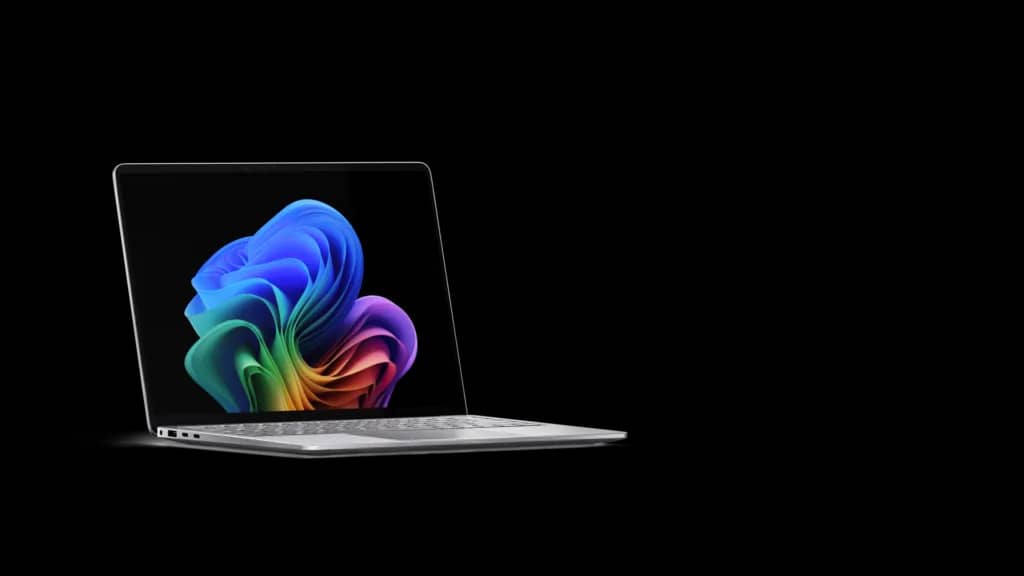
Microsoft has introduced the latest Surface Pro for Business and Surface Laptop for Business models, now available in select markets. These systems, equipped with Intel Core Ultra Series 3 processors, provide top-tier performance along with edge-based AI capabilities to boost overall productivity.
IT leaders and their partners face identical pressures as AI reshapes team workflows, cyberattacks grow more advanced, and intelligent agents influence long-term spending choices, all while facing heightened oversight. Choices made today regarding PC fleets will decide if companies pioneer this shift or lag behind for years.
Surface devices from Microsoft address these exact needs. The lineup integrates security features, hybrid AI functions, and purposeful engineering from the processor level through the operating system, allowing organizations to achieve their goals without trade-offs.
“At Flagstar, were focused on equipping our teams with technology thats secure, flexible and ready for the next wave of AI. Surface brings together the hardware, security and Microsoft ecosystem in a way that just works, giving our teams the confidence to run AI-powered workflows on device while staying protected and productive wherever they are,” said Jason Pope, Chief Technology Officer, Flagstar Bank.
Built on Intel’s latest Core Ultra Series 3 design, the new devices achieve a substantial increase in graphics capabilities, offering up to 35% greater graphics performance compared with the MacBook Air using M5, along with more than 90% faster operation than the prior Laptop 5 on certain setups featuring Intel Core Ultra X7. The integrated Intel Core Ultra Series 3 GPU supports real-time handling of tasks ranging from detailed data review and client presentations to on-the-move content development, supplying consistent and smooth operation that business leaders require while preserving portability, endurance, and protection.
The 13-inch Surface Laptop for Business stands as the lightest and most mobile option in the range. It launches immediately in select markets with 16GB and 24GB memory variants priced from $1,499 (MSRP), while an 8GB version will follow later this year from $1,299.99 (MSRP). The model incorporates local AI computation, Wi-Fi 7 connectivity, and a swappable Gen 4 SSD built for corporate maintainability, extending the complete Surface advantages into the entry-level premium segment without forcing compromises on speed or output in favor of size.
Meanwhile, the Surface Laptop for Business in 13.8-inch and 15-inch sizes targets fast-moving knowledge workers. These configurations are on sale now in chosen regions from $1,949.99 (MSRP) and include a responsive haptic touchpad, vivid high-resolution touchscreen, plus an available built-in privacy filter with anti-glare coating on select versions. Battery runtime reaches up to 23 hours.
Additional Surface for Business variants arriving later this year will use Snapdragon X2 processors. They promise up to 80% quicker on-device AI processing than previous generations together with exceptional battery longevity. The AI PCs support full business tempo whether staff members operate inside meeting rooms, visit client locations, or connect remotely.
Enterprise admins should weigh the on-device AI inferencing, removable SSD for serviceability and integrated security when evaluating fleet refreshes to balance performance gains against existing device management processes.
Tap a lens to see what this story means for you.
Liked this? The Brief brings you the whole day in tech, verified, every morning.
Two minutes, free forever. What's in The Brief →
See what’s happening right now
The Feed runs all day — short, verified briefs the moment they break.
Open the FeedFollow @thecircuitry_
Every story we publish, as it happens. No noise between.
Reader-supported
The Circuitry is a passion project I've always wanted to build, and I love the work behind it.
Running it costs real money. APIs, hosting, time. To keep improving the site and growing this into something useful for everyone, those costs have to be covered.
Any contribution is appreciated. If not, no pressure. Thanks for reading.
At its Windows and Surface event, Microsoft opened preorders for the $2,599 Surface Laptop Ultra and the $5,999 Surface RTX Spark Dev Box, and said Copilot will be able to use files and act across Windows in the coming months.
Microsoft announced Magnetic Connect, a magnetic USB-C charging solution for the Surface Laptop Ultra that keeps the port's video and data functions. The laptop starts at $2,599 and begins shipping October 16.
Meta and Microsoft are cutting employee use of Anthropic’s Claude AI and directing staff toward their own coding tools, The Information reported. The changes reflect tighter internal AI budgets while customer access to Claude through Microsoft platforms continues to expand.
Microsoft has introduced a local edition of MAI-Code-1.1-Flash that runs on Windows PCs without server access. The model requires substantial memory and is coming to GitHub Copilot in experimental preview by the end of October, starting with Nvidia RTX Spark PCs.
NVIDIA and Microsoft opened RTX Spark preorders and made Microsoft Execution Containers generally available at the Windows AI and Surface event, aimed at running AI agents on Windows PCs. RTX Spark laptops, first introduced in June, are on preorder today with up to 128 GB unified memory and one petaflop of AI compute, shipping October 16.