The Circuitry
THE CIRCUITRYYour one-stop source for all tech news
HOMETODAYNEWSFEEDEVENTS
BOOKMARKS
RSS
© 2026 The Circuitry
About UsSourcesContactCorrectionsPrivacy
  • Today
  • Feed
  • Events
  • Saved
Scroll for more
Verification
VERIFIEDConfidence: HIGH
Source identified
Claims cross-referenced
No discrepancies found
Fact-check summary

NASA, SpaceNews, Reuters and others confirm the June 30, 2026 awards of nearly $600M in contracts to Astrobotic (two Peregrine), Intuitive Machines (Nova-C) and Firefly (Blue Ghost) for 2028 Moon Base missions.

Sourcing
1source

via NASASpaceflight

Home/Tech/NASA Awards Four New Lunar Lander Contracts for Moon Base
VERIFIEDBy Xavier Rivera· ·2 min read

NASA Awards Four New Lunar Lander Contracts for Moon Base

NASA awarded four new Phase One lunar lander contracts totaling nearly $600 million on June 30, 2026, to Astrobotic, Intuitive Machines, and Firefly Aerospace for missions no earlier than 2028. The contracts advance the Moon Base program by delivering standardized science payloads and building on earlier reclassified CLPS landers to establish long-term lunar infrastructure.
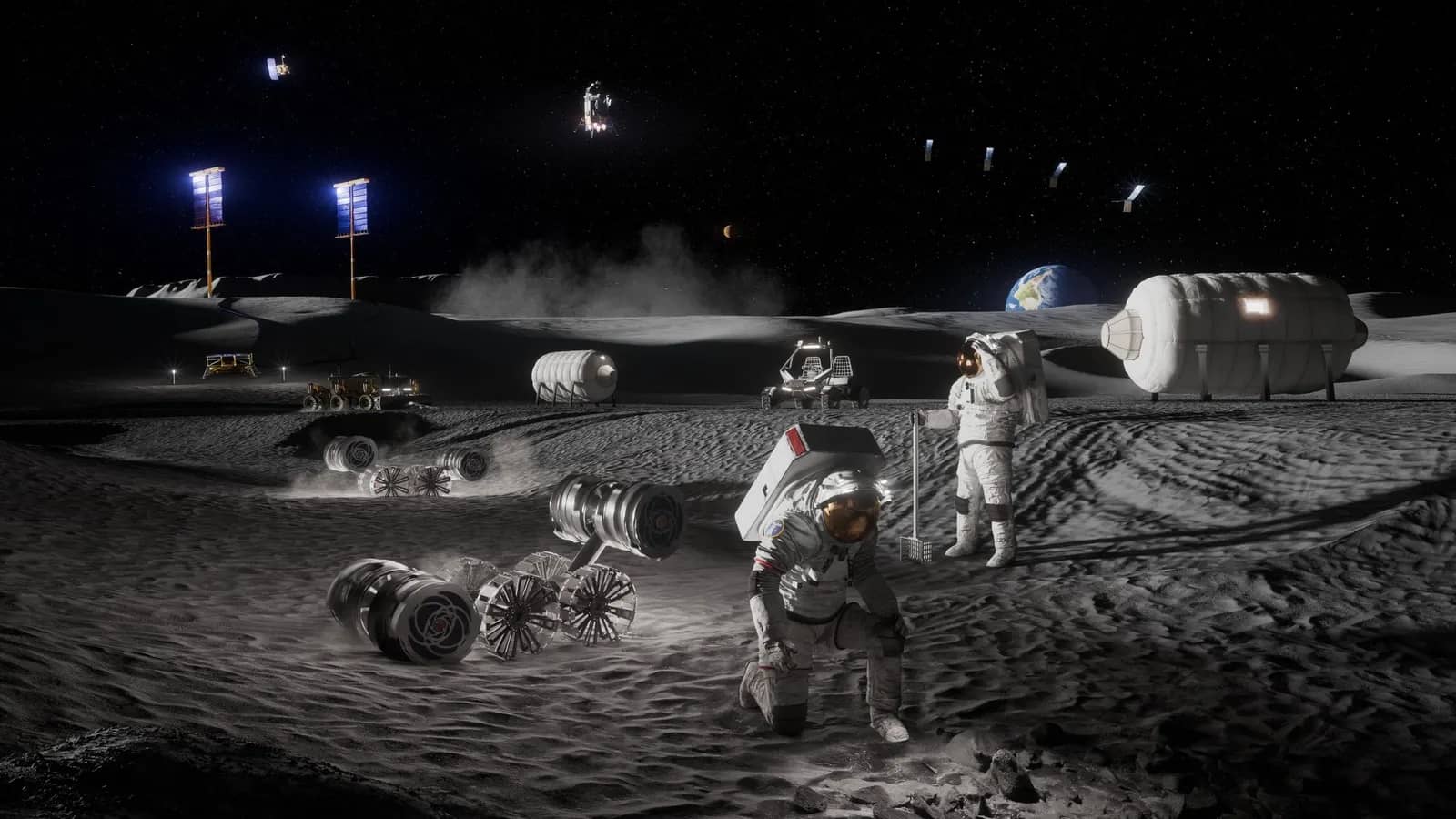
Source:NASASpaceflight
Post
NASA Awards Four New Lunar Lander Contracts for Moon Base
TL;DRAI · 60 sec read

NASA awarded four Phase One lunar lander contracts worth nearly $600 million to Astrobotic, Intuitive Machines, and Firefly Aerospace. Missions no earlier than 2028 will carry standard science payloads. The awards expand prior lander efforts and build infrastructure for sustained human lunar presence under Artemis.

NASA has awarded four new Phase One lunar lander contracts totaling nearly $600 million as part of its Moon Base program.

NASA advances Moon Base infrastructure with new commercial partners. On June 30, 2026, the agency selected Astrobotic for two awards covering its Peregrine landers 2 and 3. Intuitive Machines received one contract for its IM-4, a Nova-C class vehicle. Firefly Aerospace was chosen to deliver a variant of its Blue Ghost-1 lander.
The agency is exploring sending an engineering development model originally built as a testbed for Mars rovers Curiosity and Perseverance.

These missions target no earlier than 2028 and will carry NASA science and technology payloads. The awards build on three earlier landers reclassified from the Commercial Lunar Payload Services initiative.
POST FROM @NASAMoonBase· official announcement tweet matching the article's embedded post about the four new lunar lander contracts
https://x.com/NASAMoonBase/status/2072041541799948629

Earlier Moon Base missions form the program's backbone. In March 2026, NASA outlined initial steps at its Ignition event. Blue Origin’s Blue Moon Mark 1 Endurance, Astrobotic’s Griffin-1, and Intuitive Machines’ Nova-C lander were repurposed as the first three Moon Base missions. They are tasked with proving landing capabilities on the lunar surface.
From The CircuitryThe Feed — live briefs across tech, all day.See what’s happening →

Standard payloads equip each Phase One lander. Every selected vehicle and future Phase One landers will deliver the same core set of three scientific instruments. The Stereo Camera for Lunar Plume Surface Studies uses four cameras and stereo photogrammetry to create 3D views of engine exhaust plumes interacting with lunar dust. The Laser Retroreflective Array reflects beams from orbiters to aid precise orbit determination and landing site selection. The Linear Energy Transfer Spectrometer analyzes the lunar surface radiation environment using an advanced silicon detector.
This phased strategy mirrors the 1960s approach to the first American lunar landing.

NASA evaluates repurposed rover for lunar resource prospecting. The agency is exploring sending an engineering development model originally built as a testbed for Mars rovers Curiosity and Perseverance. The Polar Rover for Observation, Mapping and In-Situ Exploration, known as PROMISE, would characterize the lunar surface, subsurface, and prospect for resources. NASA has not finalized the decision.
Lori Glaze, NASA’s associate administrator for the Human Spaceflight Mission Directorate, stated that the awards demonstrate commitment to accelerating long-term lunar presence and developing necessary skills. The overall program aims to build essential infrastructure gradually, leading to sustained human missions under the Artemis framework. This phased strategy mirrors the 1960s approach to the first American lunar landing.
Why this mattersAI · ~100 words

Tap a lens to see what this story means for you.

Reader-supported
DonateBuy me a coffee →Follow@thecircuitry_ →Follow@thecircuitry.to →

Reader-supported · The Brief

Liked this? The Brief brings you the whole day in tech, verified, every morning. Two minutes, free forever.

HELP US IMPROVE
From The Circuitry

See what’s happening right now

The Feed runs all day — short, verified briefs the moment they break.

Open the Feed →
From The Circuitry

Follow @thecircuitry_

Every story we publish, as it happens. No noise between.

Follow on X ↗On Bluesky ↗

Reader-supported

The Circuitry is a passion project I've always wanted to build, and I love the work behind it.

Running it costs real money. APIs, hosting, time. To keep improving the site and growing this into something useful for everyone, those costs have to be covered.

Any contribution is appreciated. If not, no pressure. Thanks for reading.

Buy me a coffee
NASALunar LanderMoon BaseArtemis
More inTech
  • Tesla and SpaceX confirm Terafab chip fab in Texas

    Tech · 1d
  • OpenAI Urges Federal Judge to Throw Out Apple's Trade Secrets Complaint

    Tech · 2d
  • Meta introduces Muse Code, its terminal-based coding agent

    Tech · 2d
SupportThe Work

The Circuitry is reader-supported. If you find the daily brief useful, you can buy me a coffee to keep it going.

Buy a coffee →
SubscribeCircuitry Brief

Liked this? The Brief brings you the whole day in tech, verified, every morning. Free forever.

MORE IN TECH

Tesla and SpaceX confirm Terafab chip fab in Texas

Tesla and SpaceX have confirmed Grimes County, Texas as the site for their Terafab semiconductor megafactory, with the first phase costing roughly $16.8 billion. The project targets the largest chip manufacturing facility on the planet to supply over 1 terawatt of compute per year that exceeds current and future global production capacity.

OpenAI Urges Federal Judge to Throw Out Apple's Trade Secrets Complaint

OpenAI has filed a motion asking a federal judge to dismiss Apple's trade secrets lawsuit, describing the claims as meritless. The dispute, which follows a July suit and this week's injunction request from Apple, highlights tensions after their prior partnership on Siri and OpenAI's hardware push.

Meta introduces Muse Code, its terminal-based coding agent

Meta has released an early beta of Muse Code, a terminal-based coding agent driven by the updated Muse Spark 1.2 model and positioned against Anthropic's Claude Code and OpenAI's Codex. Substantially lower rates, including a contributor plan at $0.10 for every million tokens received, may encourage migration away from higher-priced options such as Anthropic's Sonnet 5.