The Circuitry
THE CIRCUITRYYour one-stop source for all tech news
HOMETODAYNEWSFEEDEVENTS
BOOKMARKS
RSS
© 2026 The Circuitry
About UsSourcesContactCorrectionsPrivacy
  • Today
  • Feed
  • Events
  • Saved
Scroll for more
Verification
VERIFIEDConfidence: HIGH
Source identified
Claims cross-referenced
No discrepancies found
Fact-check summary

OpenAI's GPT-5.6 public rollout (Sol/Terra/Luna) plus GPT-Live voice models is corroborated by OpenAI's June 26 blog, Reuters, Axios, Wikipedia and the matching CNBC article.

Sourcing
1source

via CNBC Tech

CNBC Tech · track record
49Stories
100%Verified
530d
All sources →
Home/Tech/OpenAI makes GPT-5.6 models available to everyone
VERIFIEDBy Xavier Rivera· ·2 min read

OpenAI makes GPT-5.6 models available to everyone

OpenAI has opened GPT-5.6 Sol, Terra and Luna to all users after a government-requested limited preview and introduced GPT-Live voice models capable of real-time conversation. The timing follows Anthropic's restoration of its own latest models after a dispute over export controls.
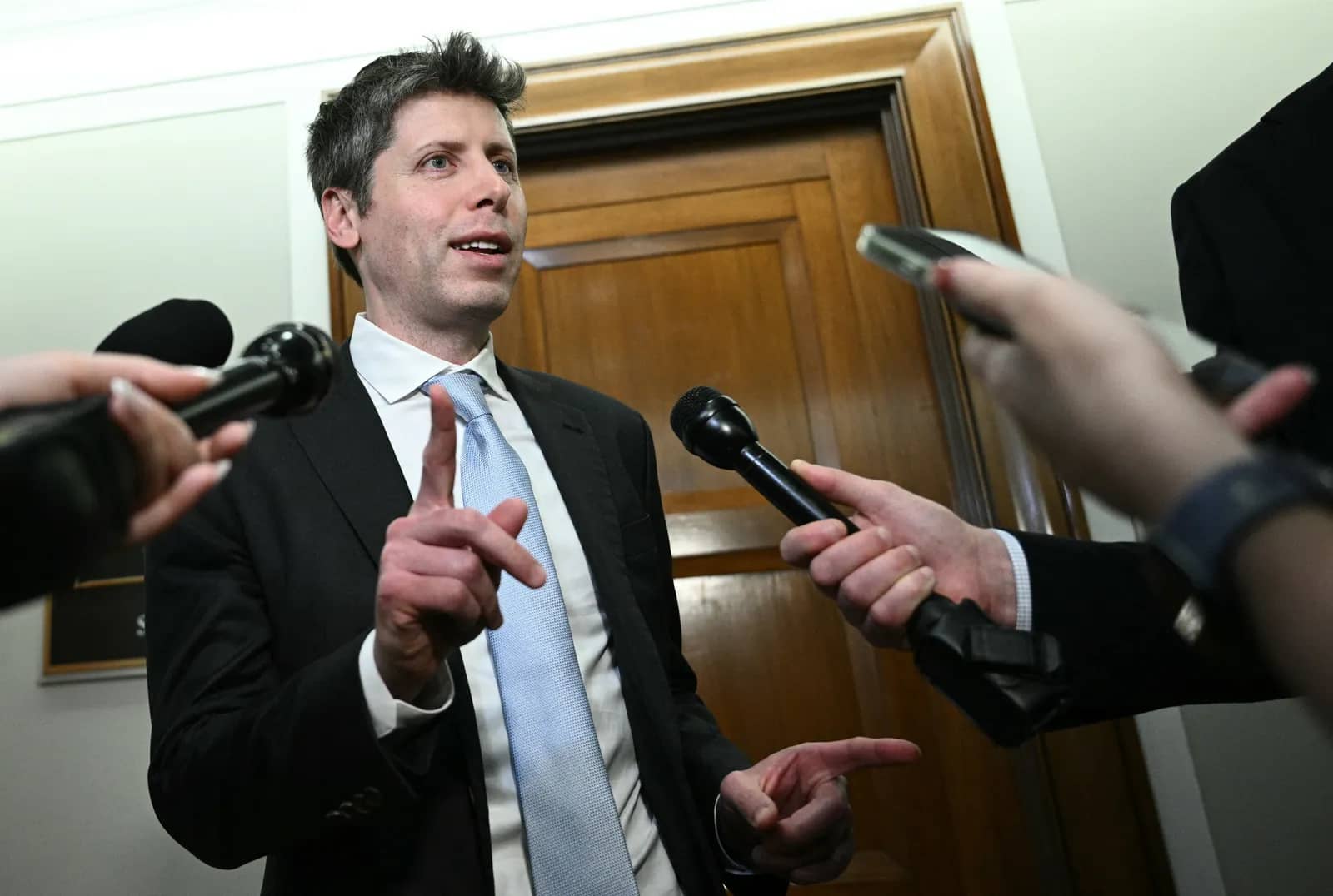
Source:CNBC Tech
Post
OpenAI makes GPT-5.6 models available to everyone
TL;DRAI · 60 sec read

OpenAI opens its GPT-5.6 models to all users and launches GPT-Live voice models that listen and reply simultaneously. The release follows a required U.S. government review under a June executive order and comes days after rival Anthropic regained access to its top models.

OpenAI has now opened its GPT-5.6 Sol, Terra and Luna models to the general public. The company simultaneously introduced a fresh set of voice models known as GPT-Live.

OpenAI expands GPT-5.6 availability globally. The models reached ordinary users on Thursday, about two weeks after the firm had confined early access to only a "small group of trusted partners" at the request of the U.S. government. "Happy building," OpenAI CEO Sam Altman wrote in a post on X late Tuesday. The firm first introduced the GPT-5.6 lineup in June and at that point consented to supply the technology solely to chosen groups whose involvement "has been shared with the government."
The models reached ordinary users on Thursday, about two weeks after the firm had confined early access to only a "small group of trusted partners" at the request of the U.S. government.

New GPT-Live voice models enable simultaneous listening and speaking. Versions labeled GPT-Live-1 and GPT-Live-1 mini started reaching ChatGPT customers across the world on Wednesday. According to an OpenAI blog post the systems can process speech and generate replies at once, making exchanges feel "much more like having a real conversation."
GPT-5.6 Sol, Terra and Luna announcement graphic from OpenAI
GPT-5.6 Sol, Terra and Luna announcement graphic from OpenAI · OpenAI

From The CircuitryThe Feed — live briefs across tech, all day.See what’s happening →
Release follows government review process established in June. In June the company declared support for "broad access" and pledged to widen distribution in the weeks ahead. OpenAI added that it does not think this variety of government review "should become the long-term default" since it withholds advanced capabilities from users, developers, enterprises, cyber defenders and international partners. The firm called GPT-5.6 Sol its "strongest model yet" and noted superior performance in coding, biology and cybersecurity.
POST FROM @OpenAI· official announcement tweet expanding GPT-5.6 preview access globally
https://x.com/OpenAI/status/2074704958419792299

Timing aligns with rival Anthropic's restored model access. The wider debut arrives shortly after chief competitor Anthropic regained permission to offer its Claude Fable 5 and Mythos 5 models after a weeks-long dispute with officials. Anthropic had blocked those releases to meet an export control directive that the U.S. Department of Commerce removed late last month. OpenAI is broadening preview access to the GPT-5.6 models around the planet, the firm stated in a post on X late Tuesday.
OpenAI added that it does not think this variety of government review "should become the long-term default" since it withholds advanced capabilities from users, developers, enterprises, cyber defenders and international partners.

Trump administration AI order shapes voluntary reviews. The Trump administration has assumed a larger part in AI rollouts since President Donald Trump issued an executive order on the topic in June. That directive calls on developers to supply their most advanced systems to federal reviewers for capability checks before general distribution and instructed agencies to craft an evaluation framework inside 60 days. OpenAI reported in June that it is collaborating with officials to shape assessment standards and create "a repeatable process for future model releases."
Why this mattersAI · ~100 words

Tap a lens to see what this story means for you.

Reader-supported
DonateBuy me a coffee →Follow@thecircuitry_ →Follow@thecircuitry.to →

Reader-supported · The Brief

Liked this? The Brief brings you the whole day in tech, verified, every morning. Two minutes, free forever.

HELP US IMPROVE
From The Circuitry

See what’s happening right now

The Feed runs all day — short, verified briefs the moment they break.

Open the Feed →
From The Circuitry

Follow @thecircuitry_

Every story we publish, as it happens. No noise between.

Follow on X ↗On Bluesky ↗

Reader-supported

The Circuitry is a passion project I've always wanted to build, and I love the work behind it.

Running it costs real money. APIs, hosting, time. To keep improving the site and growing this into something useful for everyone, those costs have to be covered.

Any contribution is appreciated. If not, no pressure. Thanks for reading.

Buy me a coffee
OpenAIGPT-5.6AI models
More fromCNBC Tech
  • CXMT jumps 466% in Shanghai debut to eclipse all other China-listed firms

    Markets · 12d
  • TSMC profit surges 77% as Arizona spending swells by $100 billion

    Tech · 23d
  • Inflation cools, IBM plunges 25%, Morgan Stanley beats

    Markets · 24d
More inTech
  • Tesla and SpaceX confirm Terafab chip fab in Texas

    Tech · 1d
  • OpenAI Urges Federal Judge to Throw Out Apple's Trade Secrets Complaint

    Tech · 2d
  • Meta introduces Muse Code, its terminal-based coding agent

    Tech · 2d
SupportThe Work

The Circuitry is reader-supported. If you find the daily brief useful, you can buy me a coffee to keep it going.

Buy a coffee →
SubscribeCircuitry Brief

Liked this? The Brief brings you the whole day in tech, verified, every morning. Free forever.

MORE IN TECH

Tesla and SpaceX confirm Terafab chip fab in Texas

Tesla and SpaceX have confirmed Grimes County, Texas as the site for their Terafab semiconductor megafactory, with the first phase costing roughly $16.8 billion. The project targets the largest chip manufacturing facility on the planet to supply over 1 terawatt of compute per year that exceeds current and future global production capacity.

OpenAI Urges Federal Judge to Throw Out Apple's Trade Secrets Complaint

OpenAI has filed a motion asking a federal judge to dismiss Apple's trade secrets lawsuit, describing the claims as meritless. The dispute, which follows a July suit and this week's injunction request from Apple, highlights tensions after their prior partnership on Siri and OpenAI's hardware push.

Meta introduces Muse Code, its terminal-based coding agent

Meta has released an early beta of Muse Code, a terminal-based coding agent driven by the updated Muse Spark 1.2 model and positioned against Anthropic's Claude Code and OpenAI's Codex. Substantially lower rates, including a contributor plan at $0.10 for every million tokens received, may encourage migration away from higher-priced options such as Anthropic's Sonnet 5.