The Circuitry
THE CIRCUITRYYour one-stop source for all tech news
HOMETODAYNEWSFEEDEVENTS
BOOKMARKS
RSS
© 2026 The Circuitry
About UsSourcesContactCorrectionsPrivacy
  • Today
  • Feed
  • Events
  • Saved
Scroll for more
Verification
VERIFIEDConfidence: HIGH
Source identified
Claims cross-referenced
No discrepancies found
Fact-check summary

Ars Technica, Engadget and Tech Times corroborate Philips offering free replacements for fewer than 100 bricked Hue Bridge Pro devices after a June firmware update.

Sourcing
1source

via The Register

The Register · track record
16Stories
100%Verified
030d
All sources →
From The CircuitryWhy The Circuitry

Verified tech news, cross-checked.

Every story is checked against independent sources before it posts — no rumors dressed up as fact.

How we verify →
Home/Tech/Philips to replace bricked Hue Bridge Pro devices
VERIFIEDBy Xavier Rivera· ·2 min read

Philips to replace bricked Hue Bridge Pro devices

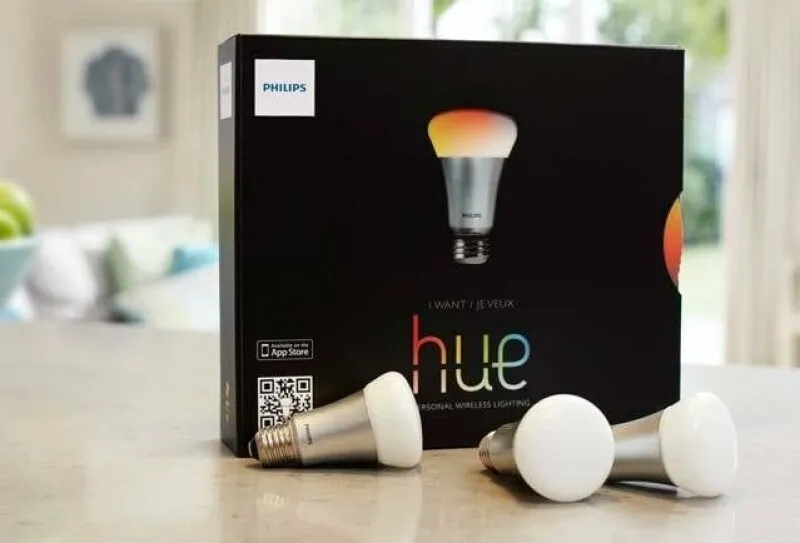
Philips is replacing fewer than 100 Hue Bridge Pro devices bricked by a specific firmware update scenario and has issued a new update on July 13 to prevent further cases. The replacements are free regardless of warranty but require users to rebuild their smart lighting setups from scratch since configuration backups are unavailable.
Source:The Register
Post
Philips to replace bricked Hue Bridge Pro devices
From The CircuitryWhy The Circuitry

Verified tech news, cross-checked.

Every story is checked against independent sources before it posts — no rumors dressed up as fact.

How we verify →
TL;DRAI · 60 sec read

Philips replaces fewer than 100 Hue Bridge Pro devices bricked by a firmware update that left them inoperable with red LEDs. Affected owners receive free replacements regardless of warranty status but must reconfigure their setups. The company issued a new update to prevent further bricking and urges automatic updates. The incident exposes risks of firmware failures in smart home hubs.

Philips is replacing Hue Bridge Pro devices after a firmware update left fewer than 100 units inoperable with no recovery option for users.

Philips identifies a specific firmware issue affecting limited devices. The company has confirmed the problem impacts Hue Bridge Pro units where automatic software updates were disabled and the device remained on an older version for an extended period before a manual update was installed under particular conditions. In those cases the Bridge Pro becomes inoperable, displays a red LED, and loses connectivity to the Philips Hue app and connected lights or accessories. A spokesperson told The Register that data shows fewer than 100 devices have been affected.
Rumblings about the bricking began in forums in June after the earlier update left some users literally in the dark.

Affected owners will receive free replacements regardless of warranty. Philips has instructed impacted users to contact customer support for confirmation and replacement. The replacements come at no charge even if the device is out of warranty. However users will need to set up their network of lights and devices again from scratch because backing up a configuration is not currently possible.
From The CircuitryThe Feed — live briefs across tech, all day.See what’s happening →
Philips releases a new firmware update to prevent further incidents. The update was issued on July 13 for devices that have not been bricked. The company urges users to enable automatic updates so the firmware rolls out as scheduled. Rumblings about the bricking began in forums in June after the earlier update left some users literally in the dark. According to a Philips spokesperson, after several weeks of attempted resolutions the company has now decided it will replace affected devices.
The incident has highlighted risks in smart home devices including the possibility that a firmware update can leave hardware hopelessly bricked.
The Hue Bridge Pro serves as the hub for the Philips Hue lighting ecosystem. It supports more than 150 lights and over 50 accessories. Philips describes the hub as equipped with a new chip capable of running complex algorithms and AI-powered features, making it faster and stronger than previous versions. The incident has highlighted risks in smart home devices including the possibility that a firmware update can leave hardware hopelessly bricked.
From The CircuitryWhy The Circuitry

Verified tech news, cross-checked.

Every story is checked against independent sources before it posts — no rumors dressed up as fact.

How we verify →
Philips faces questions on its validation procedures after the failure. The company should be commended for offering replacements out of warranty. Questions remain about its validation and qualification procedures for updates. The episode follows earlier forum reports from June.
Why this mattersAI · ~100 words

Tap a lens to see what this story means for you.

Morning Brief

Liked this? The Brief brings you the whole day in tech, verified, every morning.

Two minutes, free forever. What's in The Brief →

Reader-supported
DonateBuy me a coffee →Follow@thecircuitry_ →Follow@thecircuitry.to →
HELP US IMPROVE
From The Circuitry

See what’s happening right now

The Feed runs all day — short, verified briefs the moment they break.

Open the Feed →
From The Circuitry

Follow @thecircuitry_

Every story we publish, as it happens. No noise between.

Follow on X ↗On Bluesky ↗

Reader-supported

The Circuitry is a passion project I've always wanted to build, and I love the work behind it.

Running it costs real money. APIs, hosting, time. To keep improving the site and growing this into something useful for everyone, those costs have to be covered.

Any contribution is appreciated. If not, no pressure. Thanks for reading.

Buy me a coffee
Philips HueSmart HomeFirmware Update
More fromThe Register
  • Xi calls for AI emergency systems and global openness

    Tech · 2mo
  • OpenAI admits GPT-5.6 occasionally deletes files – but it's an 'honest mistake'

    Tech · 2mo
  • Microsoft tells Windows 10 holdouts they can keep using their PCs until 2027

    Tech · 2mo
More inTech
  • Critical CVE-2026-77900 Hits Microsoft Azure App Service for Linux

    Tech · 11h
  • Critical CVE-2026-88131 hits Microsoft Dataverse with remote code execution

    Tech · 11h
  • Critical CVE-2026-16823 hits IBM Security Verify Access

    Tech · 13h
SupportThe Work

The Circuitry is reader-supported. If you find the daily brief useful, you can buy me a coffee to keep it going.

Buy a coffee →
From The CircuitryWhy The Circuitry

Verified tech news, cross-checked.

Every story is checked against independent sources before it posts — no rumors dressed up as fact.

How we verify →

MORE IN THIS BEAT

All Tech →
  • Tech· 

    All-New Apple Home Hub Reportedly Launching as Soon as October

    Bloomberg's Mark Gurman reports that Apple intends to introduce a brand-new smart home hub sometime from October through the first months of next year. The unit will feature an approximately 7-inch screen, Siri AI at its center, facial recognition, adaptive interface scaling, and a range of smart-home tools in both tabletop and wall-mounted editions.

  • Tech· 

    Google Rolls Gemini 3.1 to Home Speakers with Camera, Automation Upgrades

    Google expands Gemini 3.1 to Home smart speakers and adds camera navigation plus automation triggers. Early-access users gain complex multi-step commands and web/app device management for smoother smart home control.

  • Tech· 

    GlobalFoundries signs $2B TSMC deal for US silicon interposers

    GlobalFoundries signed a multi-year US$2 billion agreement with TSMC on October 8, 2026 to manufacture silicon interposers at its Malta, New York fab. The deal creates the first US-based source of silicon interposers for TSMC's CoWoS advanced packaging ecosystem.

  • Tech· 

    SpaceX agrees to buy 800 MHz spectrum for Starlink Mobile

    SpaceX has agreed to acquire Grain Management's nationwide 800 MHz spectrum portfolio, which it says will pave the way for Starlink Mobile to become a major US mobile carrier. The deal needs FCC approval, and financial terms were not disclosed.

  • Tech· 

    Microsoft discloses CVE-2026-83947 in Azure Event Grid

    Microsoft has disclosed CVE-2026-83947, a CVSS 7.7 HIGH spoofing vulnerability in Azure Event Grid caused by missing authorization. Microsoft says it has already fully mitigated the cloud-service flaw and customers have nothing to do.