The Circuitry
THE CIRCUITRYYour one-stop source for all tech news
HOMETODAYNEWSFEEDEVENTS
BOOKMARKS
RSS
© 2026 The Circuitry
About UsSourcesContactCorrectionsPrivacy
  • Today
  • Feed
  • Events
  • Saved
Scroll for more
Verification
VERIFIEDConfidence: HIGH
Source identified
Claims cross-referenced
No discrepancies found
Fact-check summary

Reported by CNBC Tech; we couldn't independently corroborate the HBM4E samples shipment or May 29 share surge via other outlets yet — story is recent.

1 caveat
  • ▲Samsung's official Feb 2026 release and other reports confirm HBM4 shipments and ~6.4% share gains then, with HBM4E sampling planned for H2 2026; no matching HBM4E shipping reports found.
Sourcing
1source

via CNBC Tech

CNBC Tech · track record
49Stories
100%Verified
530d
All sources →
Home/Tech/Samsung Shares Surge 6.5% After Shipping HBM4E Samples
VERIFIEDBy Xavier Rivera· ·1.5 min read

Samsung Shares Surge 6.5% After Shipping HBM4E Samples

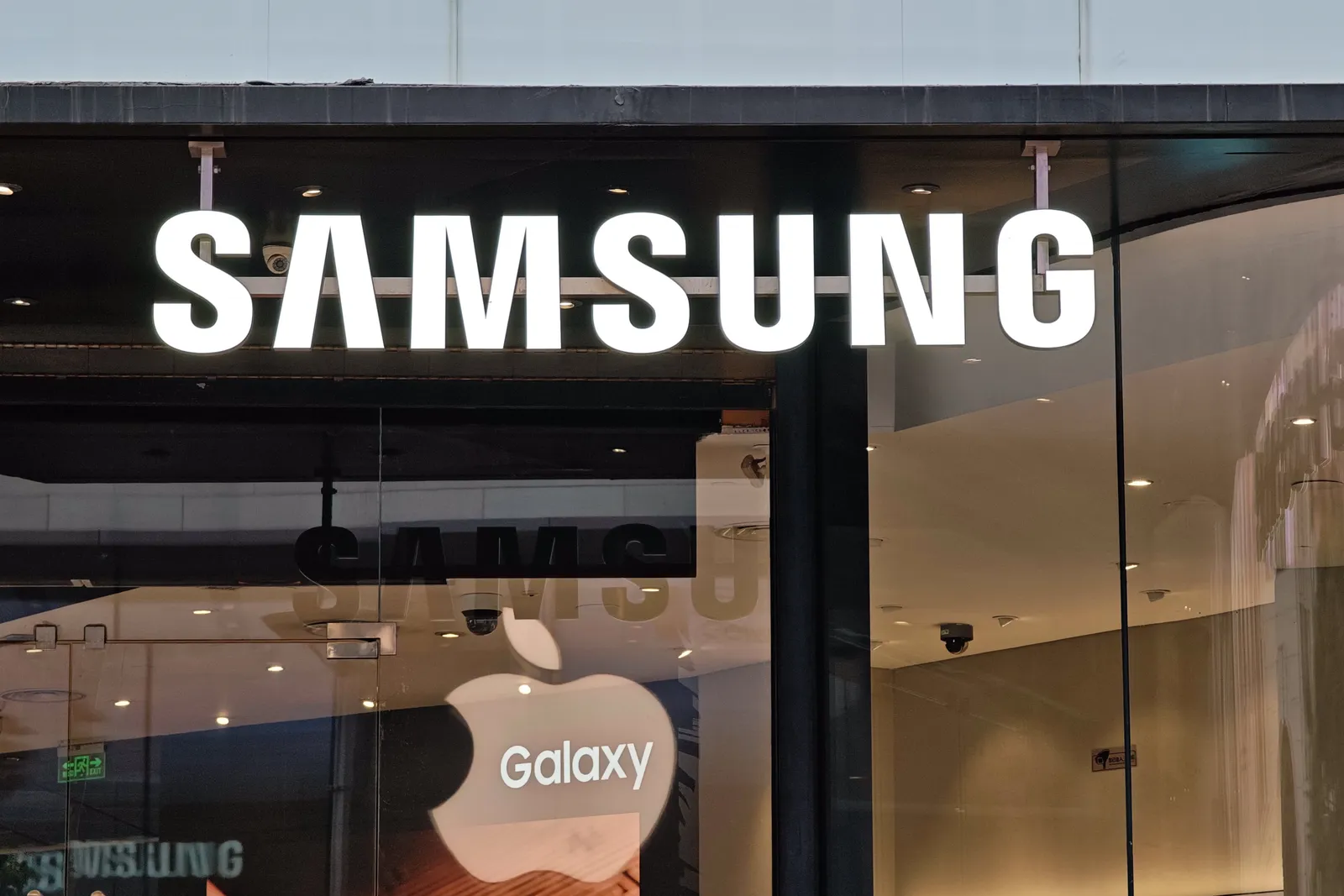
Samsung shares surged as much as 6.51% after the company began shipping samples of its industry-first 12-layer HBM4E AI memory chip globally. The development advances Samsung's push to compete with SK Hynix in high-bandwidth memory for AI accelerators from Nvidia and Google.
Source:CNBC Tech
Post
Samsung Shares Surge 6.5% After Shipping HBM4E Samples
TL;DRAI · 60 sec read

Samsung shares surged 6.51 percent after it began shipping samples of its 12-layer HBM4E high-bandwidth memory chips. The chips reach 16 Gbps speeds with 48GB capacity and better efficiency. They support AI accelerators from Nvidia and Google, helping Samsung close the gap with SK Hynix in the next-generation AI memory market.

Shares of Samsung Electronics surged as much as 6.51% after the company said it had begun shipping samples of its latest high-bandwidth memory chip to its customers globally.

The chipmaker's 12-layer HBM4E chip, which it described as an industry first, can reach speeds of up to 16 Gigabits-per-second with improved energy efficiency and thermal performance, the company said in a press release. Samsung also noted that HBM4E was faster than its previous HBM4 products.
High Bandwidth Memory chips, such as those produced by Samsung, SK Hynix and Micron are used in advanced artificial intelligence systems.

High Bandwidth Memory chips, such as those produced by Samsung, SK Hynix and Micron are used in advanced artificial intelligence systems. They help processors handle large amounts of data quickly, required by AI accelerators such as Nvidia's Rubin and Google's Ironwood Tensor Processing Unit.

Samsung's 12-layer HBM4E, which stacks Dynamic Random-Access Memory vertically, has a 48-gigabyte capacity, representing more than a 30% increase compared with the previous generation, the company said. The South Korean chipmaker added that there are plans to expand the lineup to include an 8-layer 32GB and a 16-layer 64GB configuration, depending on customer requirements.
From The CircuitryThe Feed — live briefs across tech, all day.See what’s happening →

"Through our advanced manufacturing capabilities and preemptive infrastructure investments, we will continue to drive the growth of the global AI memory market," said Sang Joon Hwang, executive vice president and head of memory development at Samsung Electronics.
Samsung is pushing to gain ground in next-generation AI memory.

The news comes after Samsung began shipping HBM4 chips to customers in February, as it seeks to narrow the gap with SK Hynix and strengthen its position in the next-generation AI memory market. Samsung is pushing to gain ground in next-generation AI memory.
Shares last traded 3.67% higher at 310,500 won.
Why this mattersAI · ~100 words

Tap a lens to see what this story means for you.

Reader-supported
DonateBuy me a coffee →Follow@thecircuitry_ →Follow@thecircuitry.to →

Reader-supported · The Brief

Liked this? The Brief brings you the whole day in tech, verified, every morning. Two minutes, free forever.

HELP US IMPROVE
From The Circuitry

See what’s happening right now

The Feed runs all day — short, verified briefs the moment they break.

Open the Feed →
From The Circuitry

Follow @thecircuitry_

Every story we publish, as it happens. No noise between.

Follow on X ↗On Bluesky ↗

Reader-supported

The Circuitry is a passion project I've always wanted to build, and I love the work behind it.

Running it costs real money. APIs, hosting, time. To keep improving the site and growing this into something useful for everyone, those costs have to be covered.

Any contribution is appreciated. If not, no pressure. Thanks for reading.

Buy me a coffee
SamsungHBM4EAI MemorySemiconductors
More fromCNBC Tech
  • CXMT jumps 466% in Shanghai debut to eclipse all other China-listed firms

    Markets · 12d
  • TSMC profit surges 77% as Arizona spending swells by $100 billion

    Tech · 23d
  • Inflation cools, IBM plunges 25%, Morgan Stanley beats

    Markets · 24d
More inTech
  • Tesla and SpaceX confirm Terafab chip fab in Texas

    Tech · 1d
  • OpenAI Urges Federal Judge to Throw Out Apple's Trade Secrets Complaint

    Tech · 2d
  • Meta introduces Muse Code, its terminal-based coding agent

    Tech · 2d
SupportThe Work

The Circuitry is reader-supported. If you find the daily brief useful, you can buy me a coffee to keep it going.

Buy a coffee →
SubscribeCircuitry Brief

Liked this? The Brief brings you the whole day in tech, verified, every morning. Free forever.

MORE IN TECH

Tesla and SpaceX confirm Terafab chip fab in Texas

Tesla and SpaceX have confirmed Grimes County, Texas as the site for their Terafab semiconductor megafactory, with the first phase costing roughly $16.8 billion. The project targets the largest chip manufacturing facility on the planet to supply over 1 terawatt of compute per year that exceeds current and future global production capacity.

OpenAI Urges Federal Judge to Throw Out Apple's Trade Secrets Complaint

OpenAI has filed a motion asking a federal judge to dismiss Apple's trade secrets lawsuit, describing the claims as meritless. The dispute, which follows a July suit and this week's injunction request from Apple, highlights tensions after their prior partnership on Siri and OpenAI's hardware push.

Meta introduces Muse Code, its terminal-based coding agent

Meta has released an early beta of Muse Code, a terminal-based coding agent driven by the updated Muse Spark 1.2 model and positioned against Anthropic's Claude Code and OpenAI's Codex. Substantially lower rates, including a contributor plan at $0.10 for every million tokens received, may encourage migration away from higher-priced options such as Anthropic's Sonnet 5.