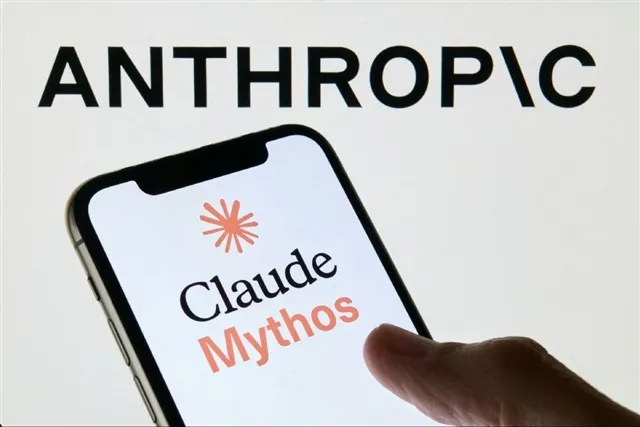
Anthropic agreed to brief the Financial Stability Board on the cyber risk profile of its Claude Mythos model following a request from the Bank of England governor. The sessions will detail how the model uncovers vulnerabilities in global financial systems and its potential effects on cyber defenses and stability.
Tap a lens to see what this story means for you.
Liked this? The Brief brings you the whole day in tech, verified, every morning.
Two minutes, free forever. What's in The Brief →
See what’s happening right now
The Feed runs all day — short, verified briefs the moment they break.
Open the FeedFollow @thecircuitry_
Every story we publish, as it happens. No noise between.
Reader-supported
The Circuitry is a passion project I've always wanted to build, and I love the work behind it.
Running it costs real money. APIs, hosting, time. To keep improving the site and growing this into something useful for everyone, those costs have to be covered.
Any contribution is appreciated. If not, no pressure. Thanks for reading.
FinCEN is investigating a cybersecurity incident after unauthorized access reached only part of its systems, and it has taken some systems offline. Affected Bank Secrecy Act and beneficial-ownership filings with due dates from November 18 to December 29, 2026 must be submitted by December 30.
Anthropic has published Siren, an evaluation that tempts AI agents to escape deliberately weakened sandboxes, with results for six Claude models. Recent models reach outside in 21% to 32% of scenarios but misuse what they find in 0.6% to 1.6%, and three mitigations cut that further.
The European Commission has confirmed that names and email addresses of external EU Academy users leaked in an ongoing AI-assisted cyberattack. The platform's public access is disabled, the leak's scale is under investigation, and the Commission has not attributed the attack.
Anthropic has launched Claude Ship in beta, three agents that review pull requests, fix them and approve the ones a team's policy allows. It is available to Claude Team and Enterprise customers on GitHub and is billed on tokens.
OpenAI's chief scientist has proposed shared limits on model perplexity and published internal scores from GPT-3.5 onward. Those scores put GPT-3.5 near 0.99 and GPT-4 near 0.91, and the proposal asks labs not to cross a shared bar until monitoring improves.