The Circuitry
THE CIRCUITRYYour one-stop source for all tech news
HOMETODAYNEWSFEEDEVENTS
BOOKMARKS
RSS
© 2026 The Circuitry
About UsSourcesContactCorrectionsPrivacy
  • Today
  • Feed
  • Events
  • Saved
Scroll for more
Verification
VERIFIEDConfidence: HIGH
Source identified
Claims cross-referenced
No discrepancies found
Fact-check summary

UNECE's June 24, 2026 adoption of the first global framework for fully driverless ADS is corroborated by official UNECE press, UN News, TomTom, TechXplore and multiple outlets.

Sourcing
1source

via Frandroid

Frandroid · track record
44Stories
100%Verified
530d
All sources →
Home/Tech/UN Adopts First Global Rules for Driverless Cars
VERIFIEDBy Xavier Rivera· ·1.5 min read

UN Adopts First Global Rules for Driverless Cars

The UNECE has adopted the first global regulatory framework for fully driverless automated driving systems on June 24, 2026. It sets uniform safety and testing standards but still requires each country to issue its own homologations before vehicles can operate without a driver.
Source:Frandroid
Post
UN Adopts First Global Rules for Driverless Cars
TL;DRAI · 60 sec read

The UNECE adopts the first global rules for fully driverless cars. The framework sets uniform safety requirements for acceleration, braking and other functions in vehicles without human drivers. Carmakers must pass tests and monitoring to prove performance matches or exceeds human drivers. Rules take effect in 2027 after national approvals. This creates consistent standards across countries for autonomous vehicle deployment.

The UNECE has adopted the first global regulatory framework for fully driverless automated driving systems, establishing uniform international safety requirements and a common methodology for vehicles that operate entirely without a driver.

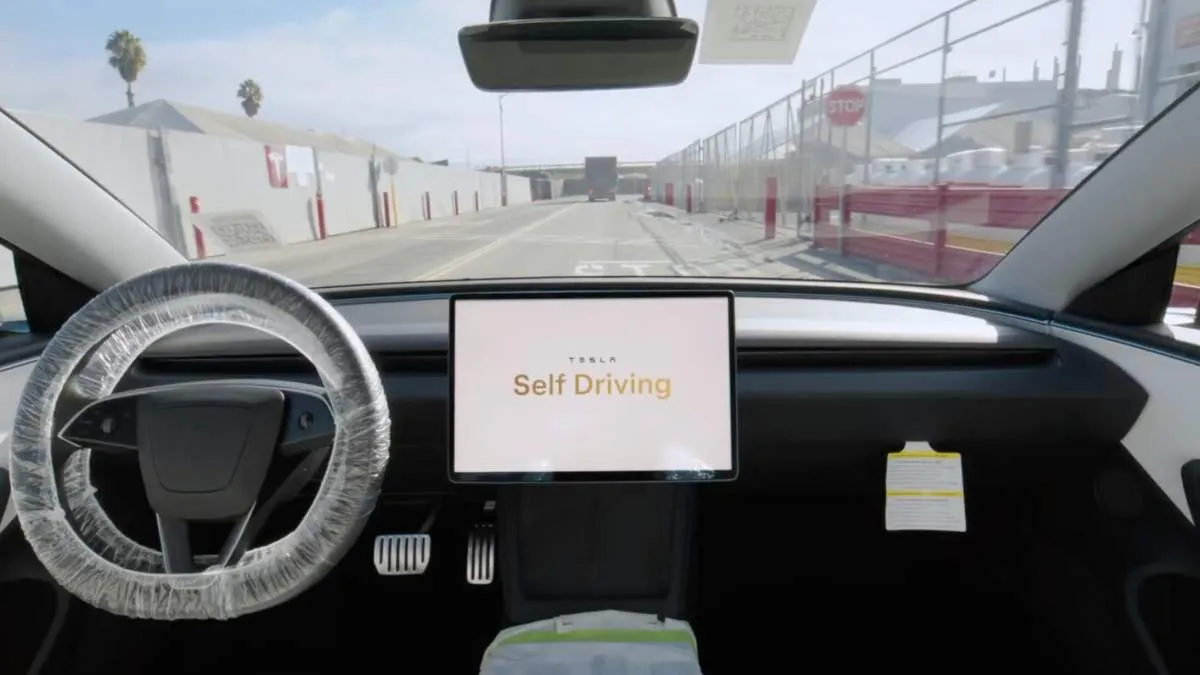
The UNECE framework targets fully driverless systems. It covers acceleration, braking, lights and turn signals for automated driving systems capable of functioning without human intervention. The rules focus on development, homologation and operation but exclude level 2 driver assistance systems such as Tesla’s current supervised FSD.
Automated driving systems must perform at a level equal to or superior to a competent human driver.

Carmakers must demonstrate the robustness of their design, validation and compliance with road rules through comprehensive tests including simulations, track tests and real-world tests. The framework requires continuous monitoring of vehicles in operation with data recorded throughout their life cycle.

Strict performance and approval standards apply. Automated driving systems must perform at a level equal to or superior to a competent human driver. Manufacturers cannot offer autonomous driving to the general public by default and must meet demanding safety rules before national homologation.
From The CircuitryThe Feed — live briefs across tech, all day.See what’s happening →

The regulation does not automatically authorize driverless cars on public roads. Each signatory country will issue its own national homologations based on the common framework.
The rules focus on development, homologation and operation but exclude level 2 driver assistance systems such as Tesla’s current supervised FSD.

Timeline and parallel regulatory updates set stage for 2027 rollout. The framework was adopted on June 24, 2026 and must enter into force in the weeks following that date, with concrete application expected around the beginning of 2027. In parallel the UNECE revised 90 existing United Nations regulations so they remain applicable to vehicles equipped with automated driving systems, including future models without pedals or steering wheels such as the Tesla Cybercab.
The move addresses the previous absence of worldwide regulation even as autonomous technology is already available in several countries under national or regional rules. Carmakers including Tesla continue to push level 3 and higher systems in Europe while others such as BMW and Mercedes have scaled back earlier ambitions.
Why this mattersAI · ~100 words

Tap a lens to see what this story means for you.

Reader-supported
DonateBuy me a coffee →Follow@thecircuitry_ →Follow@thecircuitry.to →

Reader-supported · The Brief

Liked this? The Brief brings you the whole day in tech, verified, every morning. Two minutes, free forever.

HELP US IMPROVE
From The Circuitry

See what’s happening right now

The Feed runs all day — short, verified briefs the moment they break.

Open the Feed →
From The Circuitry

Follow @thecircuitry_

Every story we publish, as it happens. No noise between.

Follow on X ↗On Bluesky ↗

Reader-supported

The Circuitry is a passion project I've always wanted to build, and I love the work behind it.

Running it costs real money. APIs, hosting, time. To keep improving the site and growing this into something useful for everyone, those costs have to be covered.

Any contribution is appreciated. If not, no pressure. Thanks for reading.

Buy me a coffee
autonomous vehiclesUNECEregulation
More fromFrandroid
  • Samsung Hosts Galaxy Unpacked Event July 22, 2026

    Tech · 17d
  • Microsoft Halts July 2026 Windows 11 Update Rollout on Select Dell Machines

    Tech · 24d
  • Xavier Niel to Spend €5.1 Billion for 16.2 Percent Stake in Vodafone

    Tech · 29d
More inTech
  • Tesla and SpaceX confirm Terafab chip fab in Texas

    Tech · 2d
  • OpenAI Urges Federal Judge to Throw Out Apple's Trade Secrets Complaint

    Tech · 2d
  • Meta introduces Muse Code, its terminal-based coding agent

    Tech · 2d
SupportThe Work

The Circuitry is reader-supported. If you find the daily brief useful, you can buy me a coffee to keep it going.

Buy a coffee →
SubscribeCircuitry Brief

Liked this? The Brief brings you the whole day in tech, verified, every morning. Free forever.

MORE IN TECH

Tesla and SpaceX confirm Terafab chip fab in Texas

Tesla and SpaceX have confirmed Grimes County, Texas as the site for their Terafab semiconductor megafactory, with the first phase costing roughly $16.8 billion. The project targets the largest chip manufacturing facility on the planet to supply over 1 terawatt of compute per year that exceeds current and future global production capacity.

OpenAI Urges Federal Judge to Throw Out Apple's Trade Secrets Complaint

OpenAI has filed a motion asking a federal judge to dismiss Apple's trade secrets lawsuit, describing the claims as meritless. The dispute, which follows a July suit and this week's injunction request from Apple, highlights tensions after their prior partnership on Siri and OpenAI's hardware push.

Meta introduces Muse Code, its terminal-based coding agent

Meta has released an early beta of Muse Code, a terminal-based coding agent driven by the updated Muse Spark 1.2 model and positioned against Anthropic's Claude Code and OpenAI's Codex. Substantially lower rates, including a contributor plan at $0.10 for every million tokens received, may encourage migration away from higher-priced options such as Anthropic's Sonnet 5.