The Circuitry
THE CIRCUITRYYour one-stop source for all tech news
HOMETODAYNEWSFEEDEVENTS
BOOKMARKS
RSS
© 2026 The Circuitry
About UsSourcesContactCorrectionsPrivacy
  • Today
  • Feed
  • Events
  • Saved
Scroll for more
Verification
VERIFIEDConfidence: HIGH
Source identified
Claims cross-referenced
No discrepancies found
Fact-check summary

The US Connected Vehicle Rule and Volvo's May waiver are corroborated by WardsAuto, Ars Technica, and InsideEVs; Polestar's specific denial aligns with reports that other Geely brands face exclusion.

Sourcing
1source

via Carscoops

Carscoops · track record
3Stories
100%Verified
030d
All sources →
Home/Tech/US Bans Polestar From Selling New Cars After 2027
VERIFIEDBy Xavier Rivera· ·2 min read

US Bans Polestar From Selling New Cars After 2027

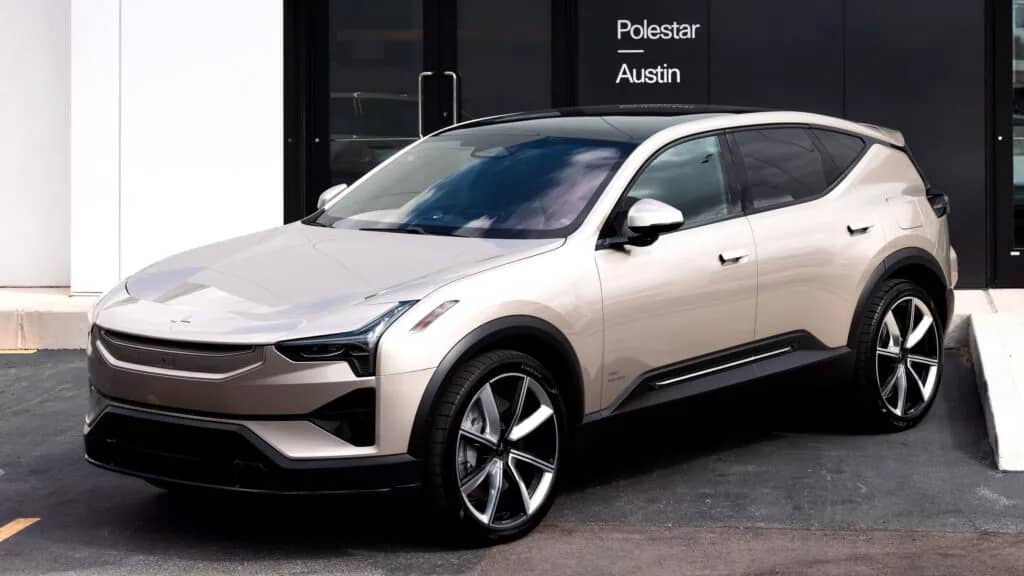
The US Department of Commerce has refused Polestar the authorization required to sell new cars past the 2027 model year under the Connected Vehicle Rule. The move effectively ends the Geely-owned brand's presence in the American market while its European growth strategy continues.
Source:Carscoops
Post
US Bans Polestar From Selling New Cars After 2027
TL;DRAI · 60 sec read

The US blocks Polestar from selling new cars after the 2027 model year. The Connected Vehicle Rule bars the Geely-owned EV maker over Chinese software and hardware. This ends US sales and South Carolina Polestar 3 output, pushing the brand to focus on Europe instead.

The US has blocked Polestar from selling new cars past the 2027 model year, shutting the Geely-owned EV brand out of the American market.

The Connected Vehicle Rule bars Polestar's future sales. The US Department of Commerce’s Bureau of Industry and Security refused the authorization Polestar needs to continue operating in the country. The decision stems from the Connected Vehicle Rule, finalized under the Biden administration, which bars cars with Chinese or Russian software and hardware in their connectivity systems on national-security grounds.
Geely owns a majority stake in Polestar, and that Chinese ownership is the reason the rule applies.
Geely owns a majority stake in Polestar, and that Chinese ownership is the reason the rule applies. Washington has spent months working to block cars built and exported from China. The Trump administration has cast the effort as protection for domestic manufacturing.

Polestar 3 production in South Carolina is affected. The ruling hits the Polestar 3, the only model the automaker builds in the United States at its South Carolina factory since 2024. Those American-made examples are shipped to Europe as well.
From The CircuitryThe Feed — live briefs across tech, all day.See what’s happening →
Existing 3 and 4 inventory in the US remains available for sale until stock runs out. Polestar has promised to continue servicing cars already sold and supporting their owners.
Sister brand Volvo, also owned by Geely, secured a waiver in May.
Volvo received a waiver while Polestar did not. Sister brand Volvo, also owned by Geely, secured a waiver in May. Software restrictions under the rule take effect for the 2027 model year, with hardware restrictions following in 2030.

Polestar shifts focus to Europe and other markets. The US accounted for just 6 percent of Polestar’s retail sales in the first quarter of 2026. CEO Michael Lohscheller said in a statement that the automotive industry is entering a new phase based on regional dynamics.
“Our strategy reflects that, with Europe being our largest growth engine and our plan to manufacture Polestar 7 in Europe,” Lohscheller continued. He pointed to record sales in 2025 and the first quarter of 2026, several new market launches in Europe this year, and continued investment in Southeast Asia, Eastern Europe, Latin America and Canada.
Why this mattersAI · ~100 words

Tap a lens to see what this story means for you.

Reader-supported
DonateBuy me a coffee →Follow@thecircuitry_ →Follow@thecircuitry.to →

Reader-supported · The Brief

Liked this? The Brief brings you the whole day in tech, verified, every morning. Two minutes, free forever.

HELP US IMPROVE
From The Circuitry

See what’s happening right now

The Feed runs all day — short, verified briefs the moment they break.

Open the Feed →
From The Circuitry

Follow @thecircuitry_

Every story we publish, as it happens. No noise between.

Follow on X ↗On Bluesky ↗

Reader-supported

The Circuitry is a passion project I've always wanted to build, and I love the work behind it.

Running it costs real money. APIs, hosting, time. To keep improving the site and growing this into something useful for everyone, those costs have to be covered.

Any contribution is appreciated. If not, no pressure. Thanks for reading.

Buy me a coffee
PolestarEVUS Regulations
More fromCarscoops
  • VW Weighs Up To 100,000 Job Cuts and Core Brand Spin-Off

    Energy · 1mo
  • Democratic Senators Question NHTSA Over Tesla's FSD Safety Assertions

    Tech · 1mo
More inTech
  • Tesla and SpaceX confirm Terafab chip fab in Texas

    Tech · 1d
  • OpenAI Urges Federal Judge to Throw Out Apple's Trade Secrets Complaint

    Tech · 2d
  • Meta introduces Muse Code, its terminal-based coding agent

    Tech · 2d
SupportThe Work

The Circuitry is reader-supported. If you find the daily brief useful, you can buy me a coffee to keep it going.

Buy a coffee →
SubscribeCircuitry Brief

Liked this? The Brief brings you the whole day in tech, verified, every morning. Free forever.

MORE IN TECH

Tesla and SpaceX confirm Terafab chip fab in Texas

Tesla and SpaceX have confirmed Grimes County, Texas as the site for their Terafab semiconductor megafactory, with the first phase costing roughly $16.8 billion. The project targets the largest chip manufacturing facility on the planet to supply over 1 terawatt of compute per year that exceeds current and future global production capacity.

OpenAI Urges Federal Judge to Throw Out Apple's Trade Secrets Complaint

OpenAI has filed a motion asking a federal judge to dismiss Apple's trade secrets lawsuit, describing the claims as meritless. The dispute, which follows a July suit and this week's injunction request from Apple, highlights tensions after their prior partnership on Siri and OpenAI's hardware push.

Meta introduces Muse Code, its terminal-based coding agent

Meta has released an early beta of Muse Code, a terminal-based coding agent driven by the updated Muse Spark 1.2 model and positioned against Anthropic's Claude Code and OpenAI's Codex. Substantially lower rates, including a contributor plan at $0.10 for every million tokens received, may encourage migration away from higher-priced options such as Anthropic's Sonnet 5.